Urban Container Gardening for Food and Pollinators - A Season of Growth
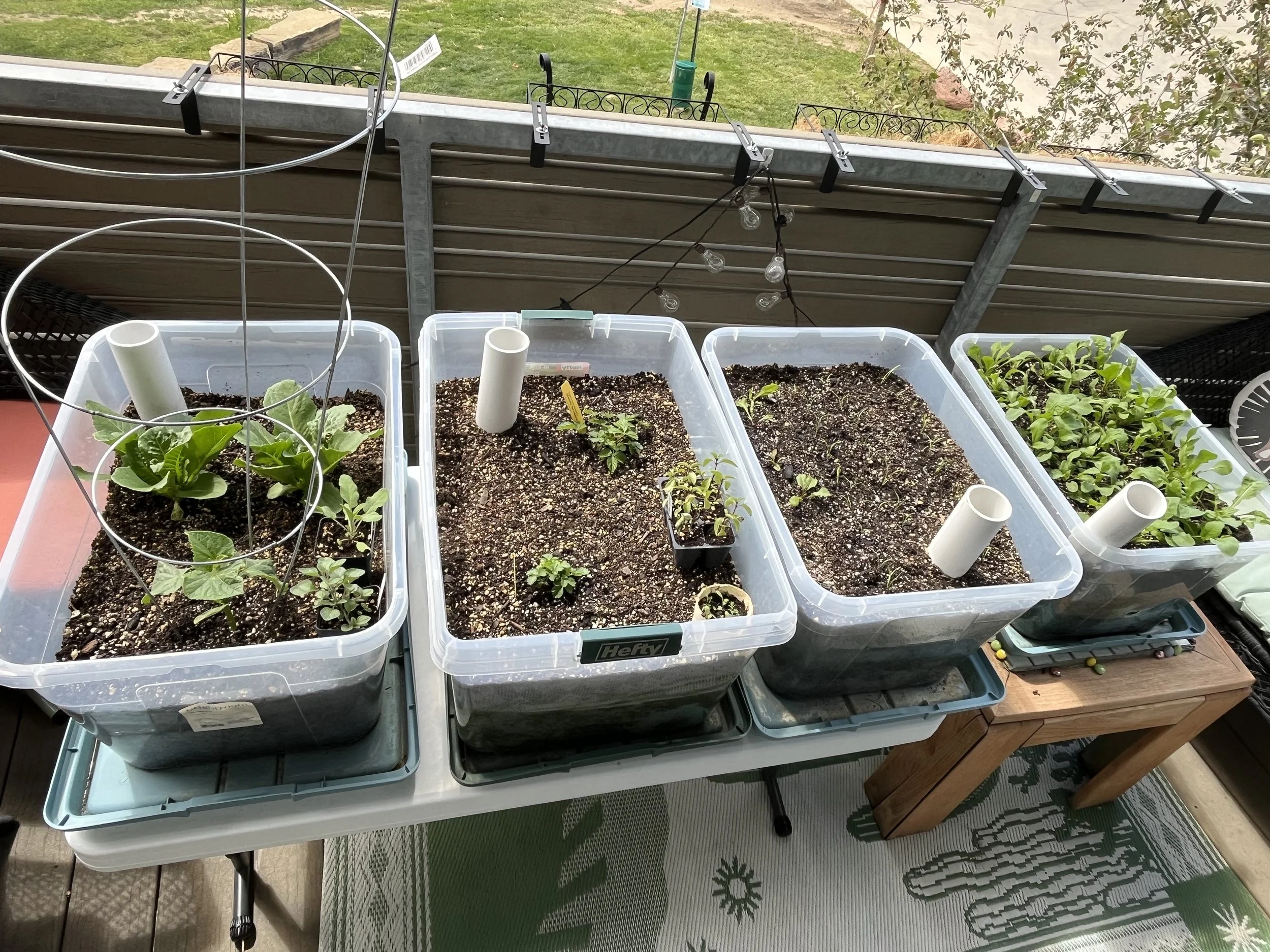
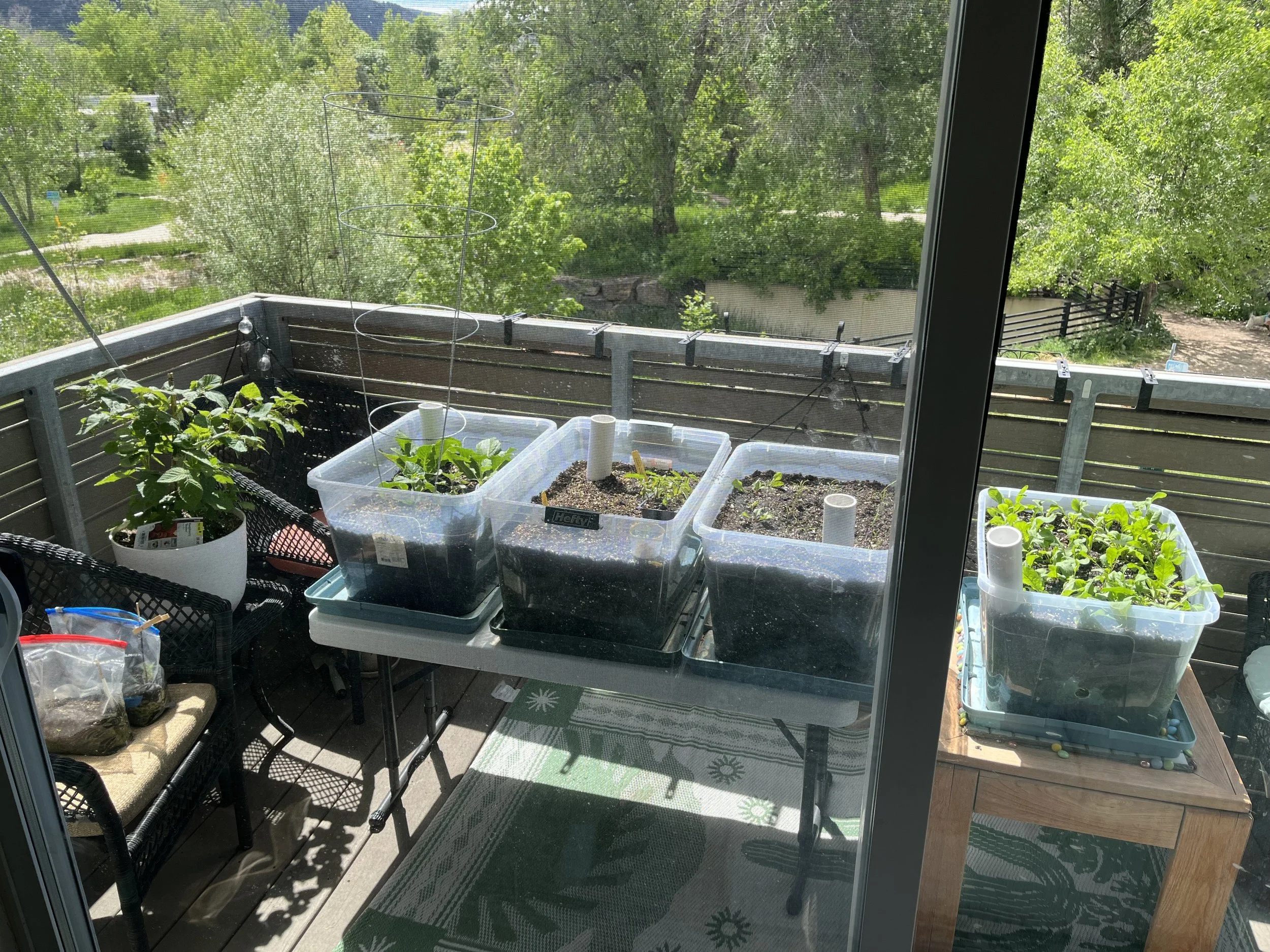
Balcony Garden—Early Spring
This project grew out of a simple question: what’s possible when you try to grow food and native plants in a small space? Through hands-on container gardening, community research, and a lot of trial and error on my own balcony, this work explores how everyday gardening can be a powerful nature-based solution. Along the way, it shows how accessible, informal learning, like swapping seeds, sharing harvests, and figuring things out as you go, can build connection, confidence, and care for the natural world. By centering apartment dwellers and people with limited space or resources, this project highlights how small-space gardening can support both personal wellbeing and local ecosystems, proving that meaningful climate and biodiversity action can start right at home.
RESEARCH FINDINGS
Literature Review
Research findings include many insights into community gardening equity, best practices for container gardening, fencing recommendations for wildlife, and which foods and native plants grow best in the front range and small spaces. Although this is still an emerging field of study, many organizations such as Wild One’s Front Range, CSU Extension, and others have valuable information on how to grow native plants and food. There is a significant gap in understanding in Boulder about how to incorporate the growing of food with native plants due to many conflicting opinions about what should be grown in personal gardens in the front range. Growing both food and native plants combines the need for many low-income apartment-dwelling residents to grow their own food and the great ecological need for more native plant matter to support local ecosystems.
Some research supports that there is an overwhelming presence of white privilege in community garden tending spaces, even when the food being grown supports non-white community members. Therefore suggesting that while the food benefits non-white communities, many do not reap the social and psychological benefits of tending to a community garden (Pablo, 2021). Although this may still ring true statewide and nationally, local NGOs like Harvest of All First Nations and Growing Gardens are shifting this narrative by hosting BIPOC+ only garden stewarding volunteer days. Some research states that starting one’s own garden fosters social capital through sharing plants, produce, and knowledge, strengthening bonds within families and communities. While barriers such as time, space, and resources exist, the key to starting and sustaining a garden lies in inspiration and community networks, which spark a cycle of sharing, trust, and reciprocity (Eng S, Khun T, Jower S, Murro MJ., 2019).
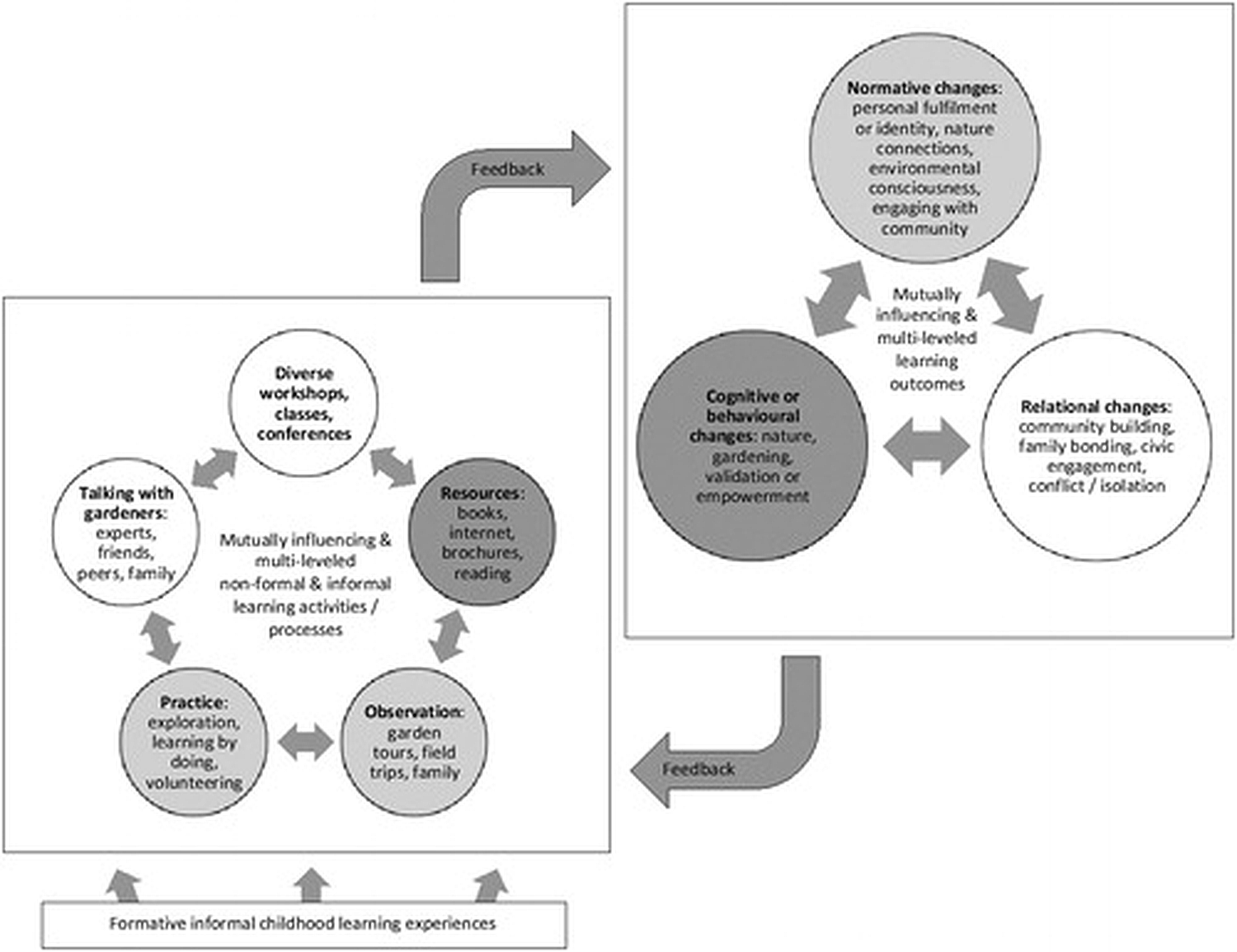
The diagram shows how informal childhood learning experiences feed into lifelong learning outcomes, with feedback loops between experiences and personal development.
“These features suggest how learning-based initiatives can support the expansion and enhancement of biodiversity on private property. Ongoing and decentralised initiatives, making use of diverse informal and non-formal opportunities, can aid the design and delivery of nature-based solutions.” (Alan P. Diduck, Christopher M. Raymond, Romina Rodela, Robert Moquin & Morrissa Boerchers (2020)). This quote captures the heart of this project by naming something that shows up again and again in my own gardening journey: learning doesn’t have to be centralized, formal, or expert-led to make a real ecological impact. Through small, decentralized actions—like experimenting with container gardening on a balcony, attending seed swaps, sharing plants with neighbors, and learning through trial and error—I experienced firsthand how informal learning can lead to meaningful biodiversity gains on private and semi-private spaces. These everyday learning moments shaped how I designed my garden, what I chose to grow, and how I supported pollinators, demonstrating how nature-based solutions can emerge organically when people are given accessible tools, community support, and the freedom to learn by doing.
Gardening with Food in Small Spaces
Food crops native to Colorado are quite limited or otherwise undesirable to the modern palate. Subalpine buckwheat, showy milkweed, yarrow, and goldenrod–while technically edible to humans, may not be the most practical in a home garden for cooking purposes. Wild strawberry, wild asparagus, raspberry, and wild onion are more recognizable and usable, but their sizes are considerably smaller than their cultivated counterparts and the seeds can be difficult to acquire without venturing onto open space land, where unauthorized seed collection is illegal.
One way to find middle ground between random non-native store-bought food crop seeds and native food crops is to support a local farm like MASA Seed Foundation who sells locally adapted seeds. The seeds that MASA sells are part of a vast seed library which has been cultivated and adapted to Colorado’s climate for years. They are more resilient in our environment because of this, and therefore more likely to germinate and survive. Another method to obtain locally adapted seeds and food crops is neighborly sharing. For example, 303 Gardening is a neighborhood association of activated gardeners in Niwot who hosts seed swaps with all kinds of seeds (crops, ornamentals, natives) perpetuating a cycle of neighborly care and reciprocity, since these seed swaps are normally free of charge and bringing seeds is not required.
More questions of access to home gardening are physical space and startup costs. What does one do if they don’t have a yard? What if they can’t afford to buy all the materials? Explorations of “container gardening” have ensued by a few local organizations in Colorado like Wild Ones Front Range and CSU Extension. Container gardening is a wonderful option for urban apartment dwelling folks who still want the benefits that gardening can provide. “Containers” could mean several things: wooden raised beds, large ceramic pots, and even plastic storage containers (plastic number 5 is safest, and make sure it is food safe). Acquiring raised beds and ceramic pots can become pricey, fast. Storage containers run anywhere from $5 to hundreds depending on size, material, time of year, and store choice. For someone on a budget, plastic storage containers are a phenomenal option and can provide decent root depth for native plants and root veggies. Facebook marketplace, thrift/second-hand stores, and “buy nothing” groups/apps are great places to find these materials for low prices, or even for free! Many stores have “after the holidays” prices for storage containers, so that is also a good time to look.
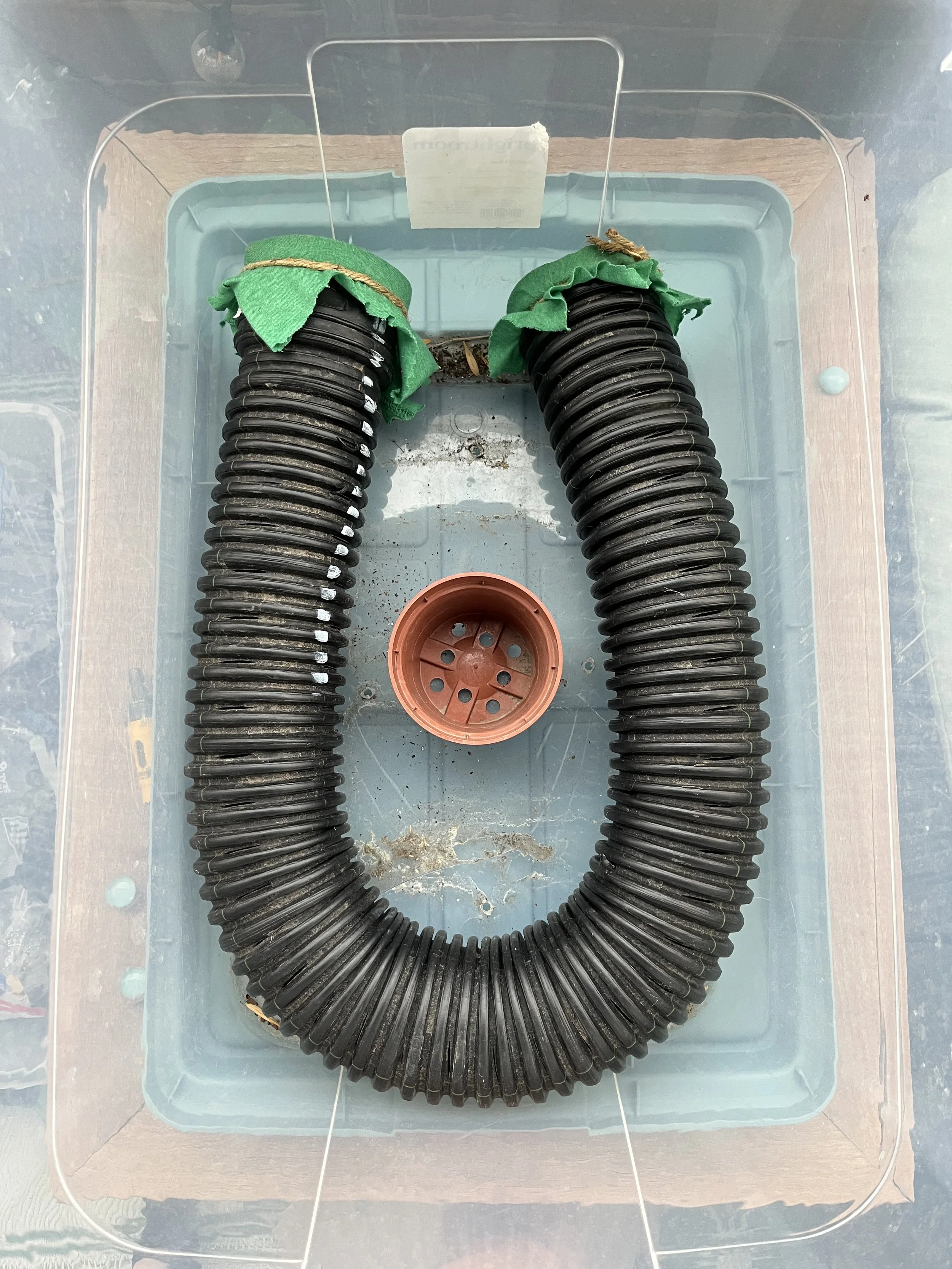
My DIY self-watering container setup.
Not sure how effective this method was. You could save time by skipping this step and poking drainage holes in the bottom of your containers.
Once the containers are chosen, there are a few more things to think through. How much time one has to water their plants is a huge one. If water is less accessible or it seems too time consuming to water daily, a self-watering container may be the answer. There are several resources available online to create your own self-watering container, and for quite cheap. The self-watering container that I chose to create involved 4 sections of 2x12” PVC pipe, a few feet of single wall perforated drain pipe, an old t-shirt, twine, and a few small plastic planters. Photo included above. This model creates a water reservoir at the bottom of the container that the soil then soaks up gradually over the course of a few days. It’s supposed to save time and money since this model requires less soil. Most of these materials were gifted to me by a colleague, but they are very cheap on either facebook marketplace, at thrift stores, or even bought new at a department store.
Gardening with food crops in the Wildland Urban Interface (WUI) has its own set of challenges in Colorado. This area tends to boast heavy animal activity, including black bears, who love to forage in fruit and veggie gardens. According to Colorado Parks and Wildlife, “exclusion fencing” is a great option to protect small areas such as gardens from wildlife activity without fencing the entire property. They state that “8’ woven-wire fence is often used with posts set at 8 to 20’ intervals, and the wire is brought tight to the ground. Make the top highly visible by using a top rail, high-visibility wire or flagging. Place gates at corners where an accidentally trapped animal is more likely to find an escape” (Hanophy, W. 2009). Woven-wire fences can become costly, especially for larger plots. For most home gardeners, chicken wire is an affordable alternative that gets the job done. To deter squirrels and other small climbing critters, some gardeners opt to extend their fencing overhead, creating a protective “ceiling” for added security.
Gardening with Native Plants in Small Spaces
The native plant community in Colorado has become a thriving space, mostly for those that own and steward land. As land and home prices continue to rise at an unprecedented rate, fewer people are able to afford single-family homes. Many apartment complexes, especially in Boulder, have begun incorporating community garden raised beds for tenants to use. For those that have some sort of private outdoor use space (balcony, patio, etc.), but no access to a garden plot, container gardening with native plants is still very possible! According to Sue Dingwell at Colorado Native Plant Society, these are some natives that did well in containers for her: Anise hyssop, Black-eyed susan, Blanket flower, Blue grama, Chocolate flower, Clematis (Western virgin’s bower), Fringed sagebrush, Little bluestem, Mountain sneezeweed, Rocky mountain bee plant, Rocky mountain penstemon, Sideoats grama, Swamp milkweed, Tickseed coreopsis, and Wine cups. In order to assess which native plants may do well in containers, there is information online about the height and spread of native plants. For containers, one might want taller plants with less spread capability depending on the type of containers used.
Acquiring native seeds seems like a daunting task with the collection restrictions on public land, but seed swaps are plentiful along the Front Range and in Denver. Most seed swaps happen during the winter months to give people time to make sow bags and cold stratify if necessary. For someone on a budget, buying native plant seedlings or starts can become very expensive quickly, especially if one has a large area to cover. Wild One’s Front Range hosts several seed swaps in the winter along the Front Range, and seedling/plant swaps in the spring and summer to make gardening with native plants more accessible to the community. If you do have the means to buy native plant starts, Harlequin’s Gardens in Boulder is a great place to go!
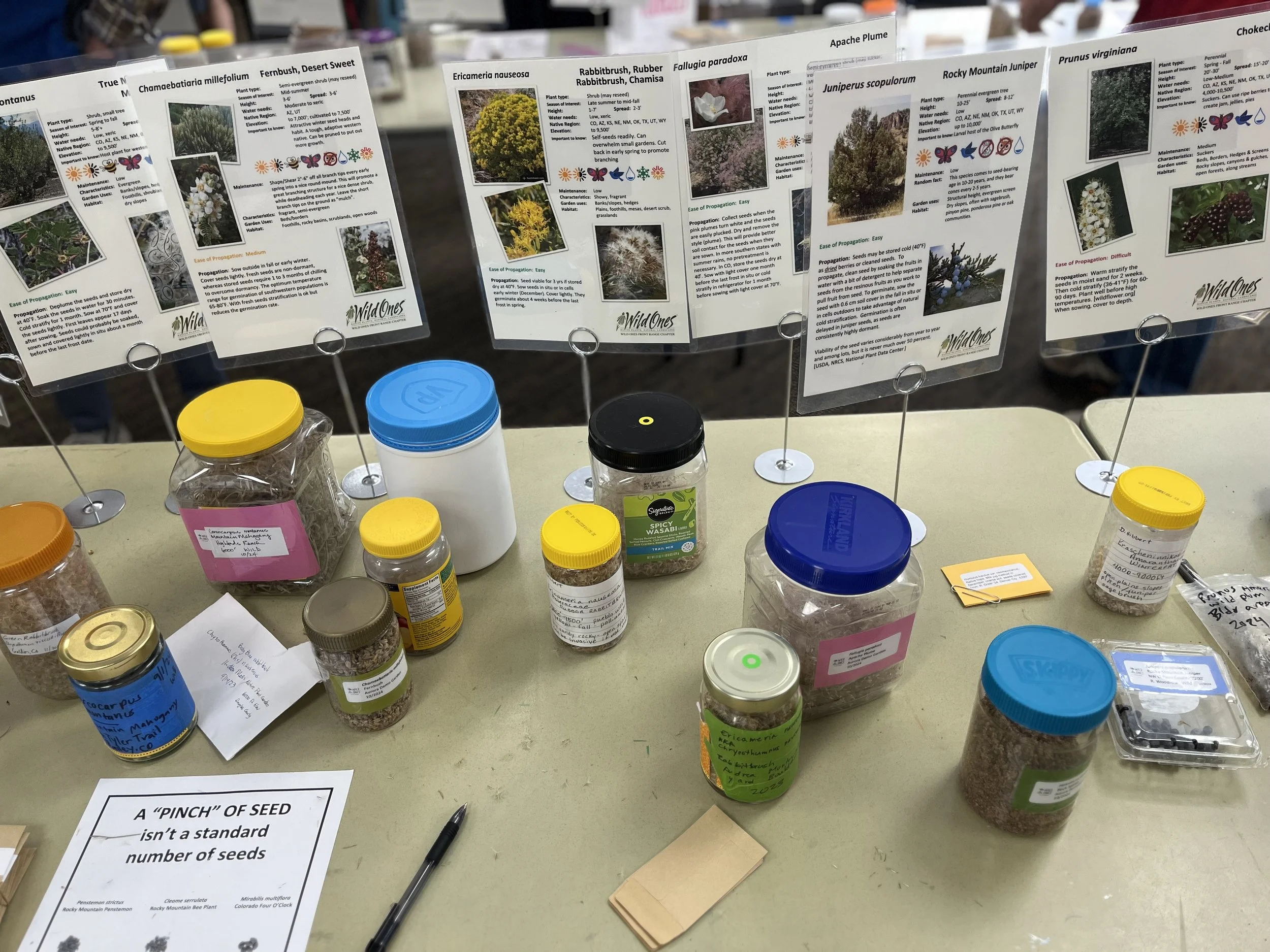
Wild One’s Front Range Seed Swap
Sow bags are one of the best, easiest, and cheapest ways to stratify and grow native plants from seed. Cool Boulder has an entire blog post all about Sow Bags, so I won’t reiterate here. Basically, sow bags are little plastic bags filled with soil that you sprinkle native seeds on top of and put outside on your patio/balcony for the whole winter (snow and all) and spring until they sprout. Very little care is needed after the initial creation of the bags. They need very little water because condensation is created in the bag and essentially acts as a mini greenhouse for the seeds. This method has about an 80-85% success rate.
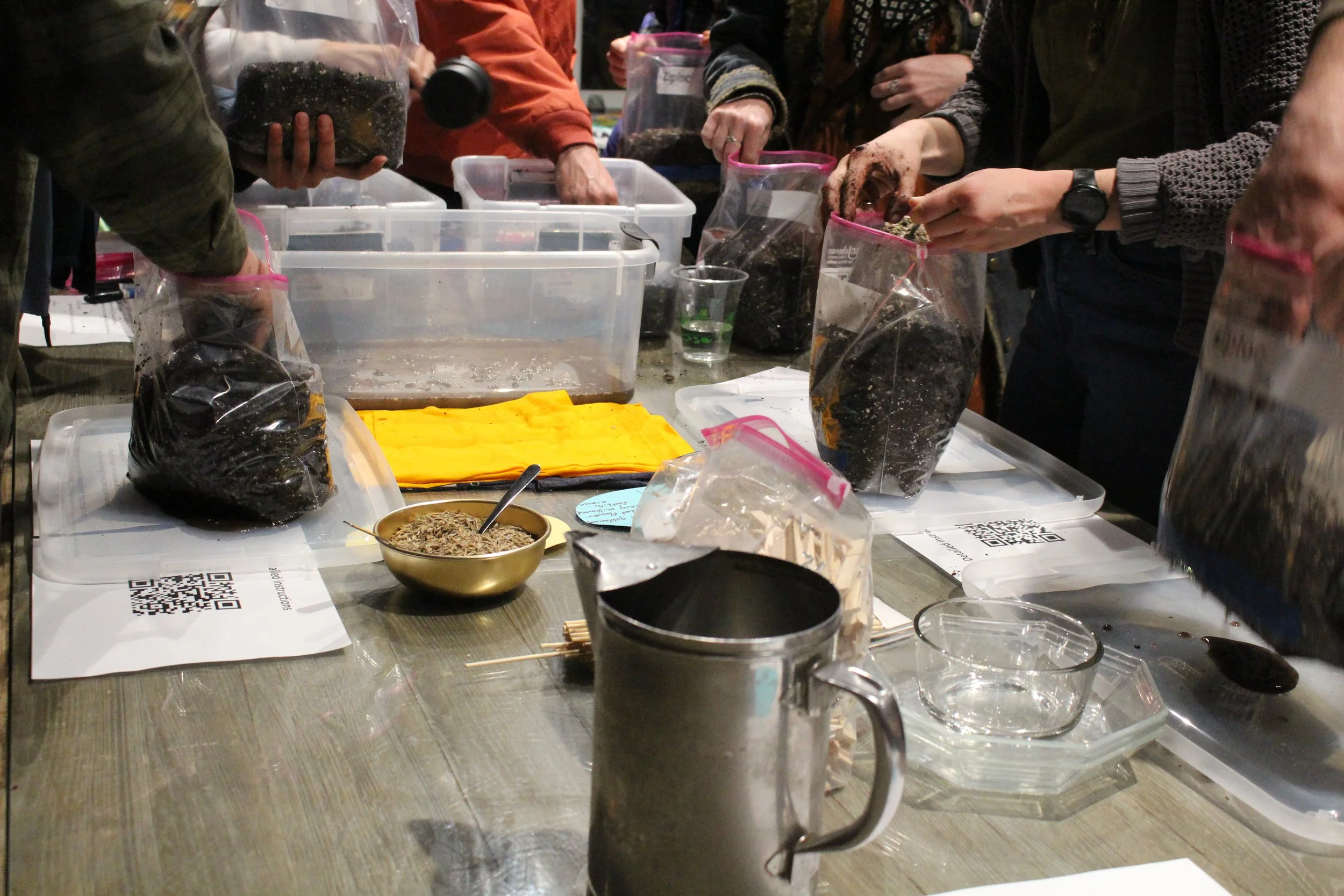
Sow Bag Making
PRACTICAL FINDINGS
Spring in the Garden
April
It is now April, and 3 out of 5 of my sow bags have sprouted (plains coreopsis, standing cypress, and rocky mountain bee plant). I have hope that a few more will rear their heads soon. Here in Colorado, there is hope in the air as the temperatures begin reaching the upper 70s. Long-time Coloradans know that a late spring frost is most likely on the horizon. I have started my beet, lettuce, and arugula seeds inside, nestled in egg and yogurt cartons. I will purchase strawberry, basil, sage, thyme and oregano plants at the farmers market in late spring to transfer to my balcony garden. I have one self watering container that I hope to plant a raspberry in, but I’m still scratching my head about where to find a raspberry bush.
May
April has come and gone, and I have transplanted my surviving arugula and beet sproutlings. Unfortunately, as tends to happen with rookie gardeners, my romaine lettuce sprouts died. I believe this happened because I failed to use a grow light, and romaine lettuce needs ample sunlight to grow strong. Despite my best efforts of opening the blinds early, their west facing window placement was not enough (and I only have west-facing windows in my apartment). Redeemingly, I was able to purchase two decently large romaine lettuce starts at my local farmers market, along with two impulse-buy cucumber starts (“might as well!”, I thought to myself). I also purchased two different varieties of wild Alpine strawberry starts from Harlequin’s Gardens, one red, and one yellow! These six starts cost me around $23.
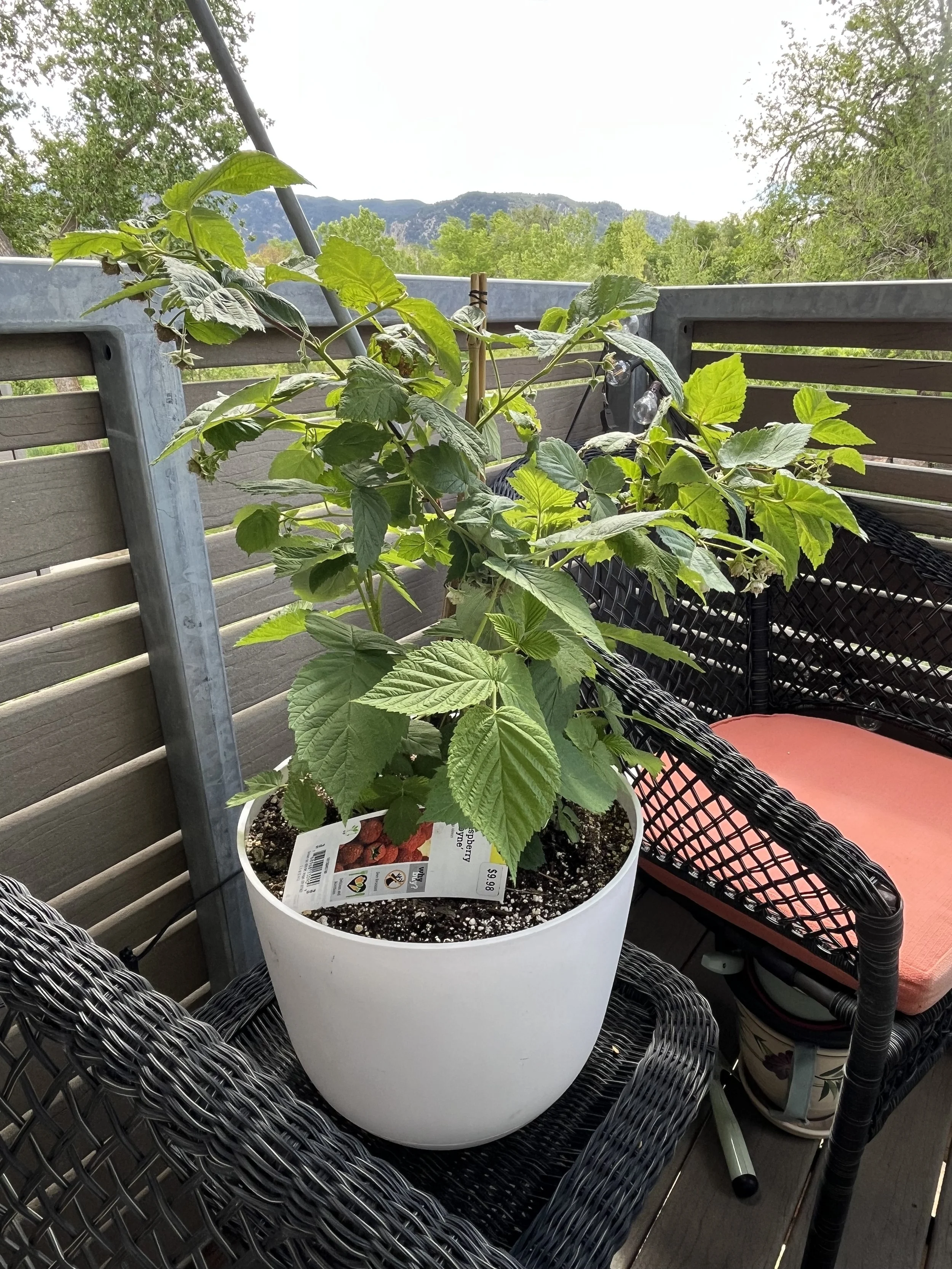
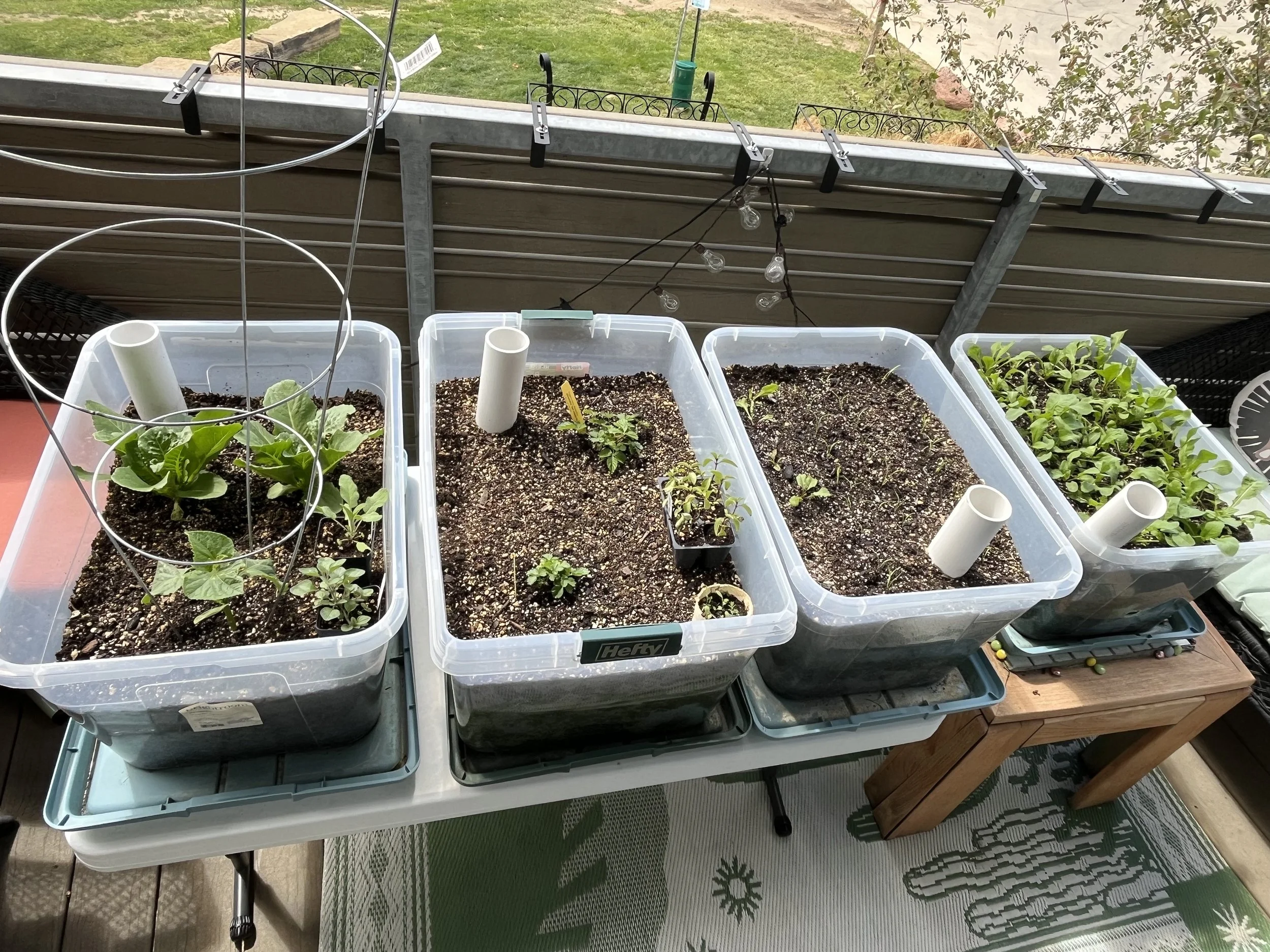
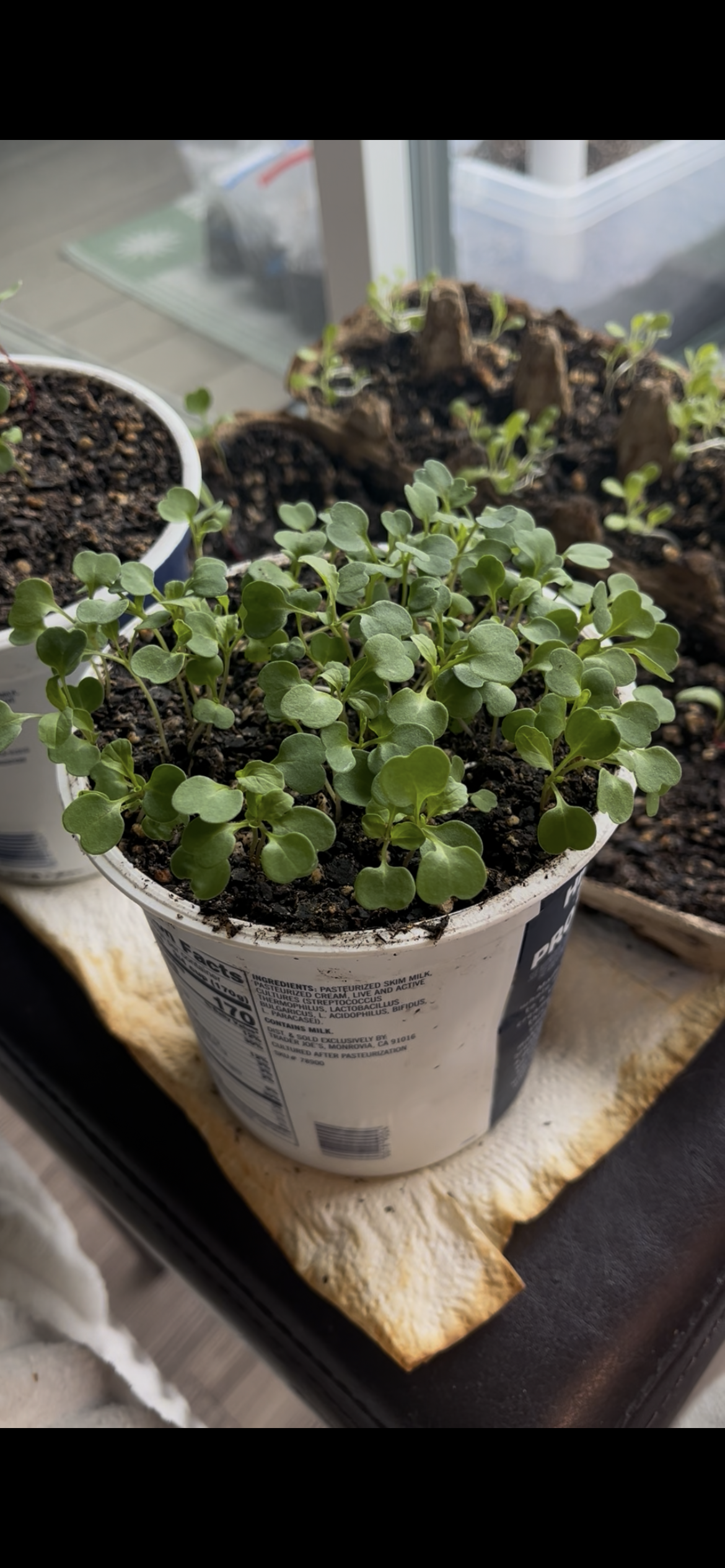
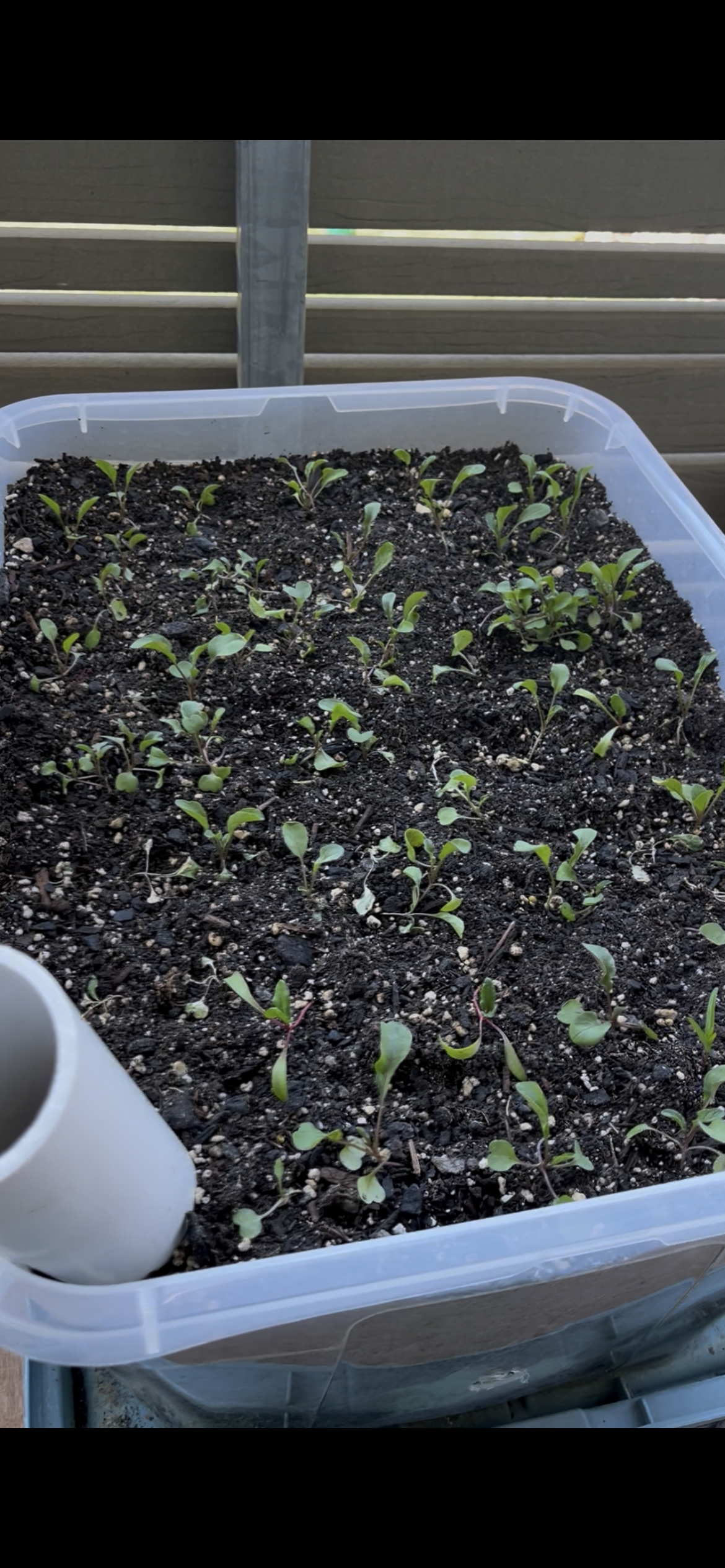
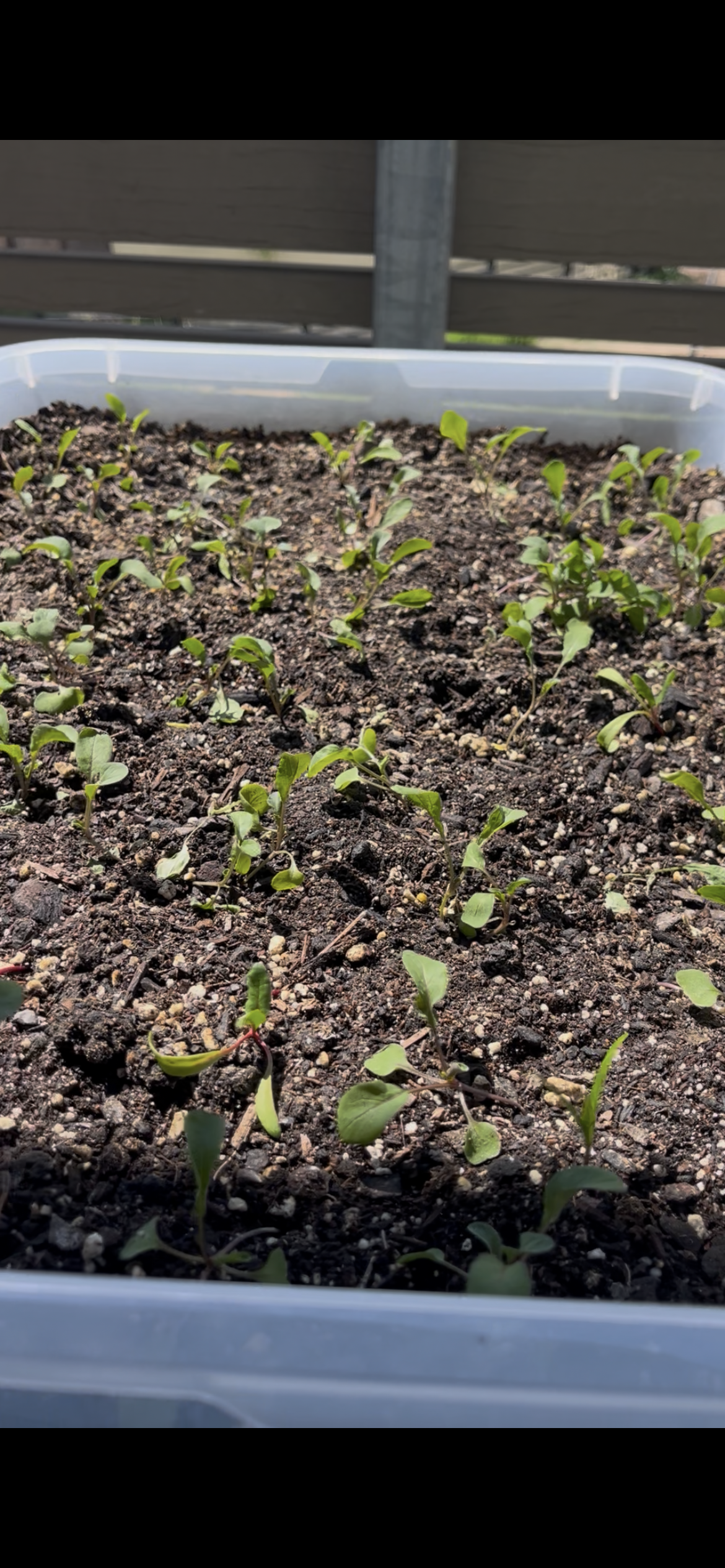
My direct-sown carrot seeds have yet to sprout up, and my arugula and beet sprouts are a bit leggy and weak. They seem to have trouble growing on my west-facing balcony due to the absence of morning light. I did find a neonic-free raspberry bushel start (the Boyne variety) from Home Depot ($10), and placed it in a large pot on the south side of my balcony. She seems to be thriving! My native plants are almost strong enough to transplant, and it looks like I’ll be getting 3 out of 5 this year. I have not yet purchased any herb starts for my balcony ledge planters, but I will at the next farmers market and once I have another bag of soil (I’m spreading purchases out in tandem with my pay periods).
I’m beginning to realize that I will need one more large container to accommodate all of the plants I’m growing, which shouldn’t be too much of an issue because I do have space for one more. After consulting with colleagues and seeing the presence of some green fungal mossy substance on the inside of my clear storage containers, I will prioritize getting an opaque container that the sun cannot penetrate through, which should help mitigate some of the mossy growth. The self-watering containers seem to be doing their job well, as I’ve noticed condensation on the inside meaning the soil stays moist, despite the blazing and direct afternoon sun.
After some thought, I realized that I needed to elevate my containers so they could be exposed to the sun for longer periods of time during the day. I found a cheap used folding table on Facebook Marketplace that fit my balcony, and set it up! This elevated my containers an extra three feet, giving them MUCH better access to light. I’m hoping this will encourage better growth, which I’m already starting to see. This means that I will not have space for one more planter for my natives, so I’m going to transplant them directly into the ground outside of my apartment and see what happens. This way, they can come back year after year and not depend on me as much.
Mid-May
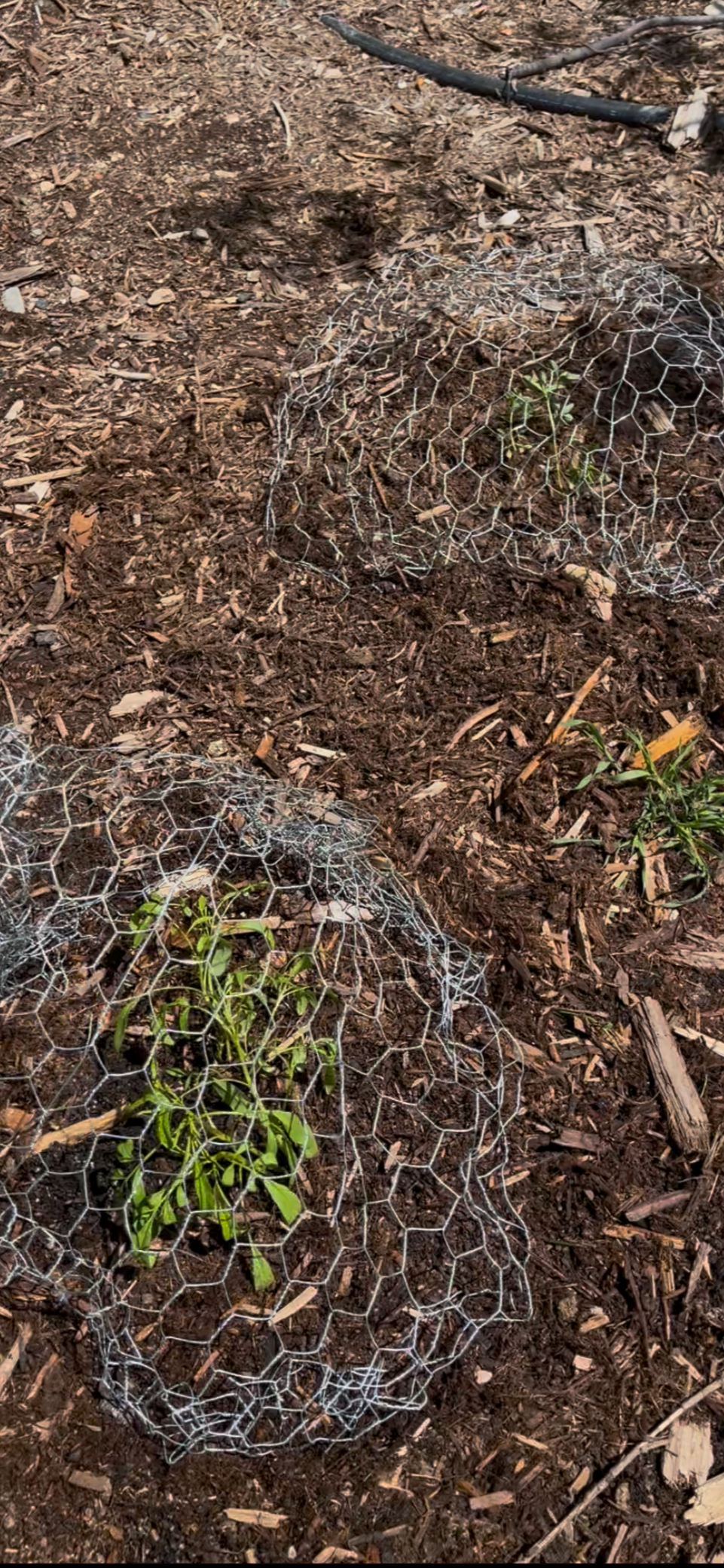
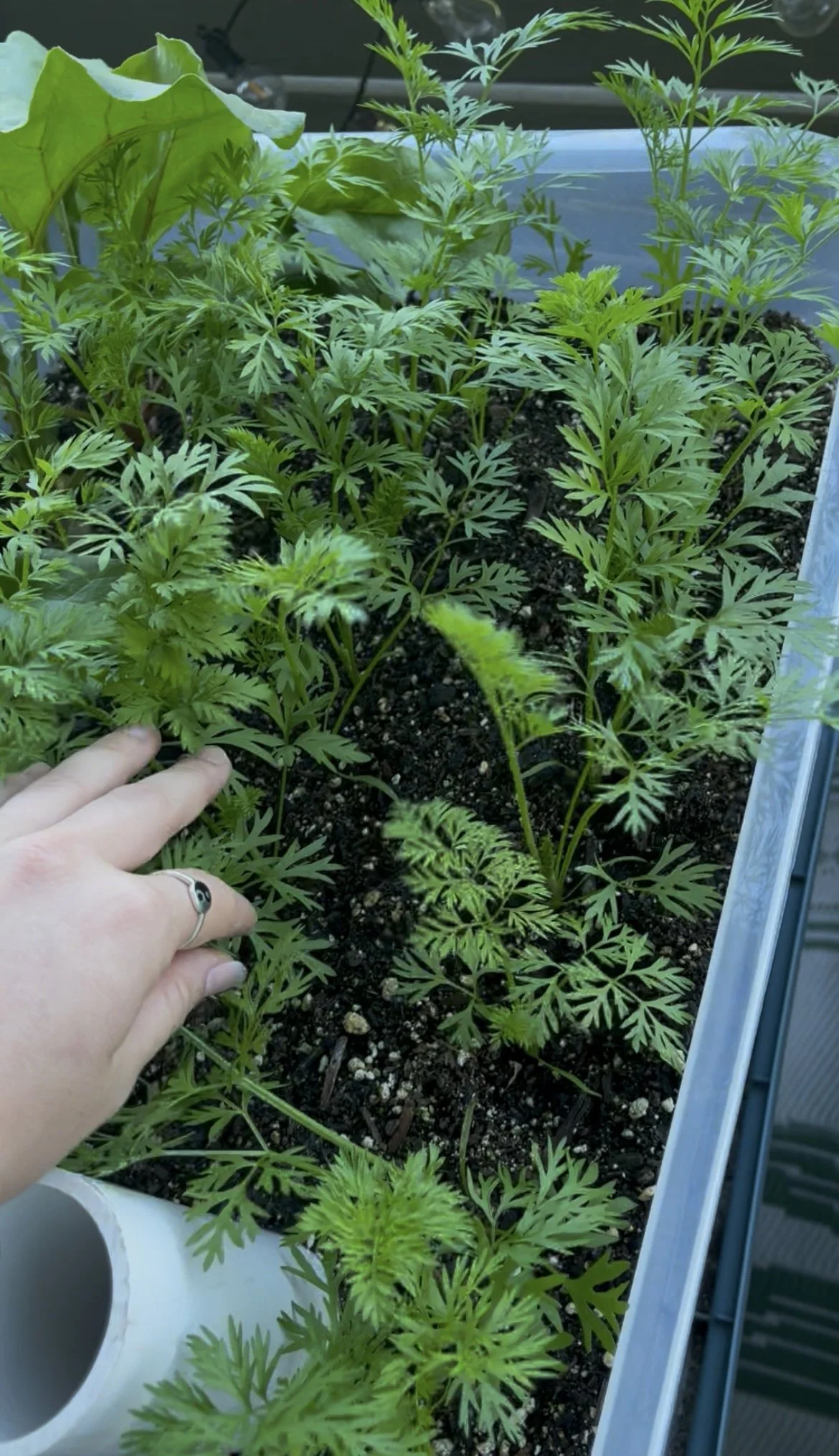
I transplanted my plains coreopsis and bee plant in the ground in front of my neighbors apartment (with her permission). They are beginning to grow larger and stronger! My arugula is thriving and some plants are large enough for me to start harvesting a little bit. I tasted one of the more mature leaves which was spicy and delicious. My beets are doing fine, but are growing slower than the other plants, which may be normal (I’m not sure, I’ve never grown anything before!). All of my carrots sprouted and I thinned them today (5/19) to create more space and less competition, hopefully encouraging supple growth. My soil seems to be holding a decent amount of moisture and the self-watering containers are doing their thing. I recently bought Thai basil, oregano, and sage from Backyard Roots (a local grower) and have yet to transplant them into their larger final growing spots. I’m a little nervous to do this because their final spot gets hot and direct afternoon sun which could easily torch their leaves as the season goes on.
Native Plants
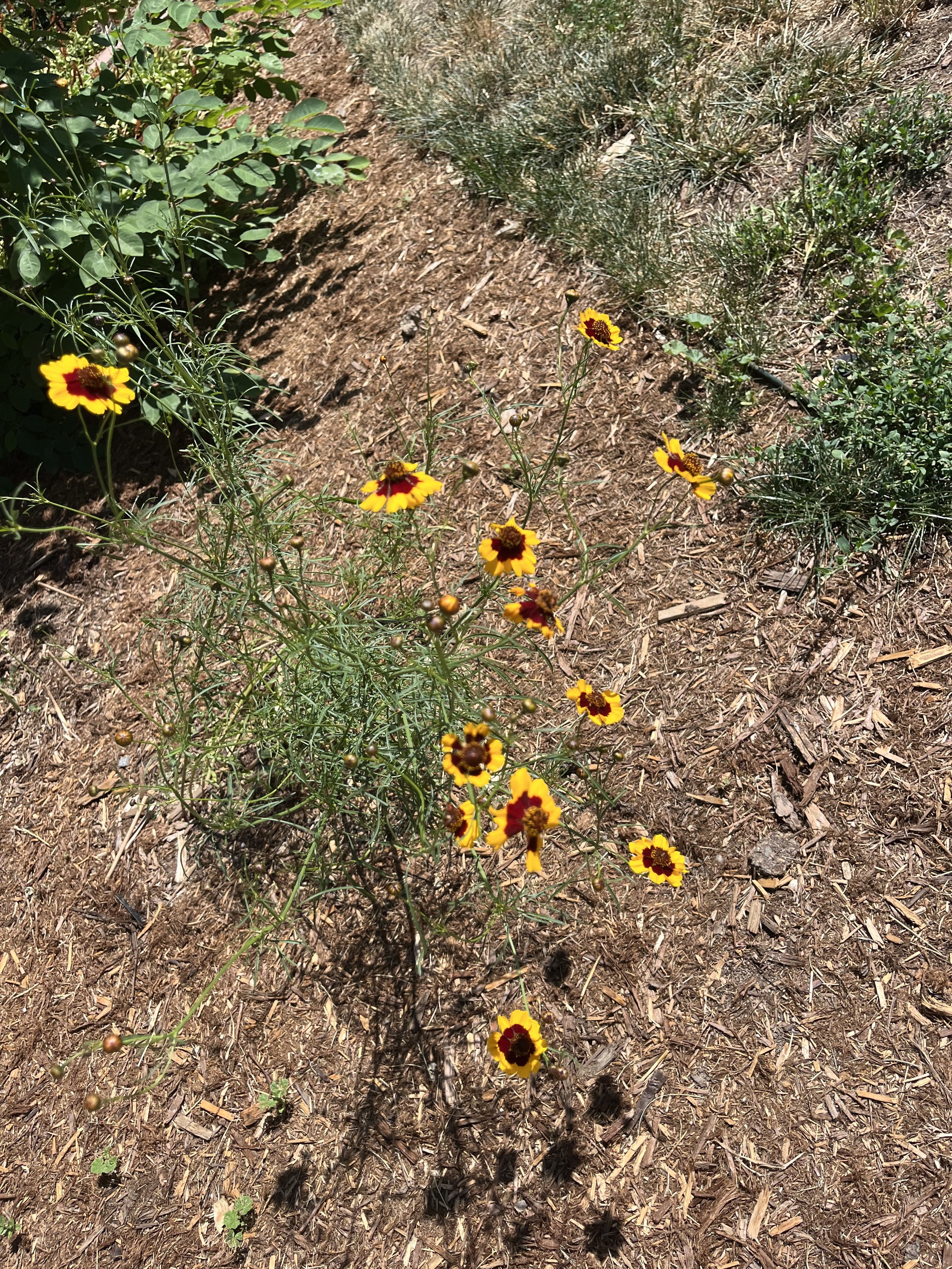
My bee plant and plains coreopsis after transplanting from sow bags. Cages to protect from dogs/other wildlife while they grow.
Early-Mid-June
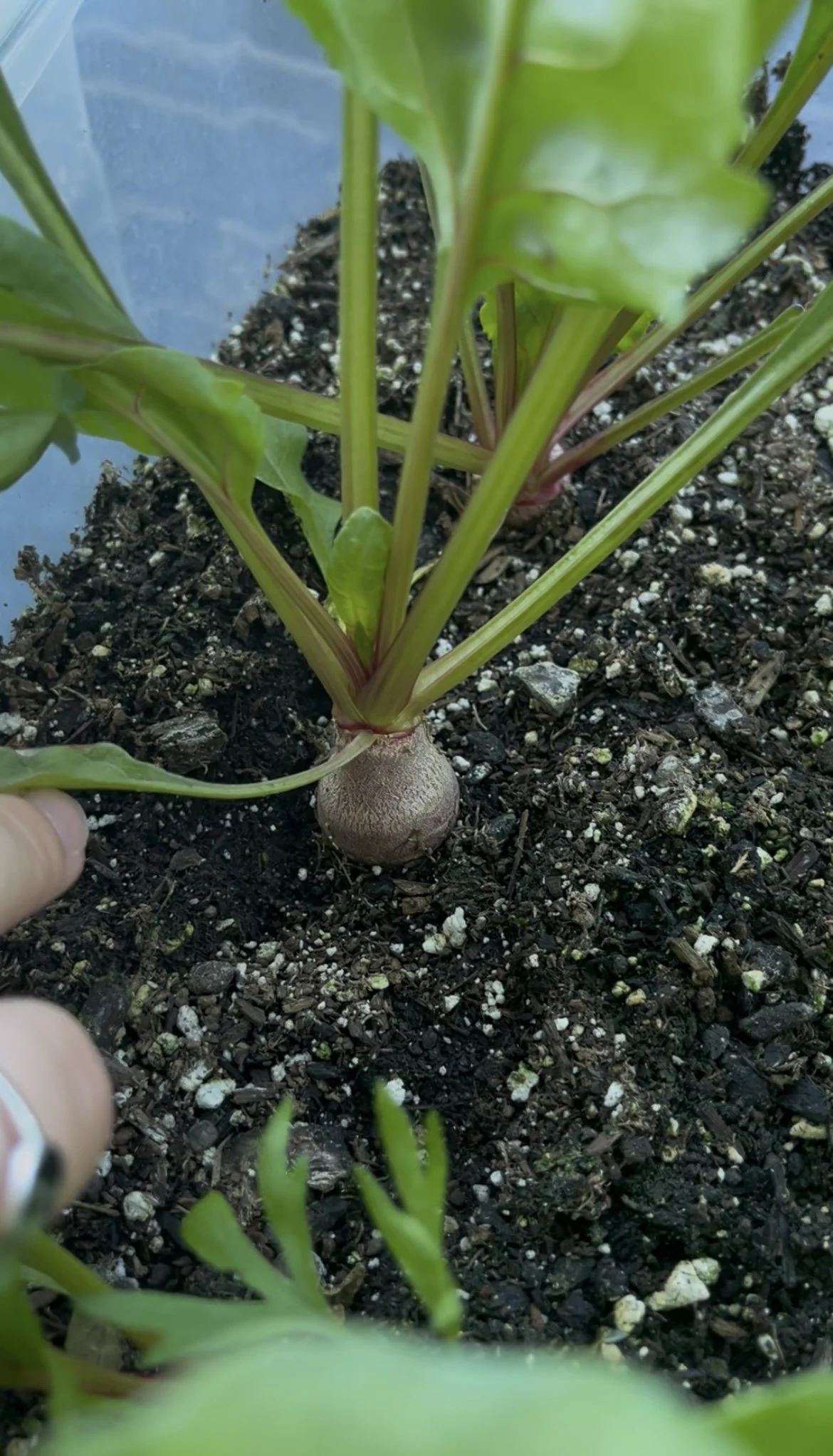
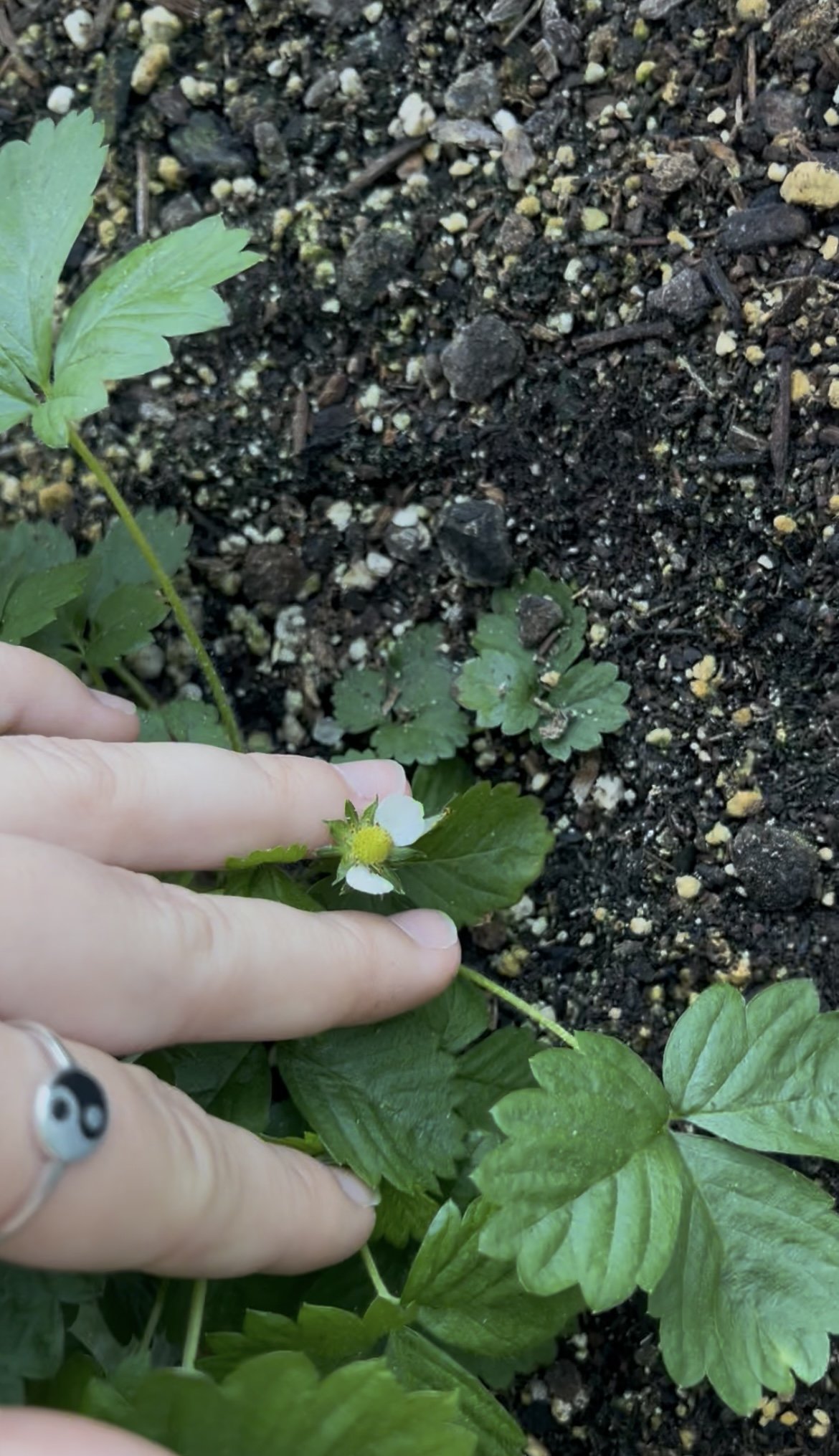
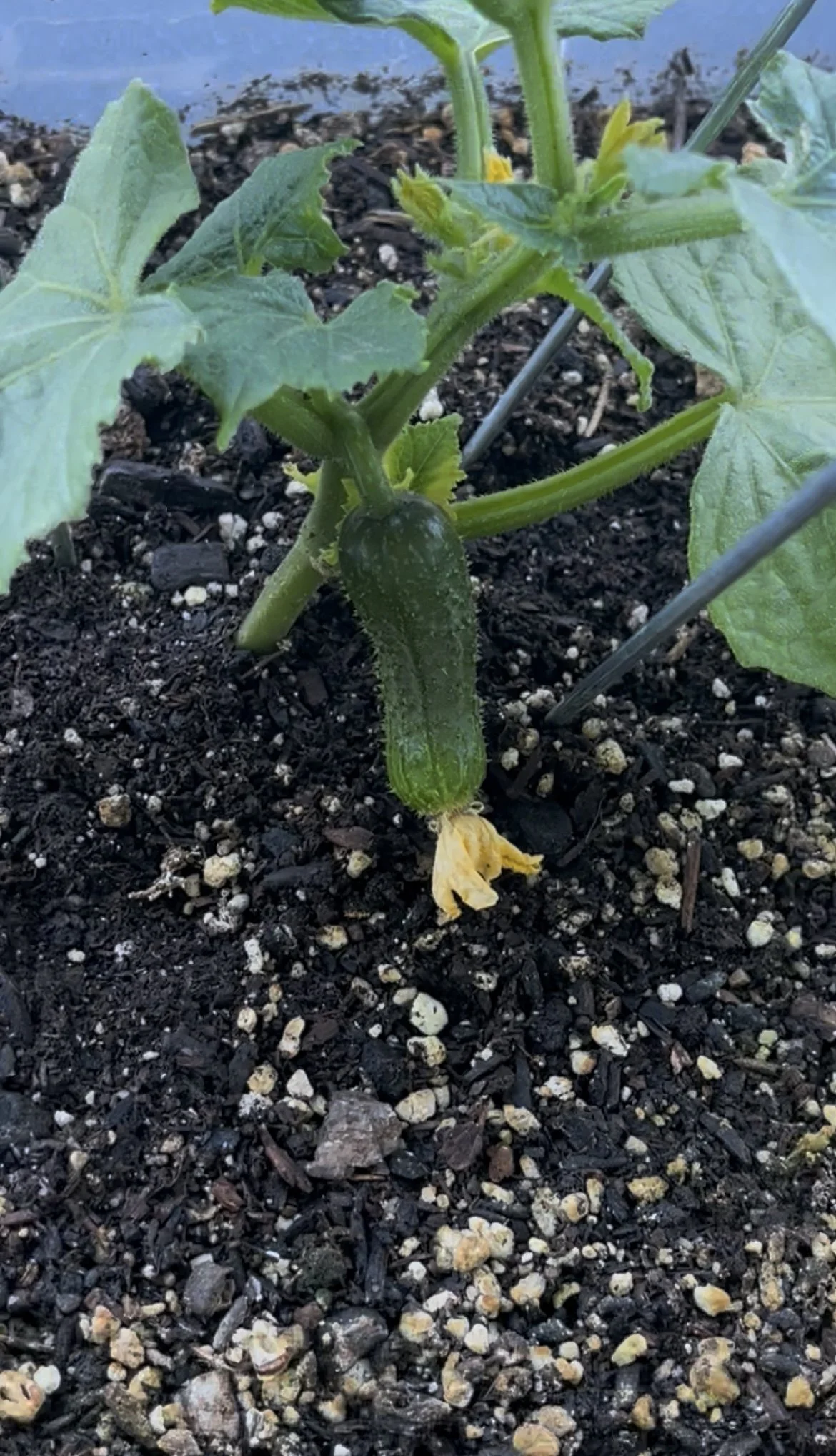
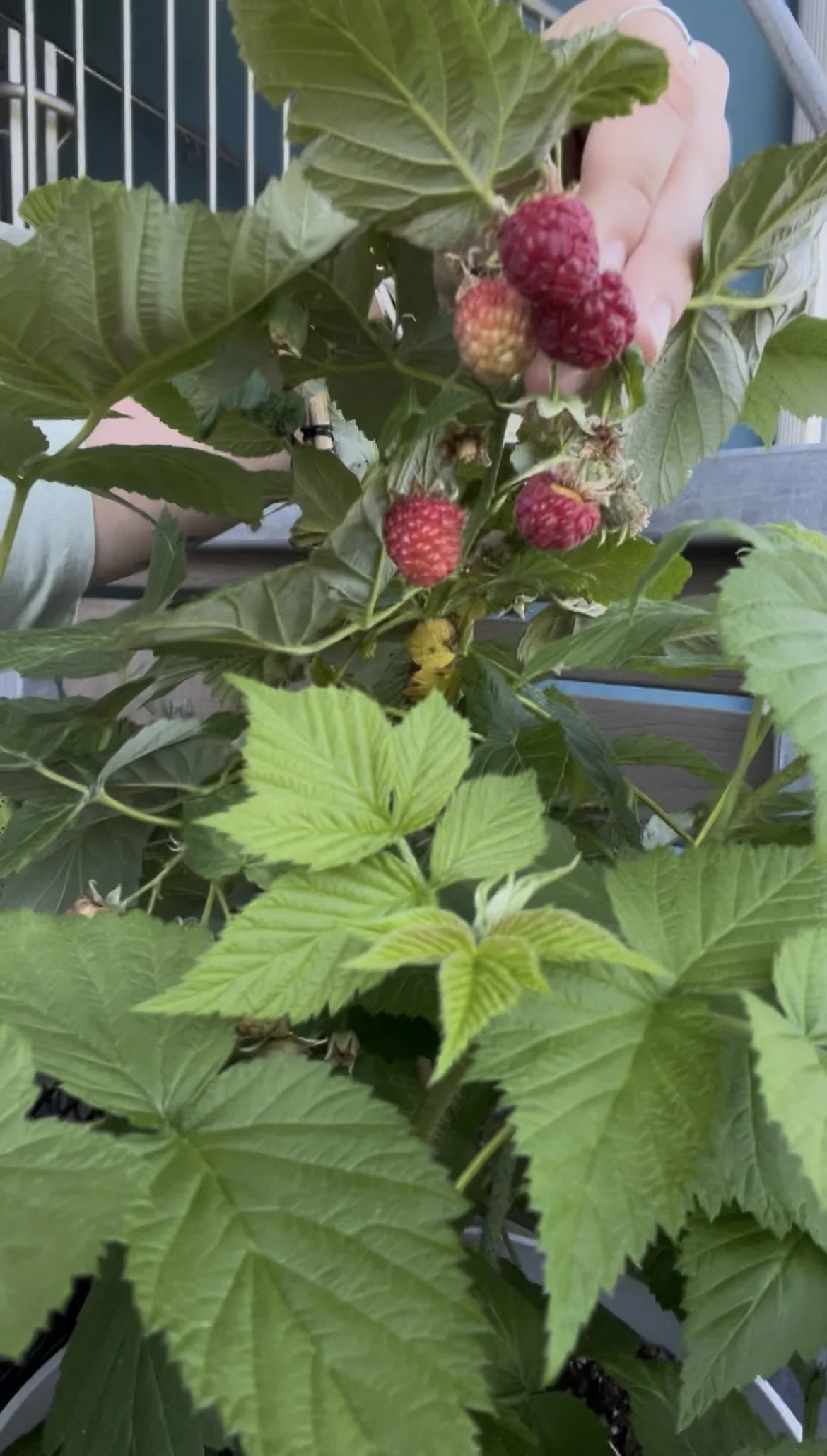
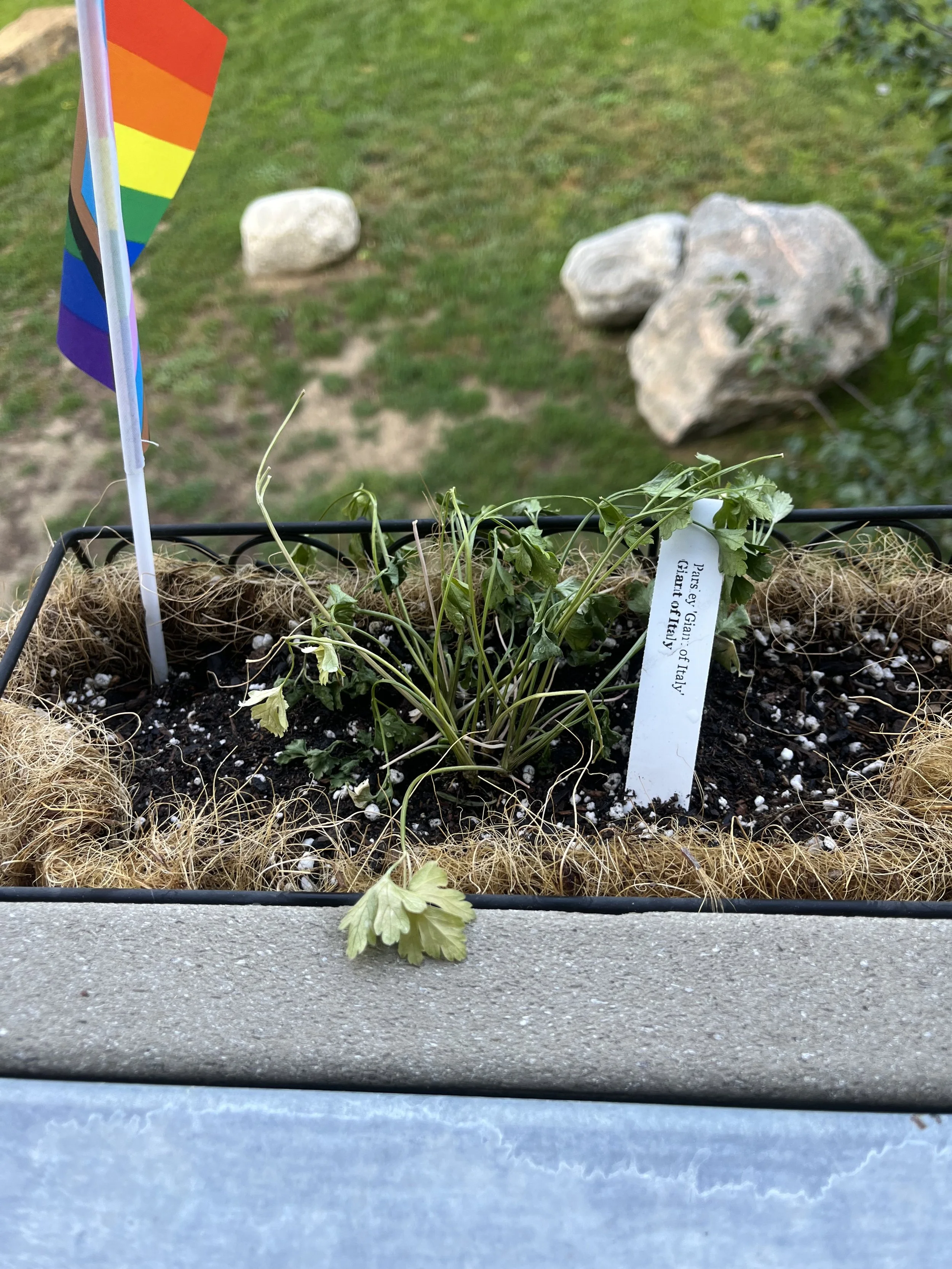
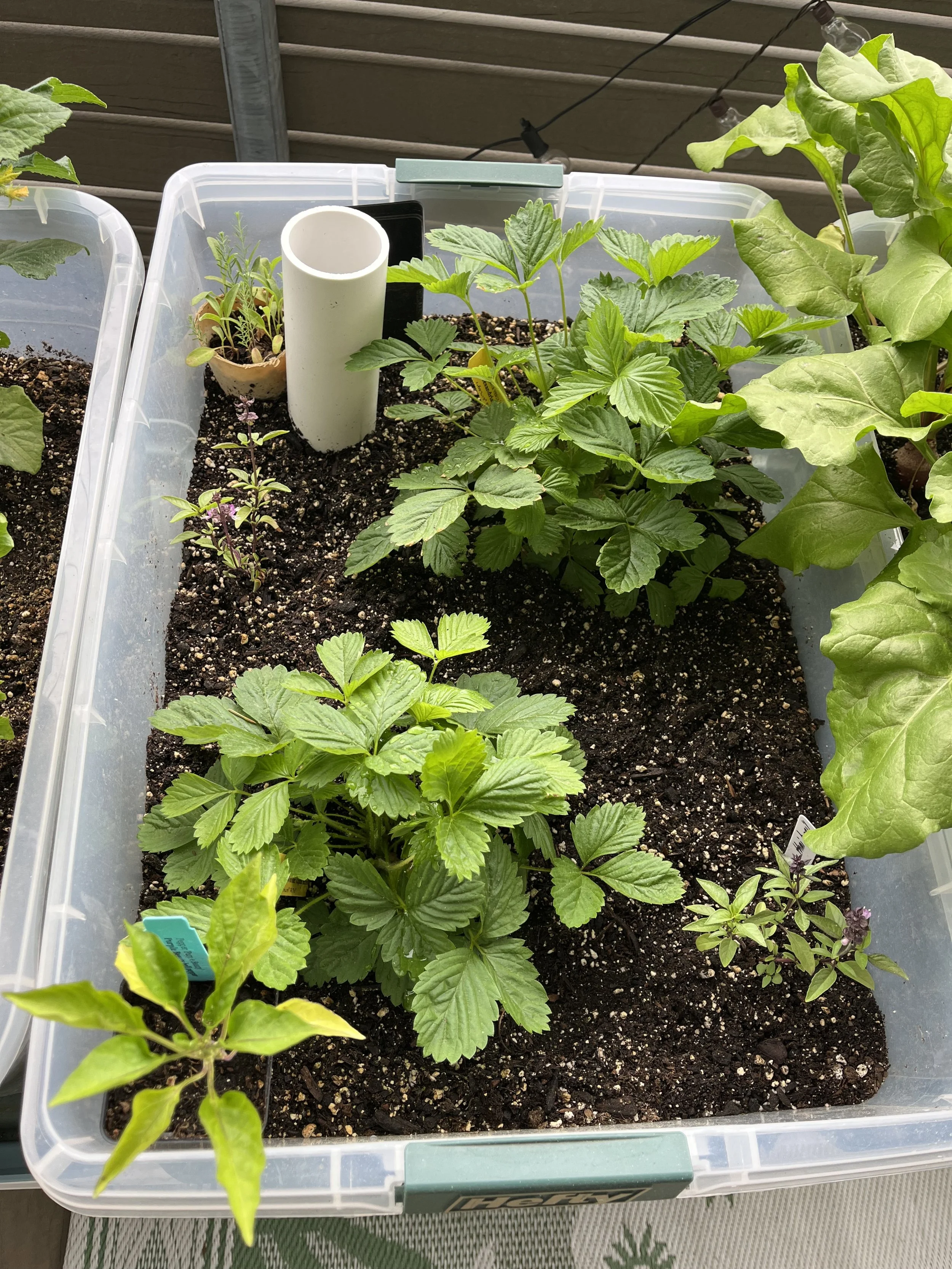
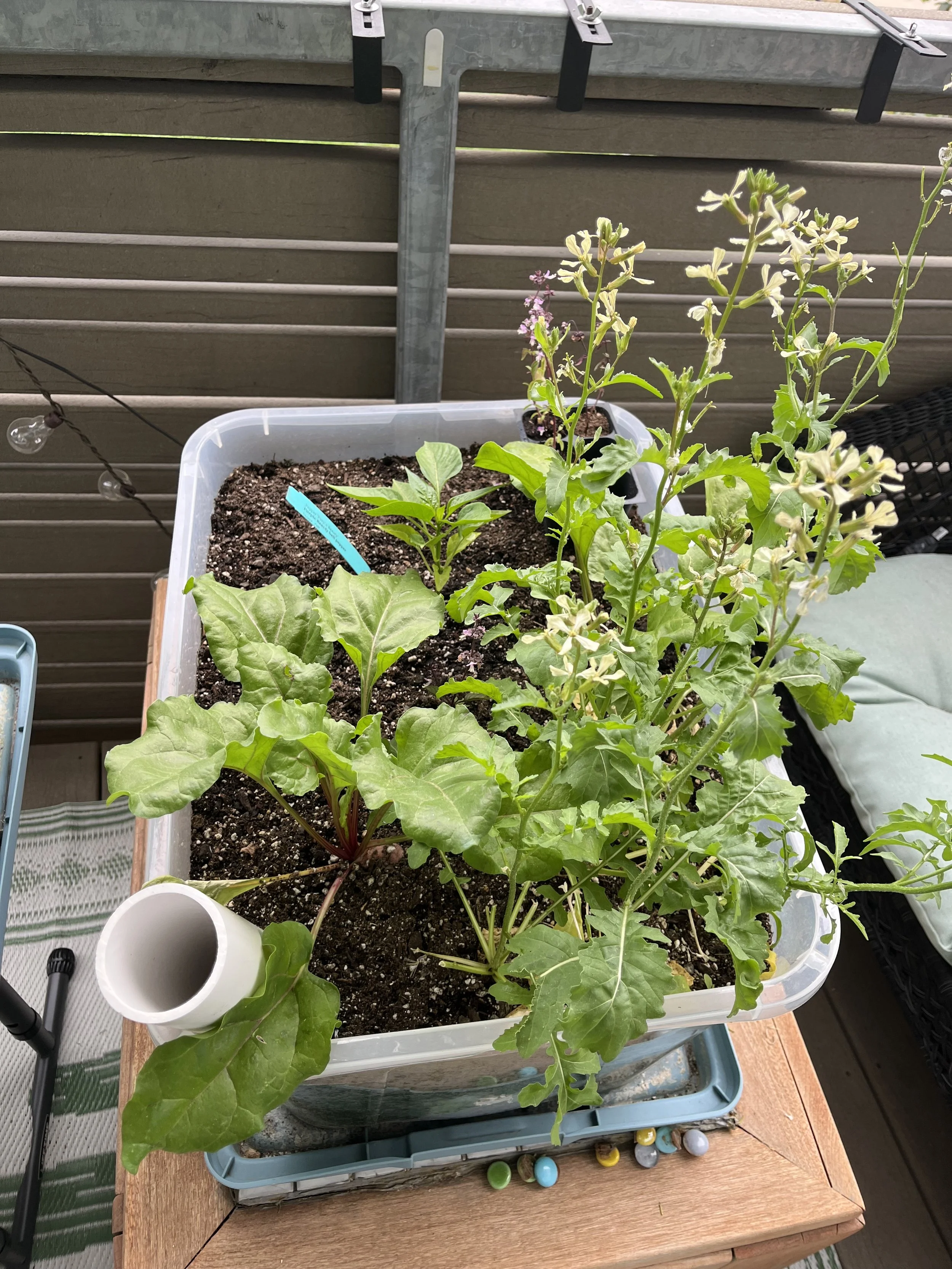
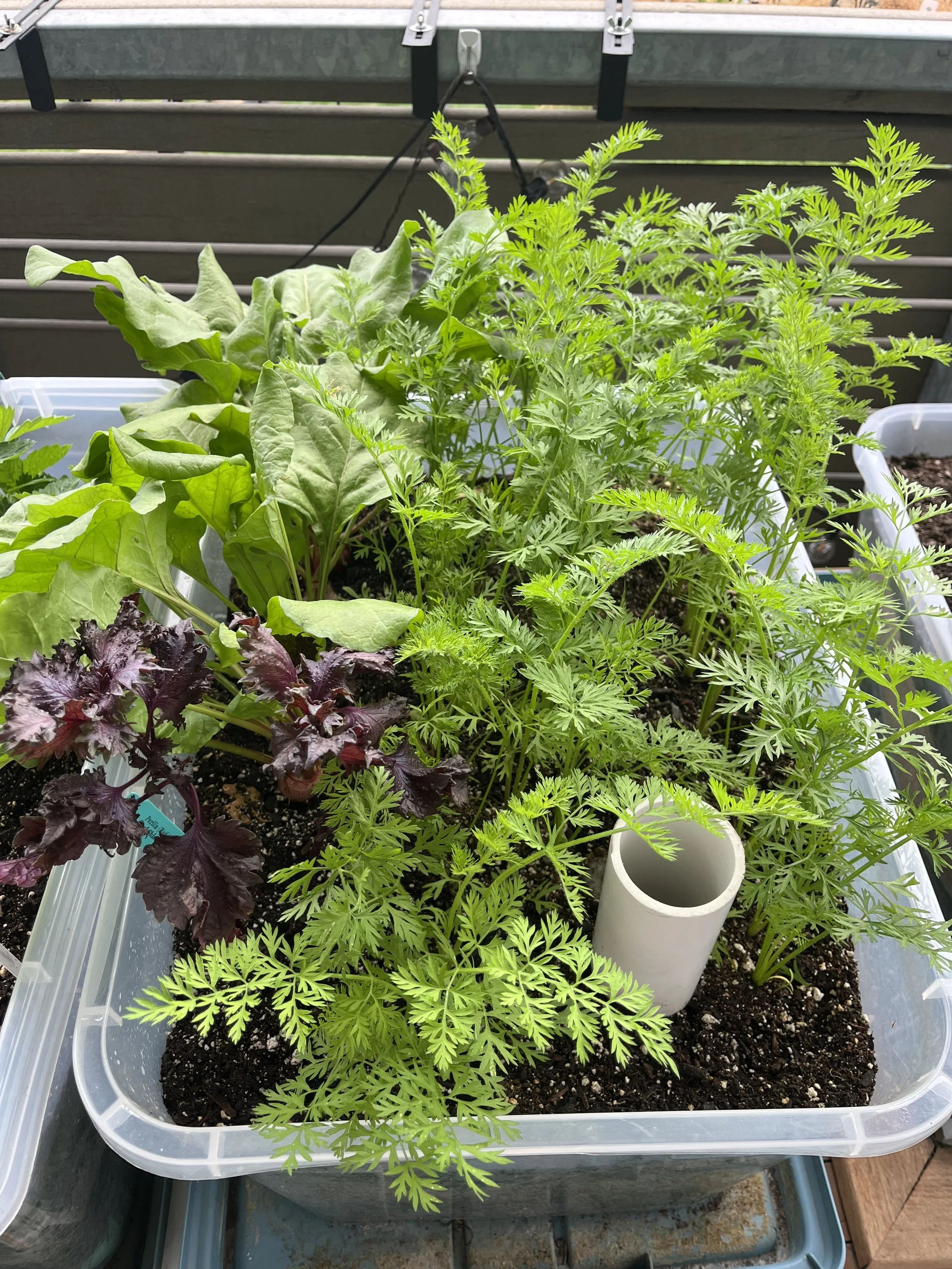
It is now June, and I transplanted my herbs to their garden boxes. I added German Chamomile, Red Shiso Leaf, and Parsley. My thai basil from Backyard Roots bolted and is now flowering. The leaves never got to a usable size, so I don’t think I will repurchase that again. My greens harvests have been bountiful! I have harvested over a pound of arugula and romaine so far. My arugula bolted, so I am leaving some with flowers for pollinators and to harvest the seeds for next year, and will be taking out the rest and replacing them with purple beauty bell peppers. I’ll have to add some nitrogen back, so I’ll put more soil on top and add some natural fertilizer. My romaine has grown back completely without resowing, and I plan to harvest at least another pound of greens from those two plants. My raspberries are beginning to turn pink, and I have harvested at least 15 berries so far. I have a baby cucumber forming, and she finally started to grow tall enough to use the trellis. My strawberries are beginning to bush out, and my red alpine has two flowers that are turning into little strawberries already. My yellow alpine has yet to flower, but I feel it coming soon. My beets and carrots are looking taller and taller each day, and I can see the root bulbs of the beets beginning to form. I’m worried that I may need to thin my carrots again to actually get the carrots to form, but I don’t want to thin them if it’s not necessary since I already did once when they were smaller.
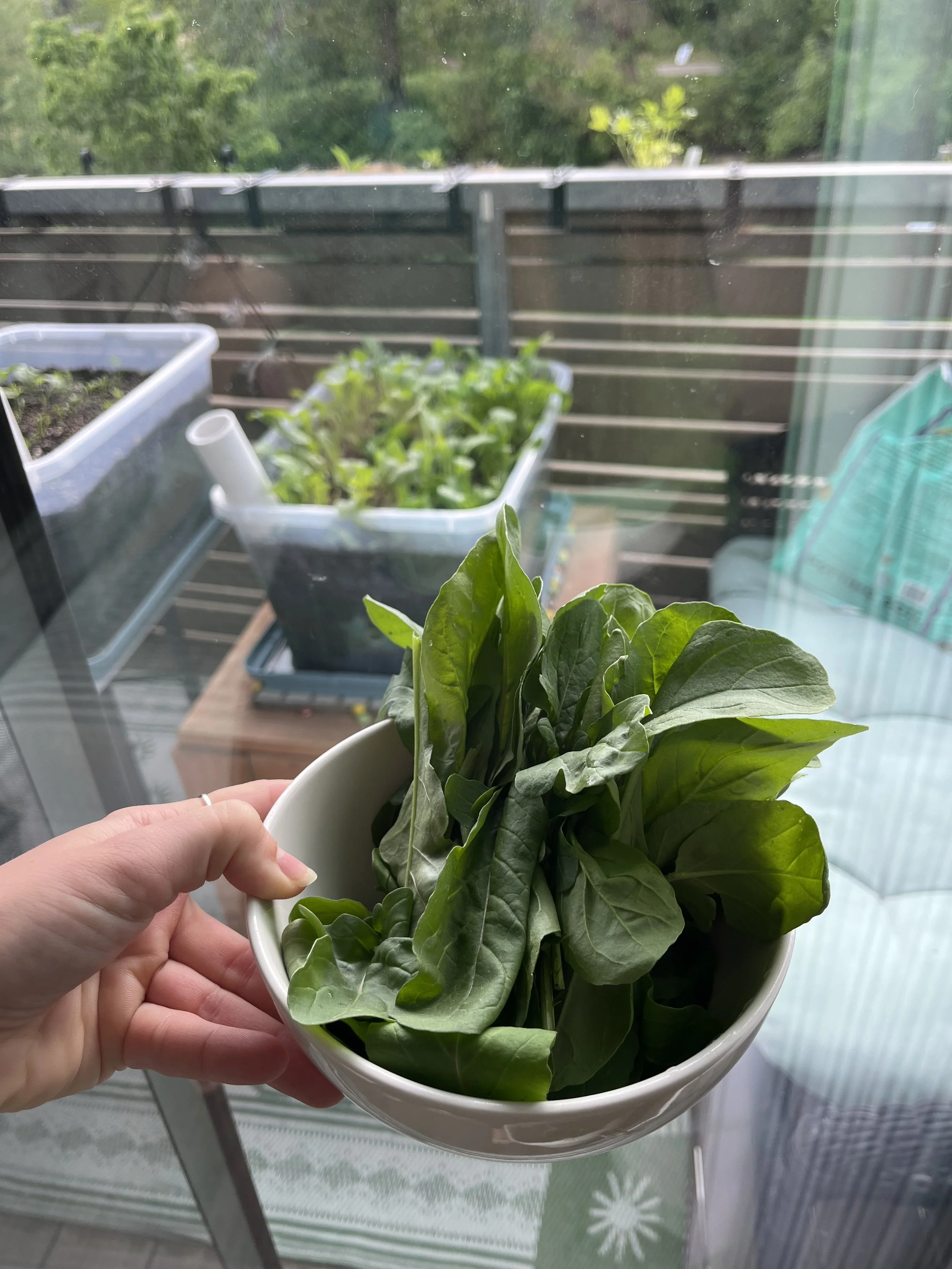
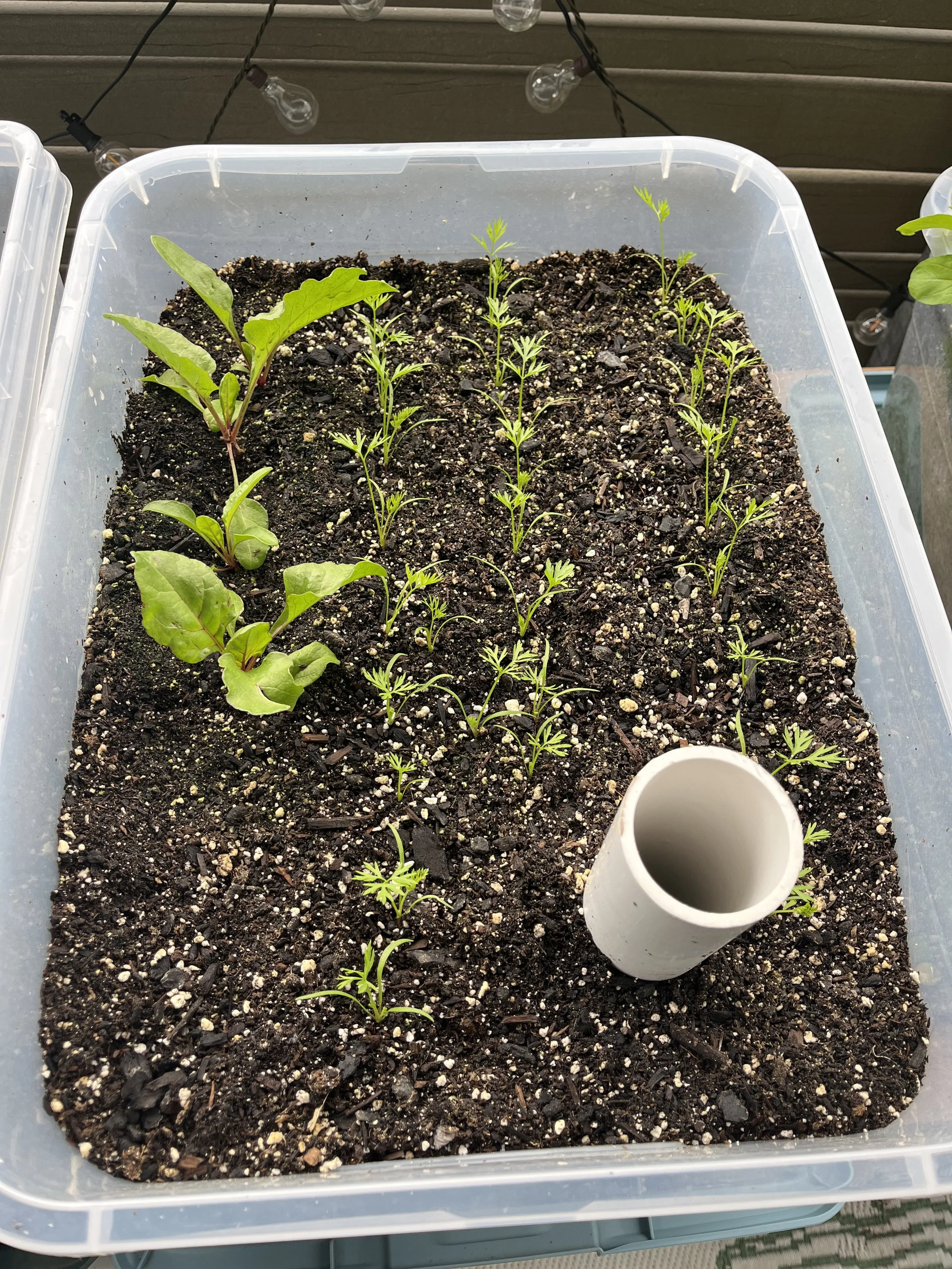
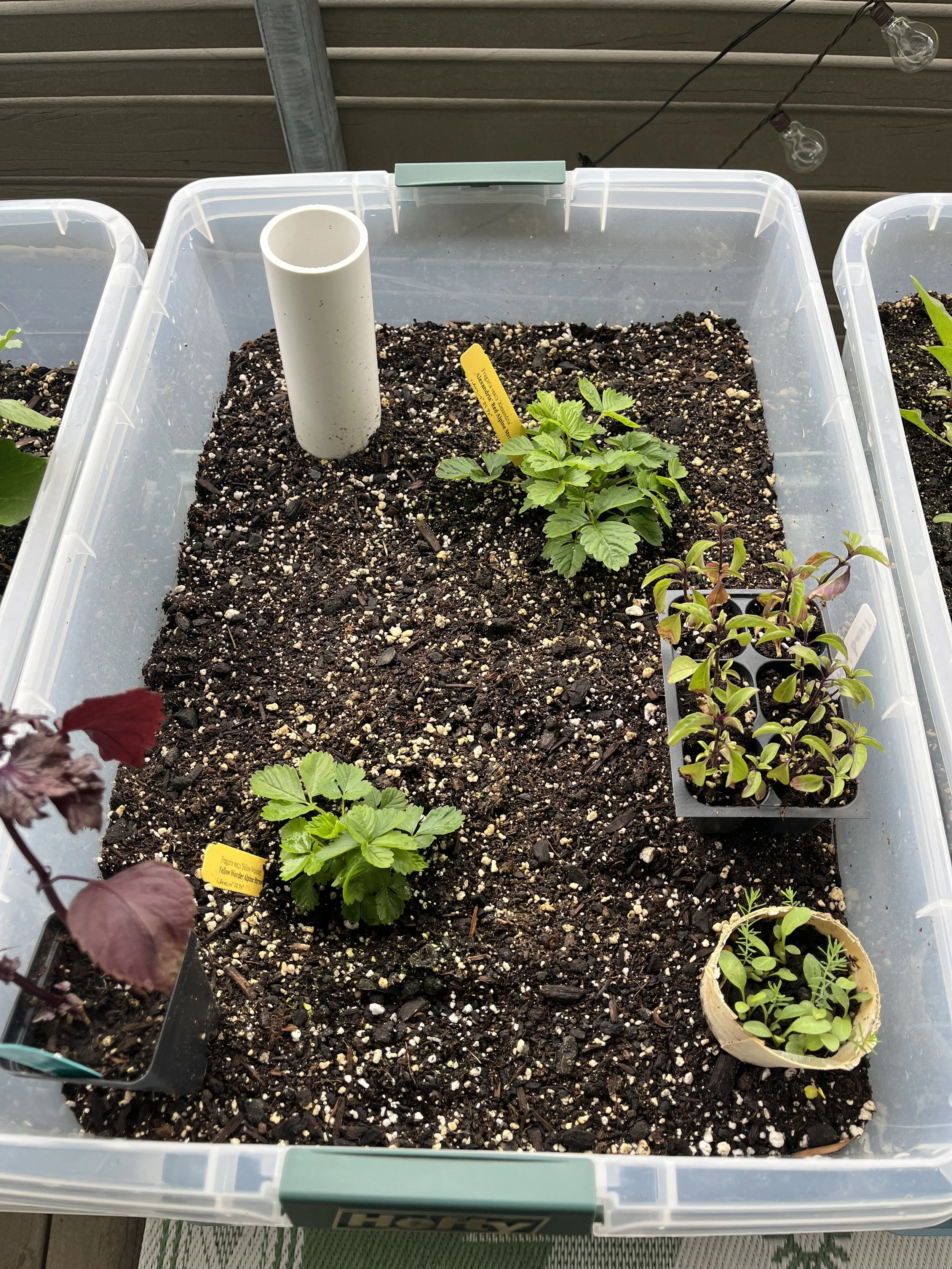
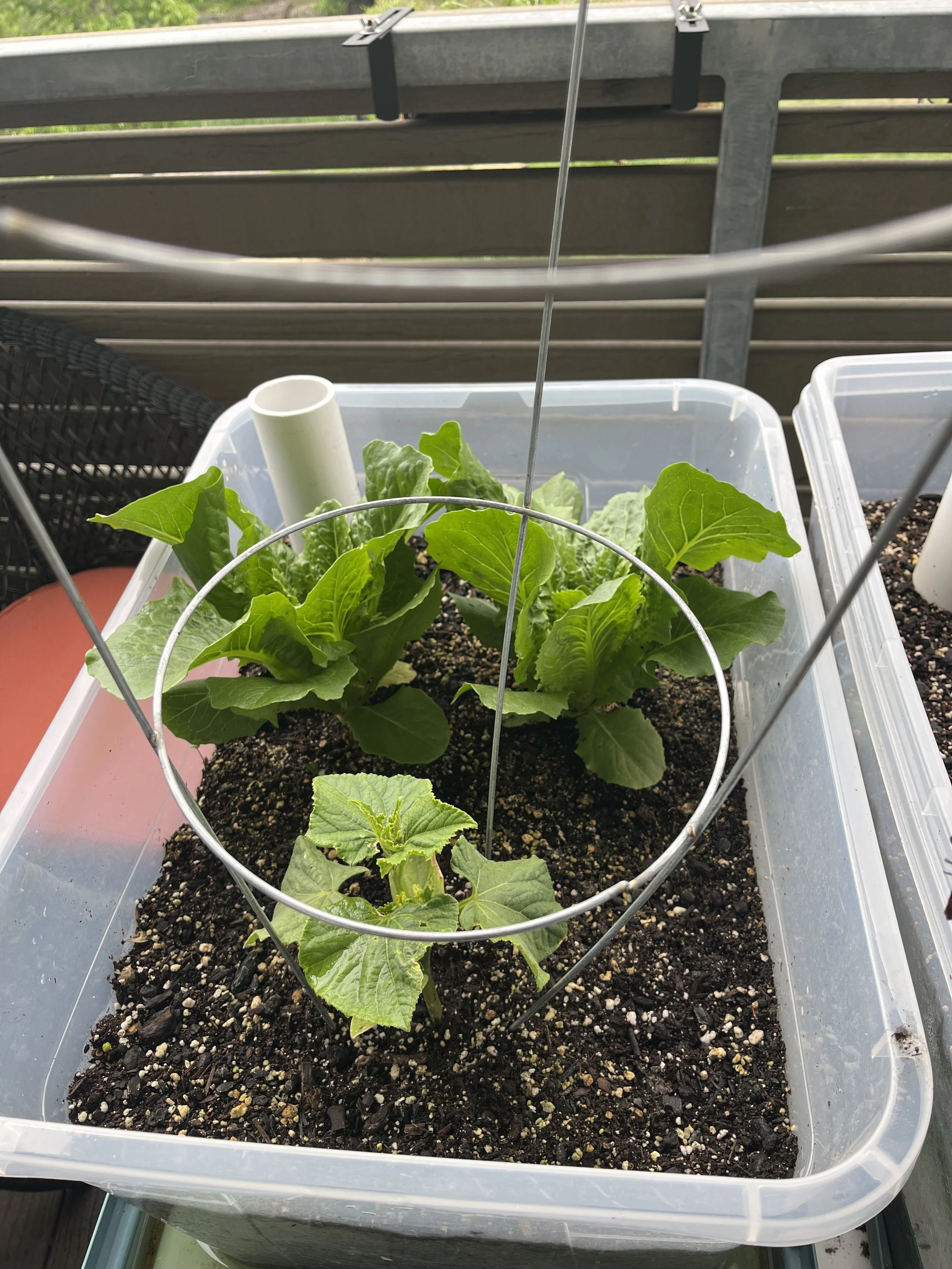
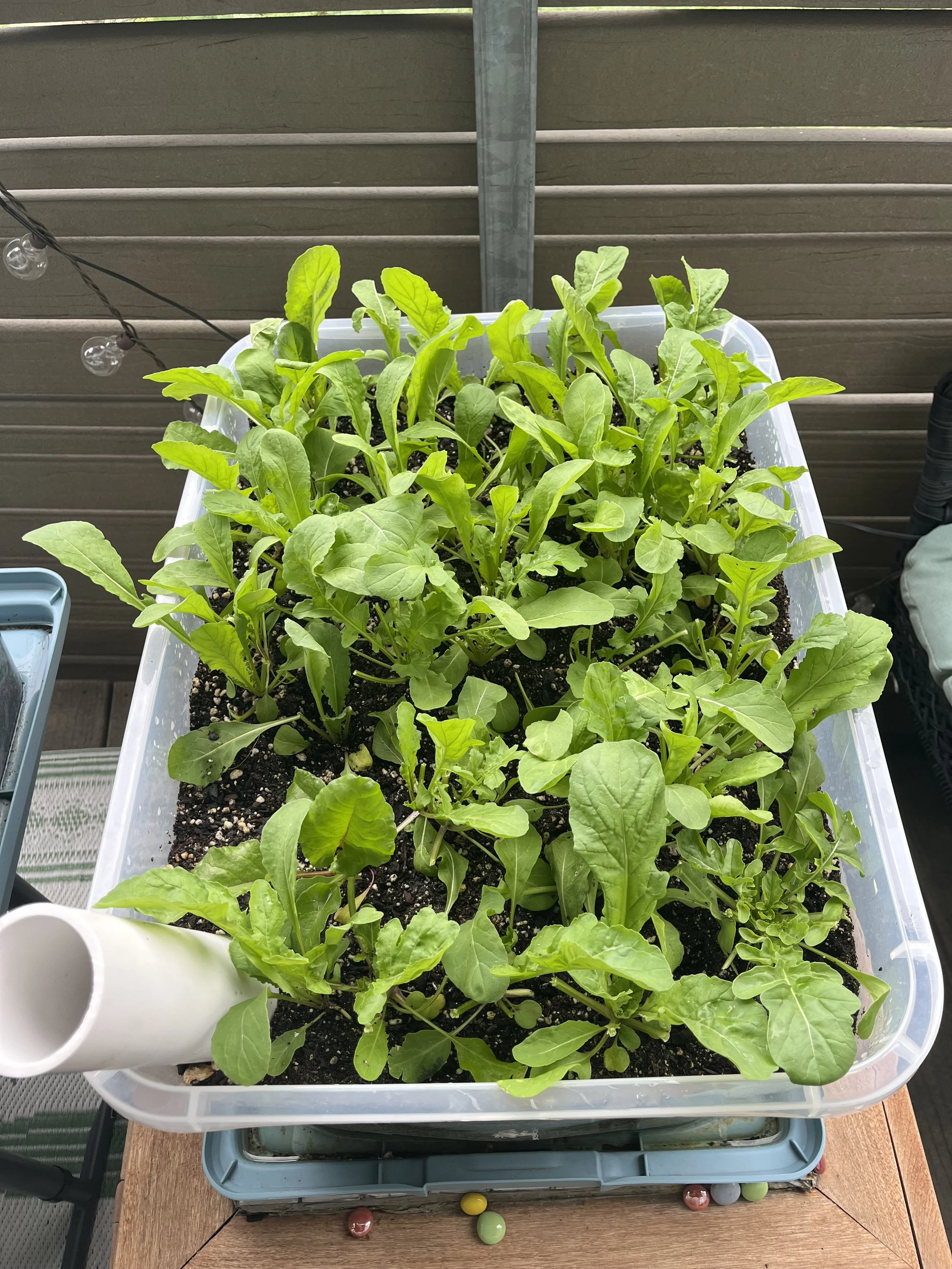
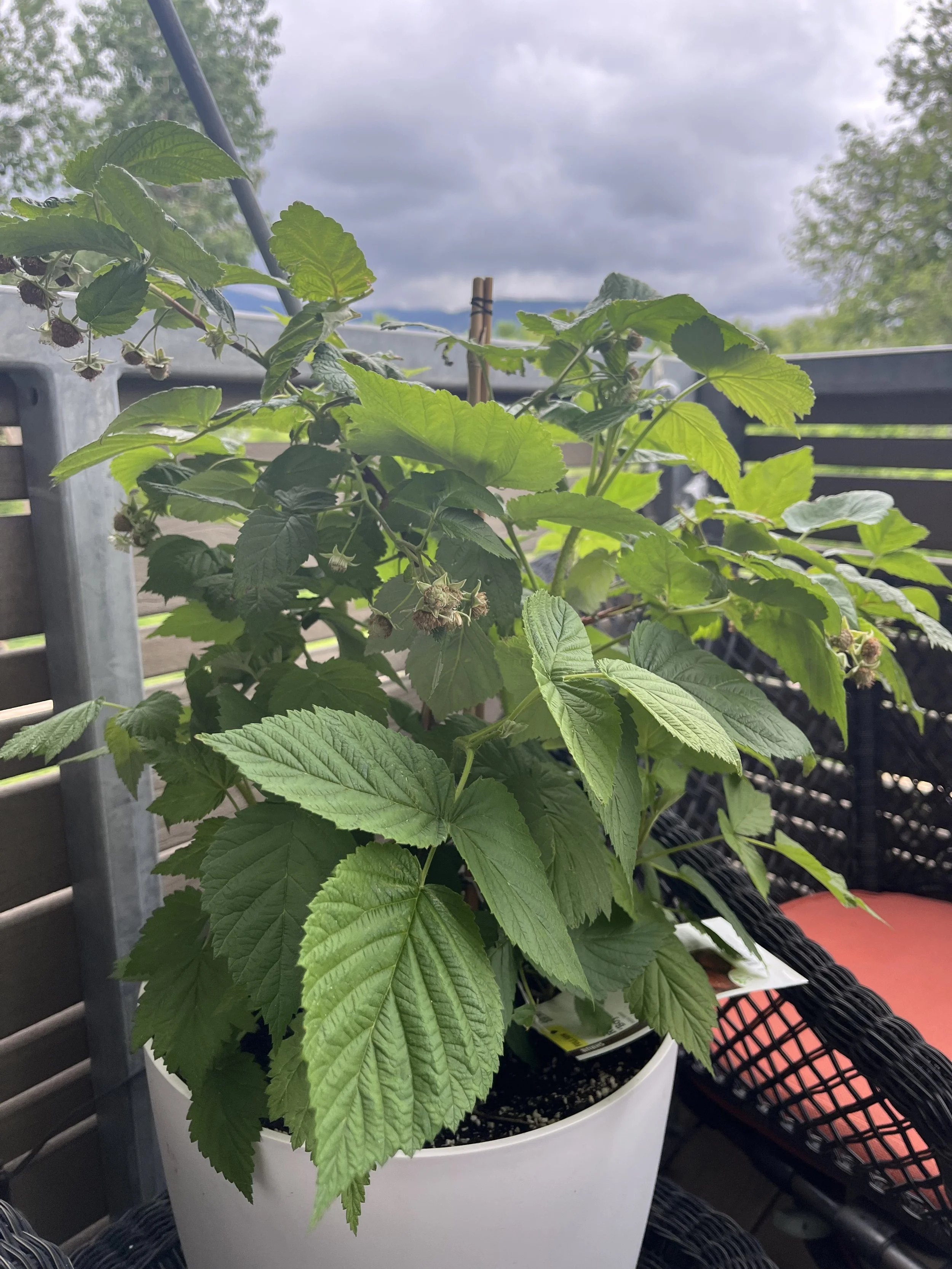
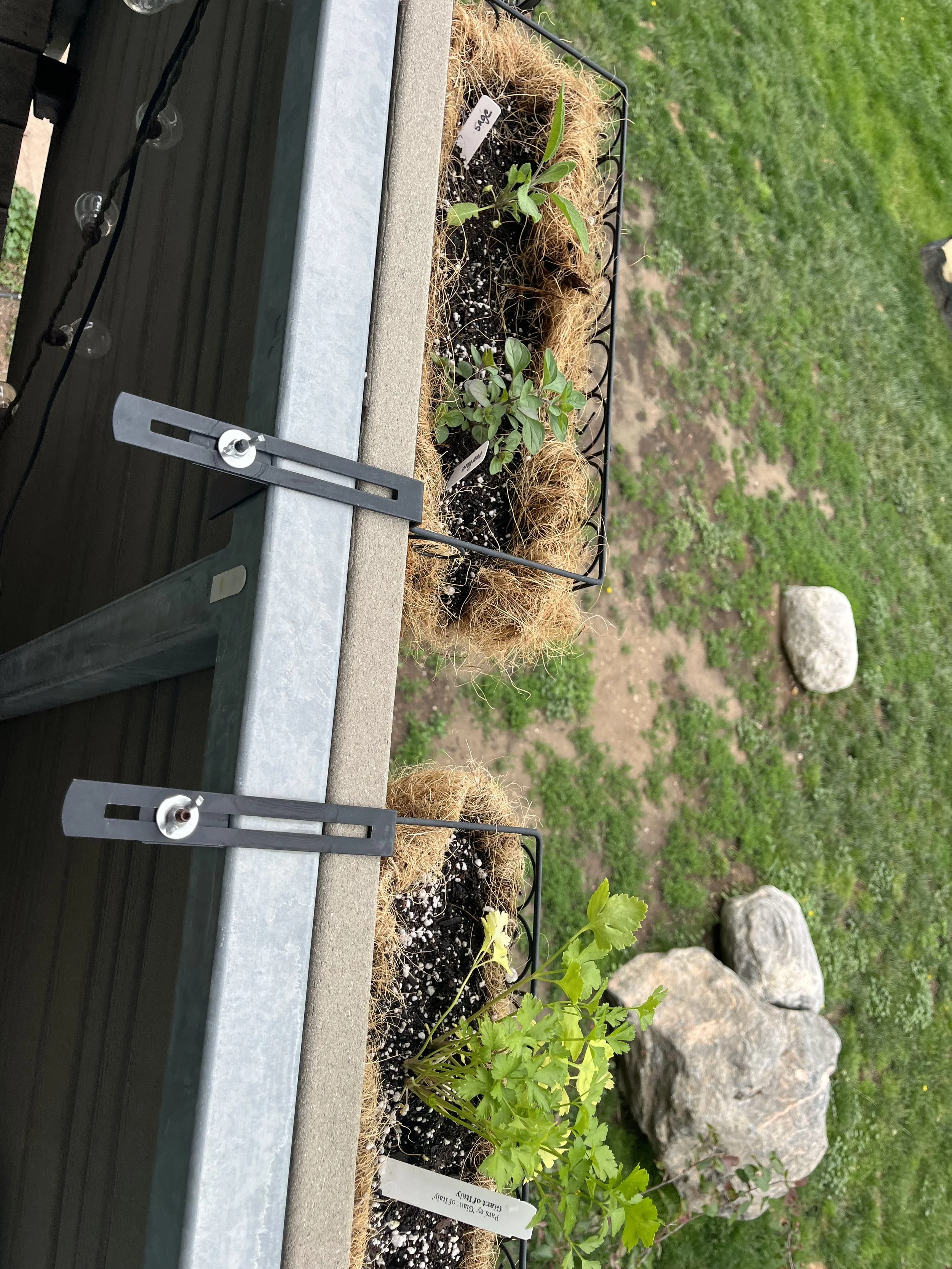
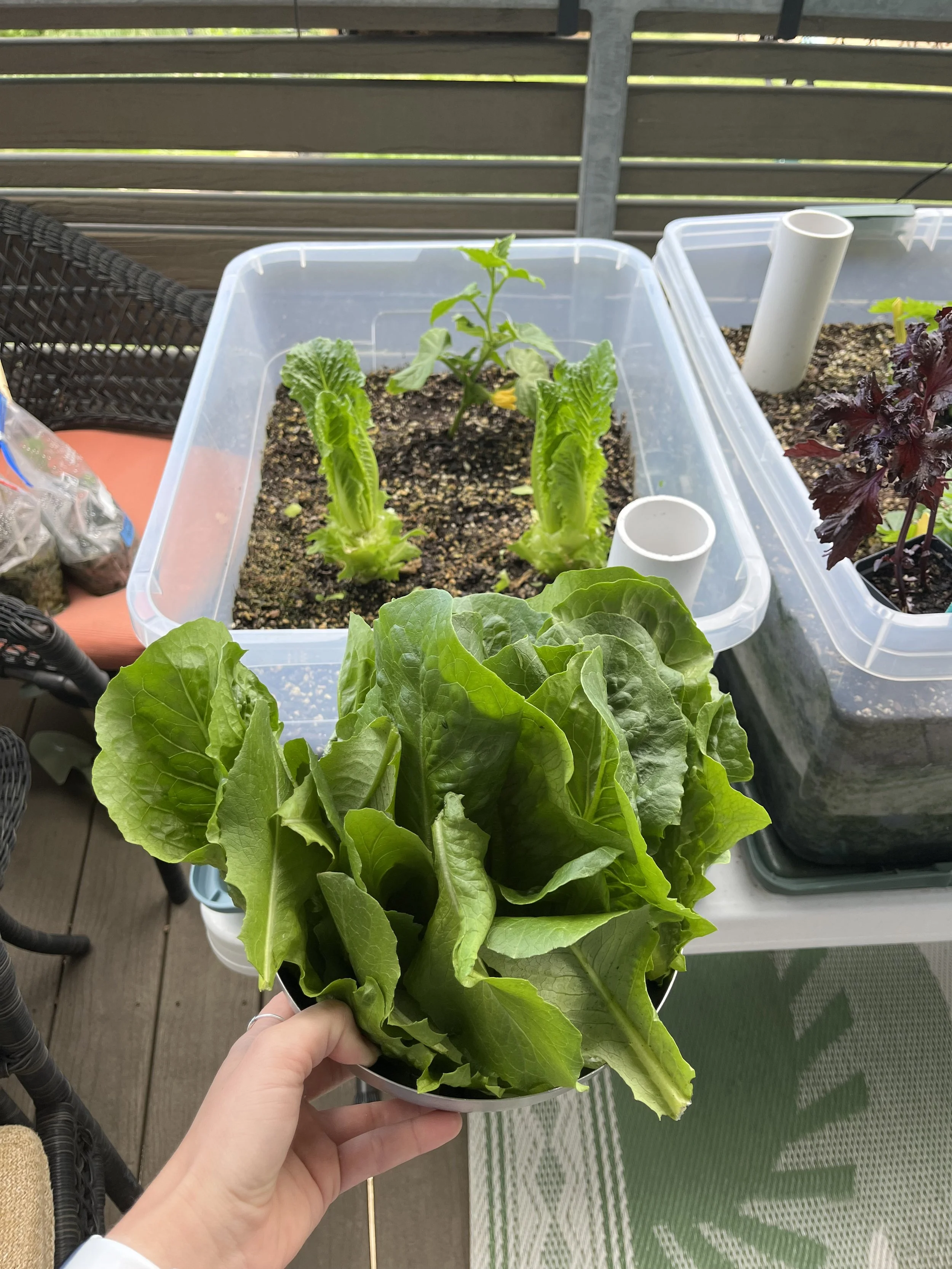
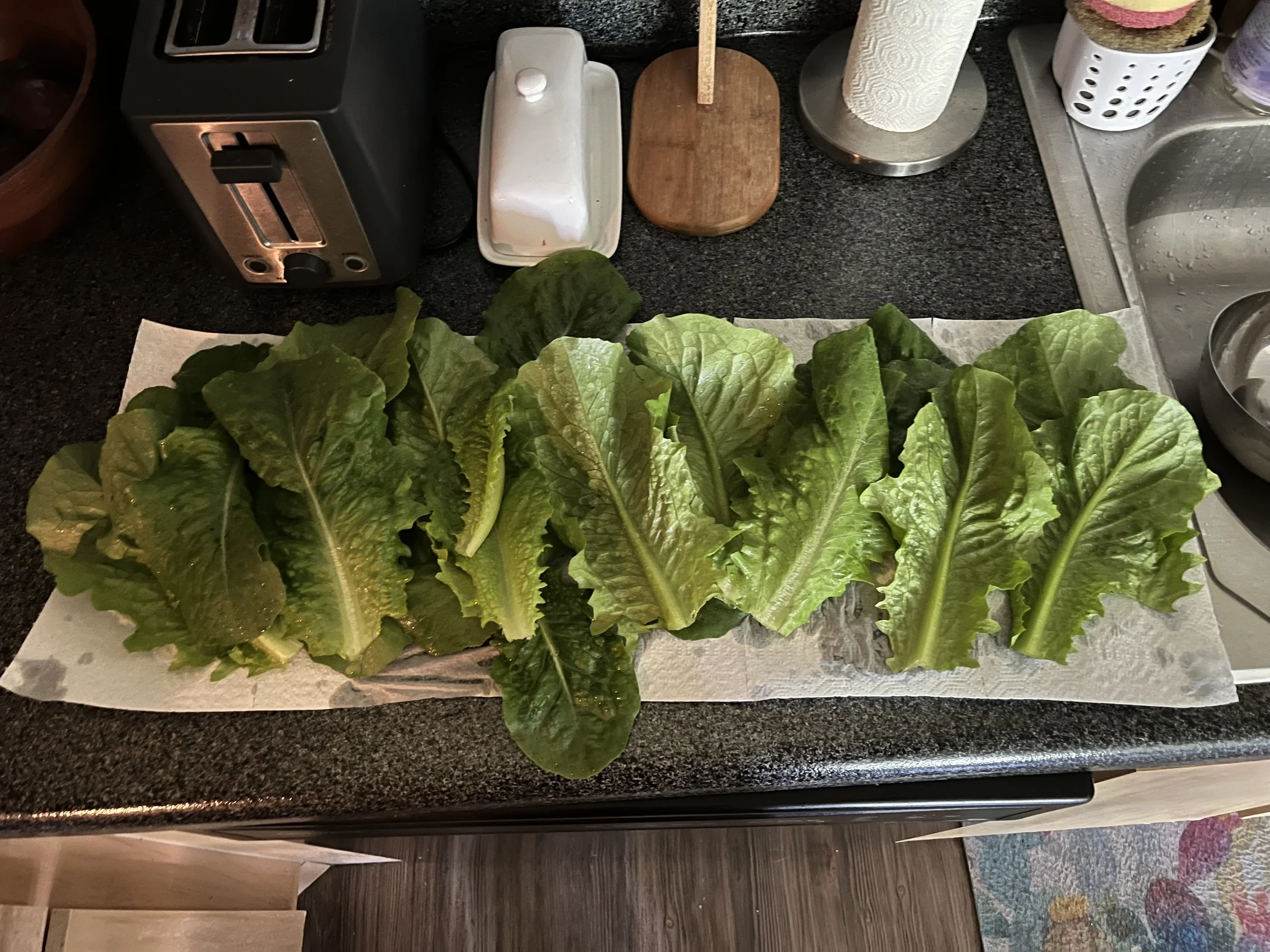
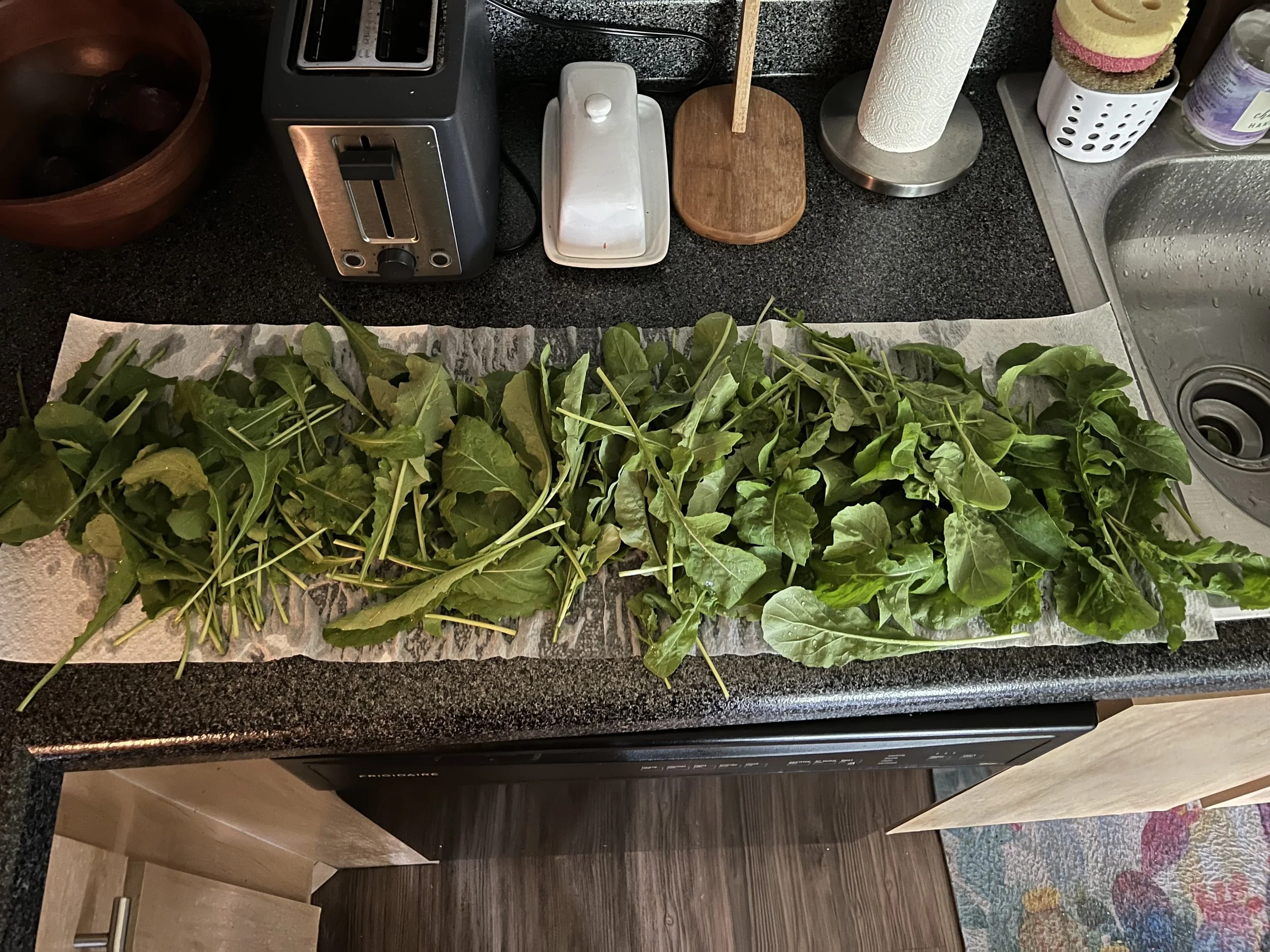
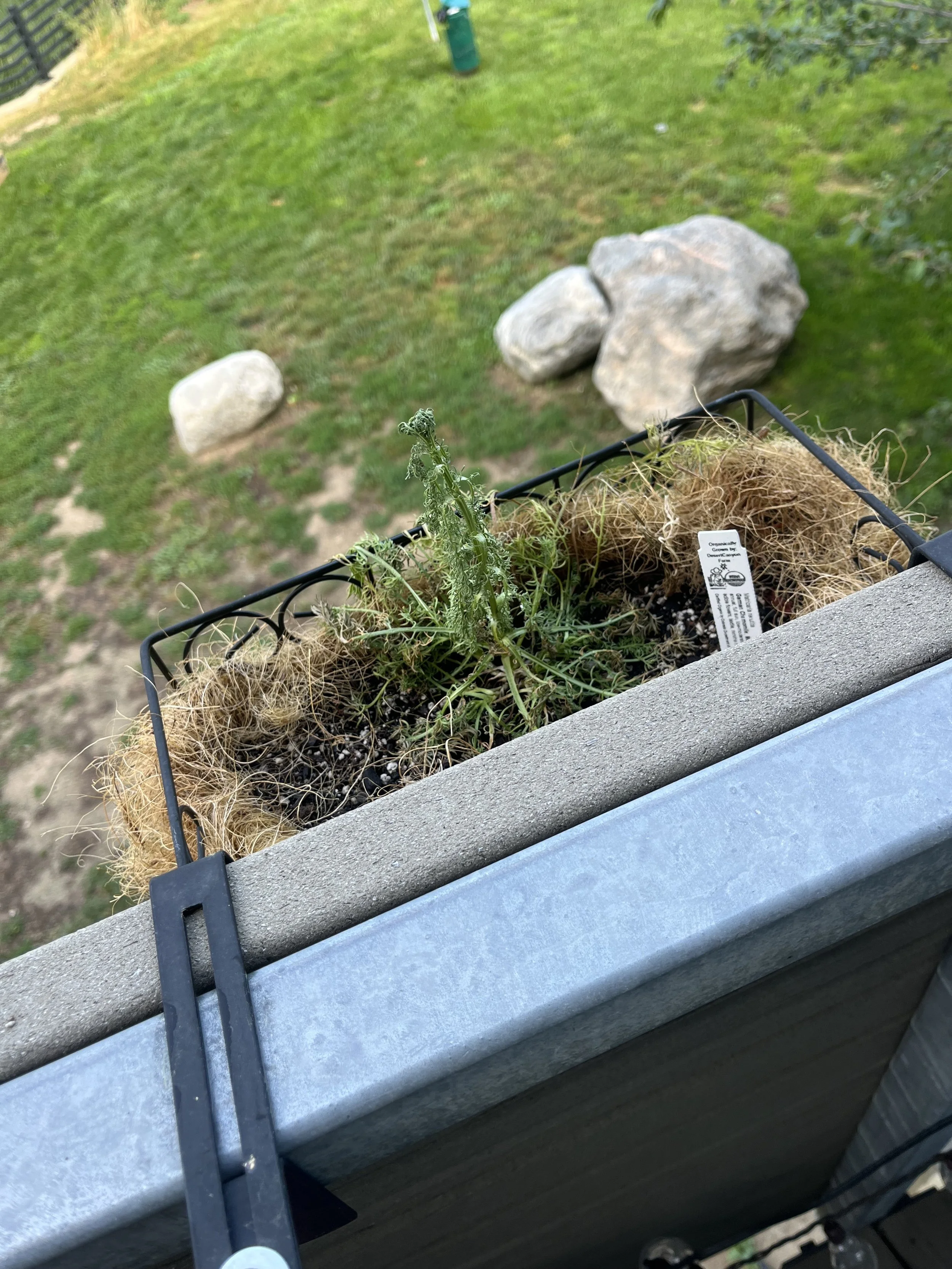
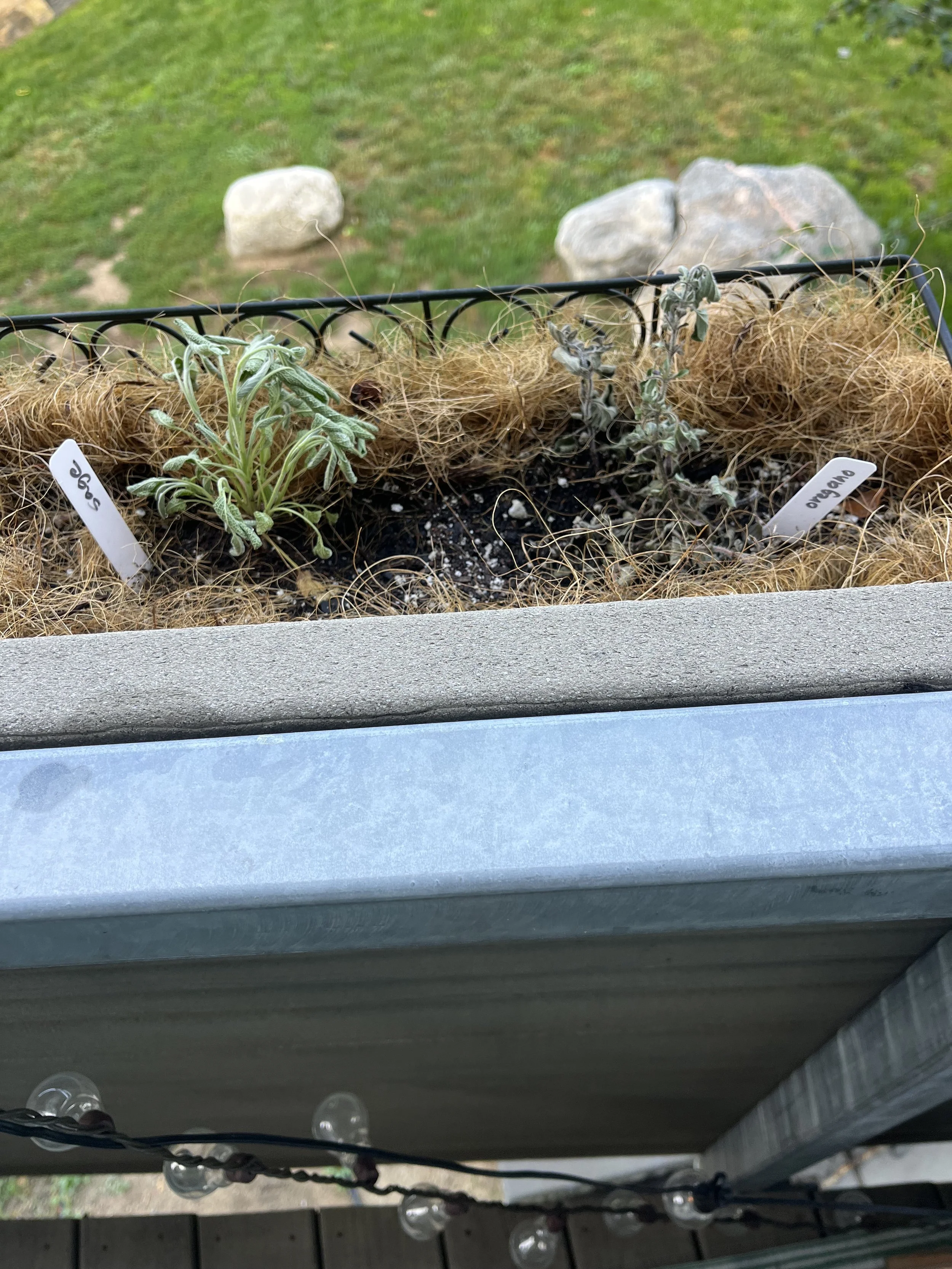
As far as the self-watering containers go, I don’t know how effective they are at holding and distributing moisture in the soil. Since days are getting hotter, I’ve noticed that my plants need quite a bit of water to stay moist, and since I drilled holes in the bottom of my containers at the beginning of the season, they are not holding water the way they should. My herbs visibly wilt if they are dry, so keeping an eye on those has been a real task, and my chamomile really doesn’t want to survive in that small balcony box. It takes a while to water each container, since I only have a half gallon size watering can. I’d like to purchase a kitchen sink attachment for a hose to see if I could access water that way, which would make life just a little easier.
I have not witnessed any pollinators on my balcony this season yet. I still have hope that I may be able to catch one in the early morning or hot afternoon when the direct sun is on my crops. I’m realizing that the plants I chose (mostly leafy) don’t attract many pollinators, with the exception of cucumbers, strawberries, and raspberries. I bought a mason bee nest ($12 at Harlequins) to encourage native bees to rest on my balcony, but I’m not sure how effective this will be, as most native bees are ground nesting, and they like to stay close to the ground. My native plants (bee plant and coreopsis) that I planted in my neighbors mulch patch are doing so well! No flowers yet, but they’re growing tall and strong.
Late June
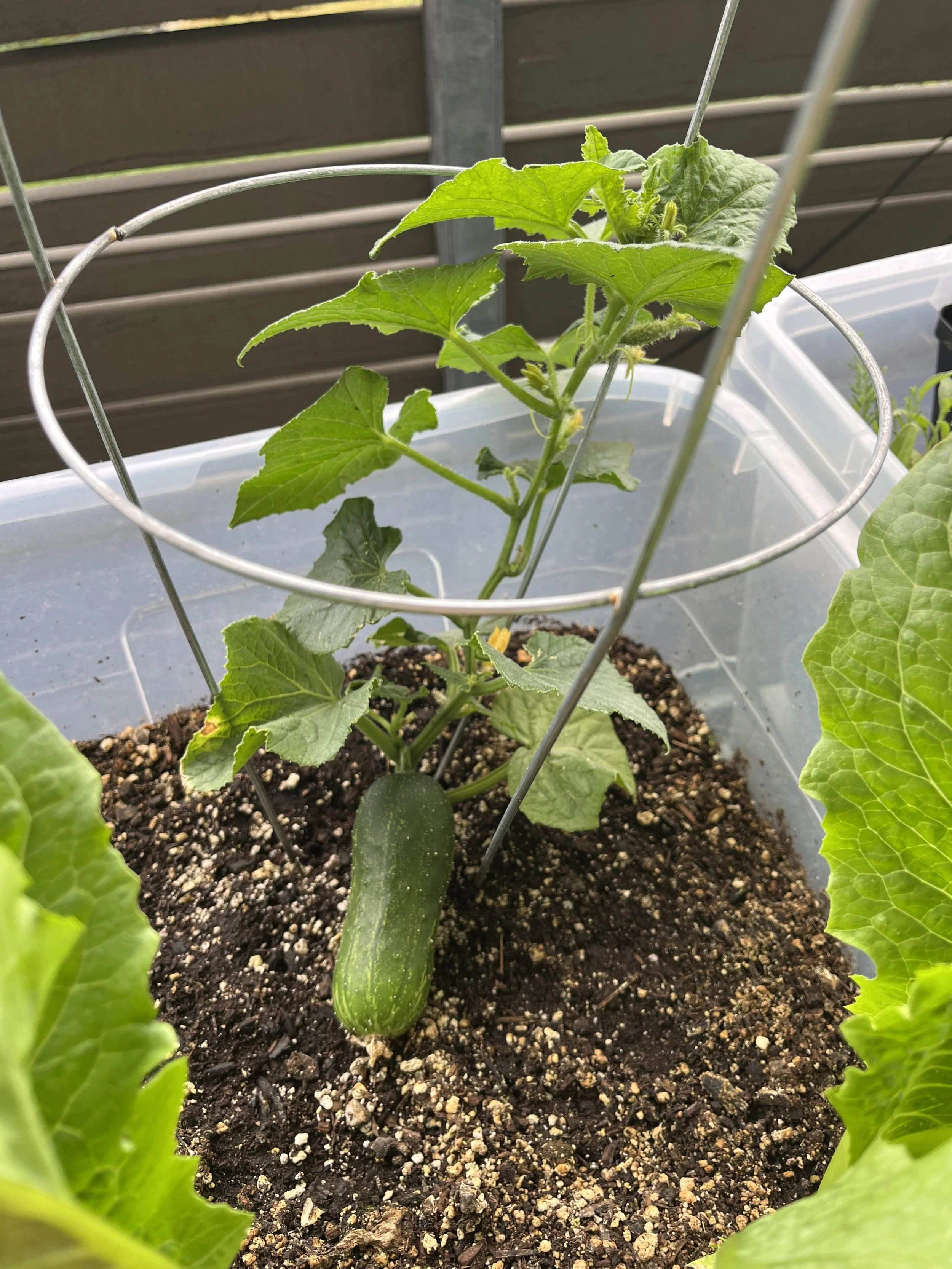
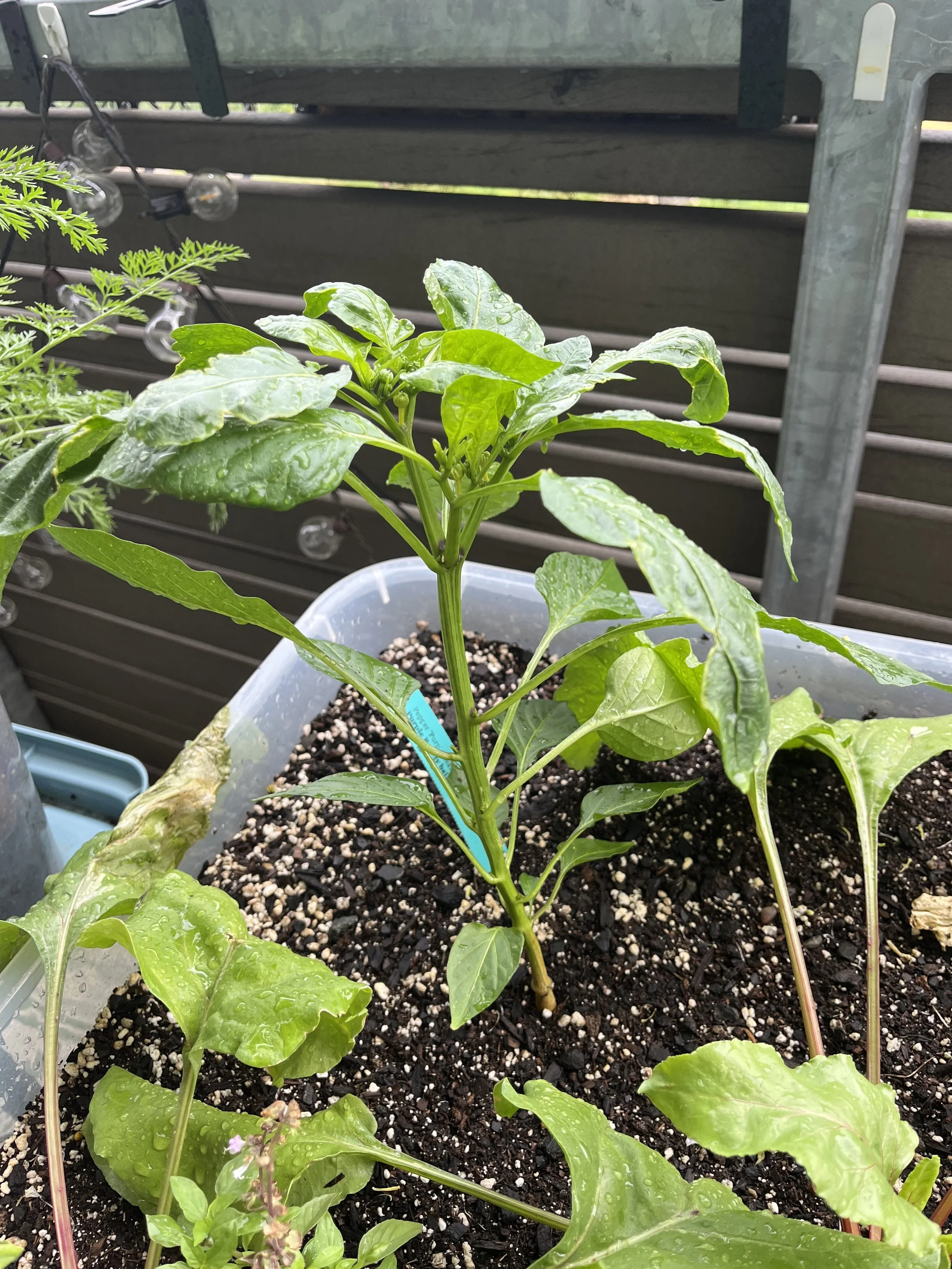
My coreopsis has buds! I can see them wanting to bloom, and I feel it coming very soon. My bee plant is growing taller, but no buds yet. On the veggie side, I have many cucumber flowers and one cucumber that is forming beautifully. Each morning, I’ll go out and find the ripe raspberries on my plant, and pick them for my morning oatmeal. It’s usually only 3-6 berries, but the flavor is so strong that it feels like more! My carrots and beets are flourishing! I can see the beet bulbs growing larger and larger by the day. I removed more than half of my bolted arugula and left some for the pollinators that enjoy their white flowers. In their place, I planted my purple beauty peppers, and they seem to be doing very well. I still have yet to see pollination in action from any bees, but I know it’s happening because my fruits and veggies are growing strong.
On the other hand, I left on a short vacation for 4 days and gave my partner instructions for watering my garden to be sure it survived, but unfortunately he forgot to water my herbs in planter boxes. 3 out of 4 of those plants are really struggling right now. My sage plant came right back, though. I see a flower trying to bloom from my chamomile, but the rest of the plant looks wilty and sad. I have a lot of hope that if I stay on top of watering her that she will come back! Those pesky herb plants need an abundance of care to stay alive, especially in their hot west facing position. If I were to do it again, I would probably recommend a shade mechanism for hot afternoon or morning sun, and more hearty/heat tolerant herbs like sage for beginners like myself.
Late July
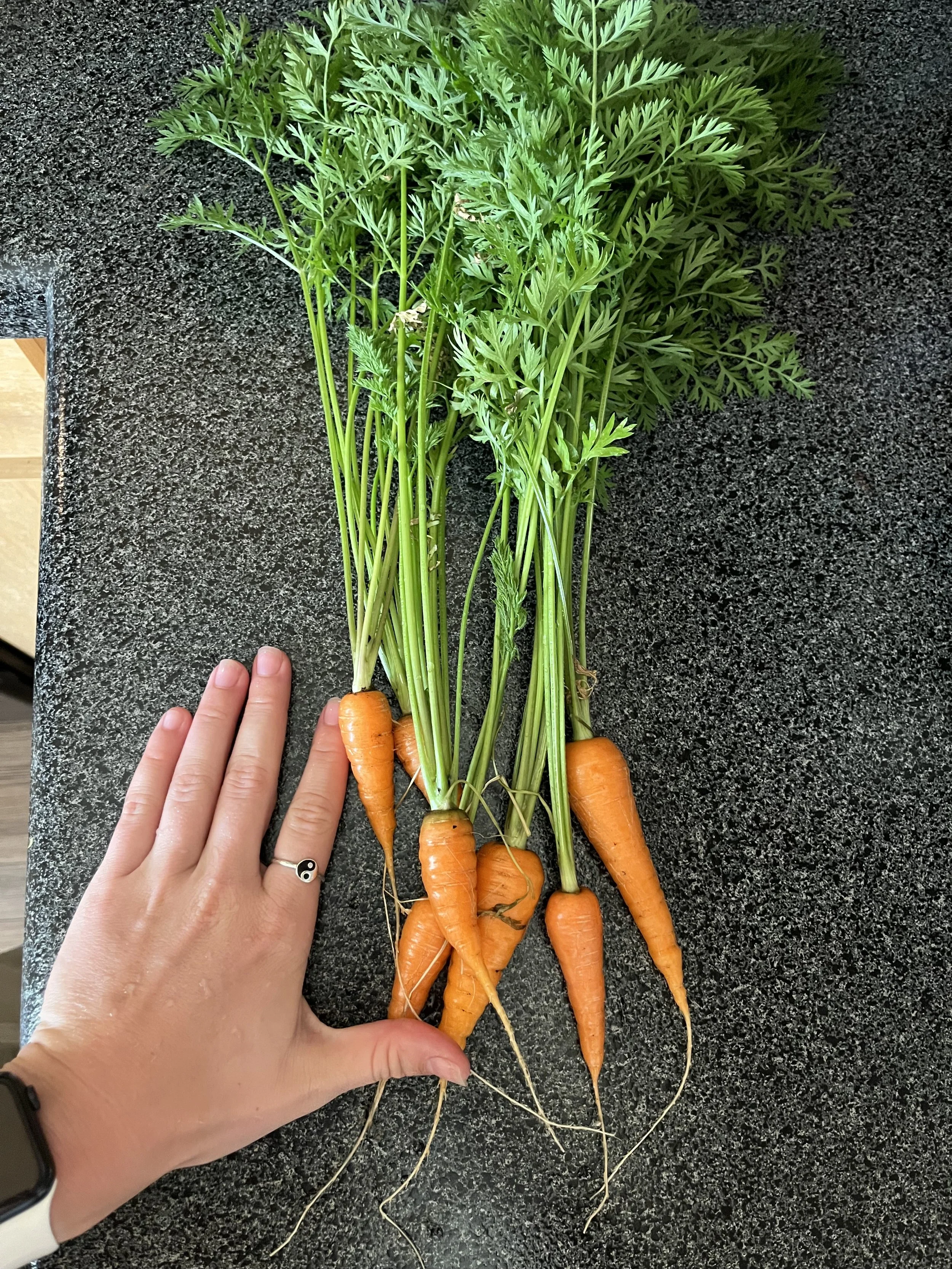
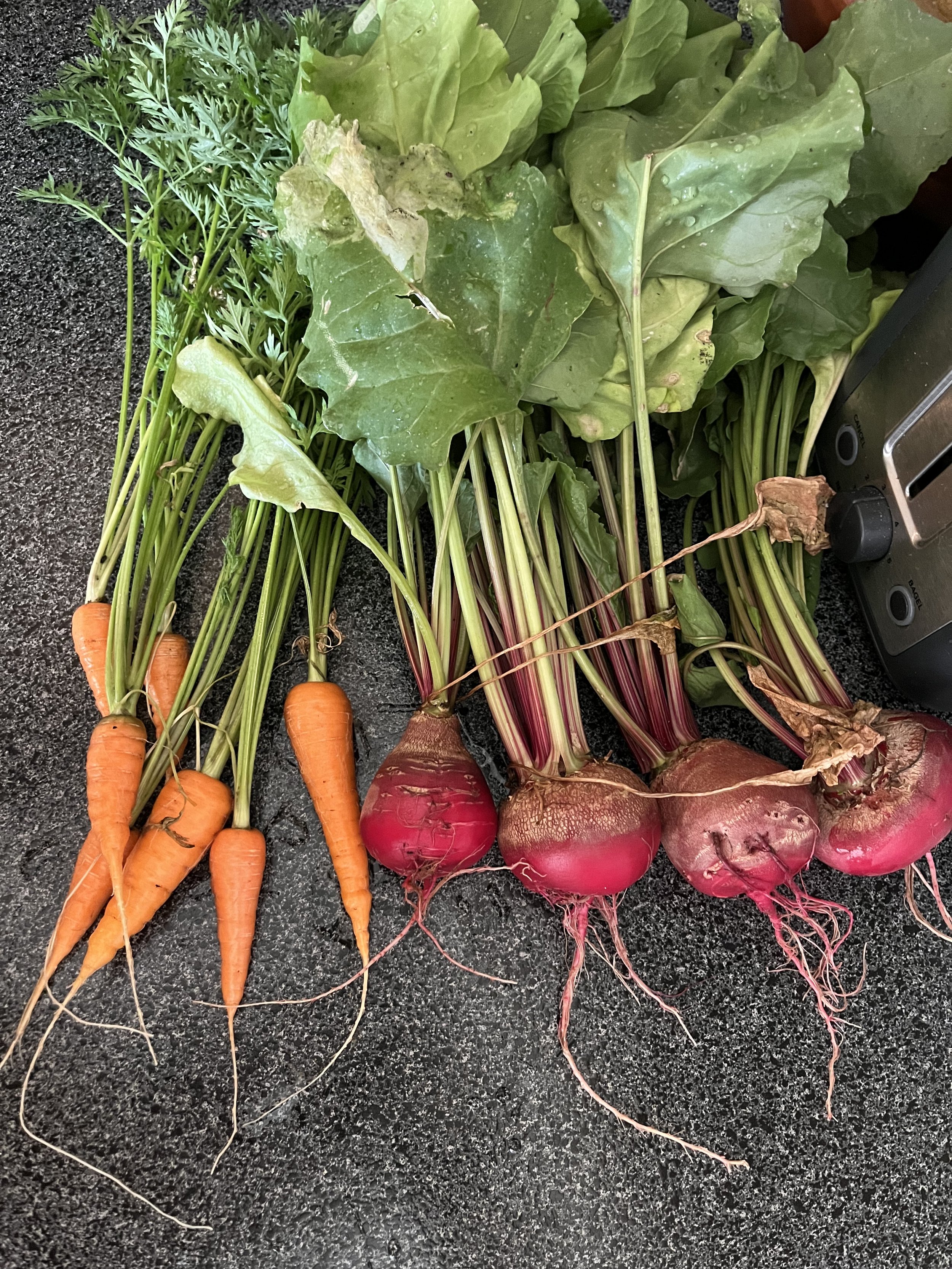
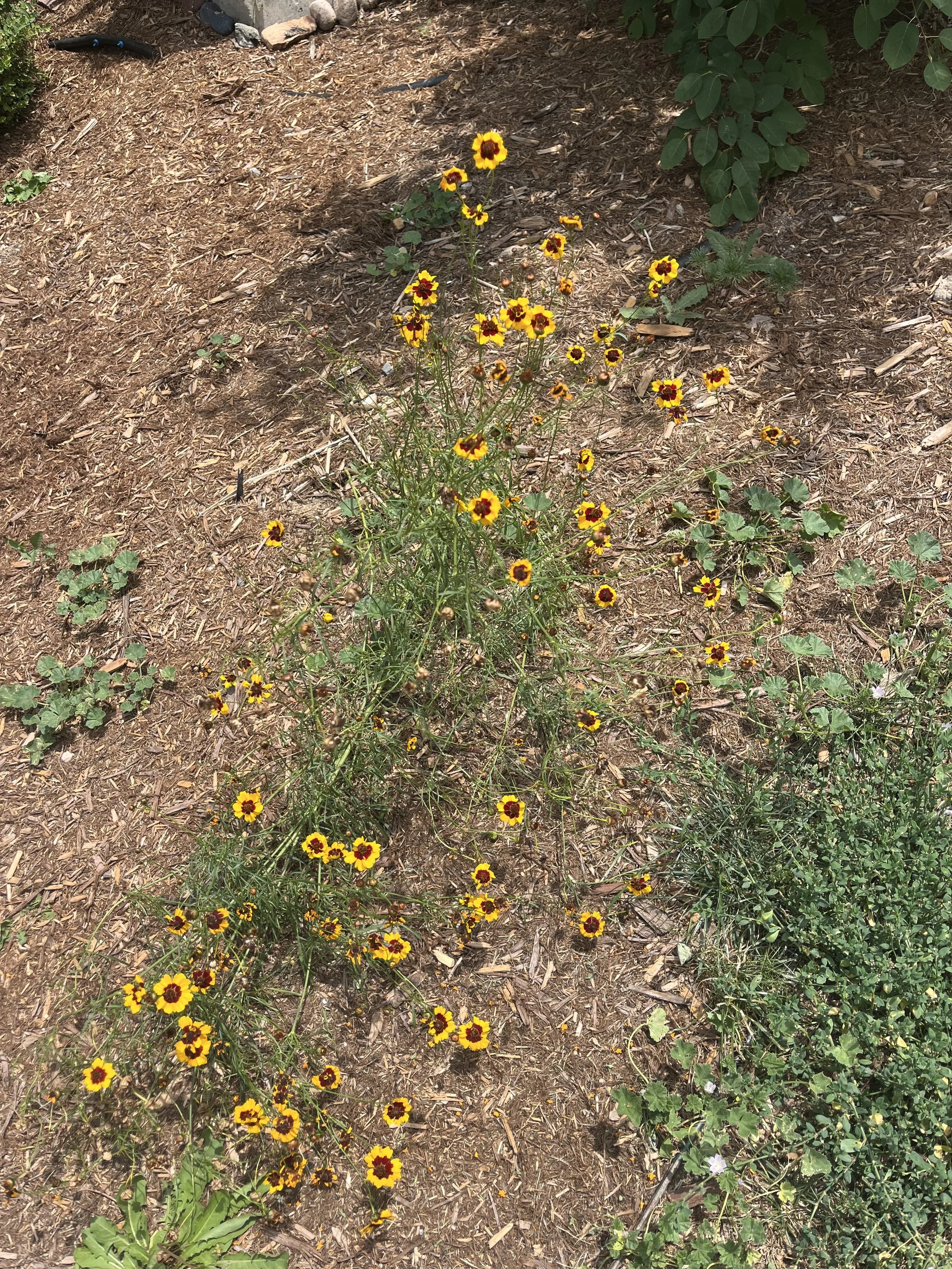
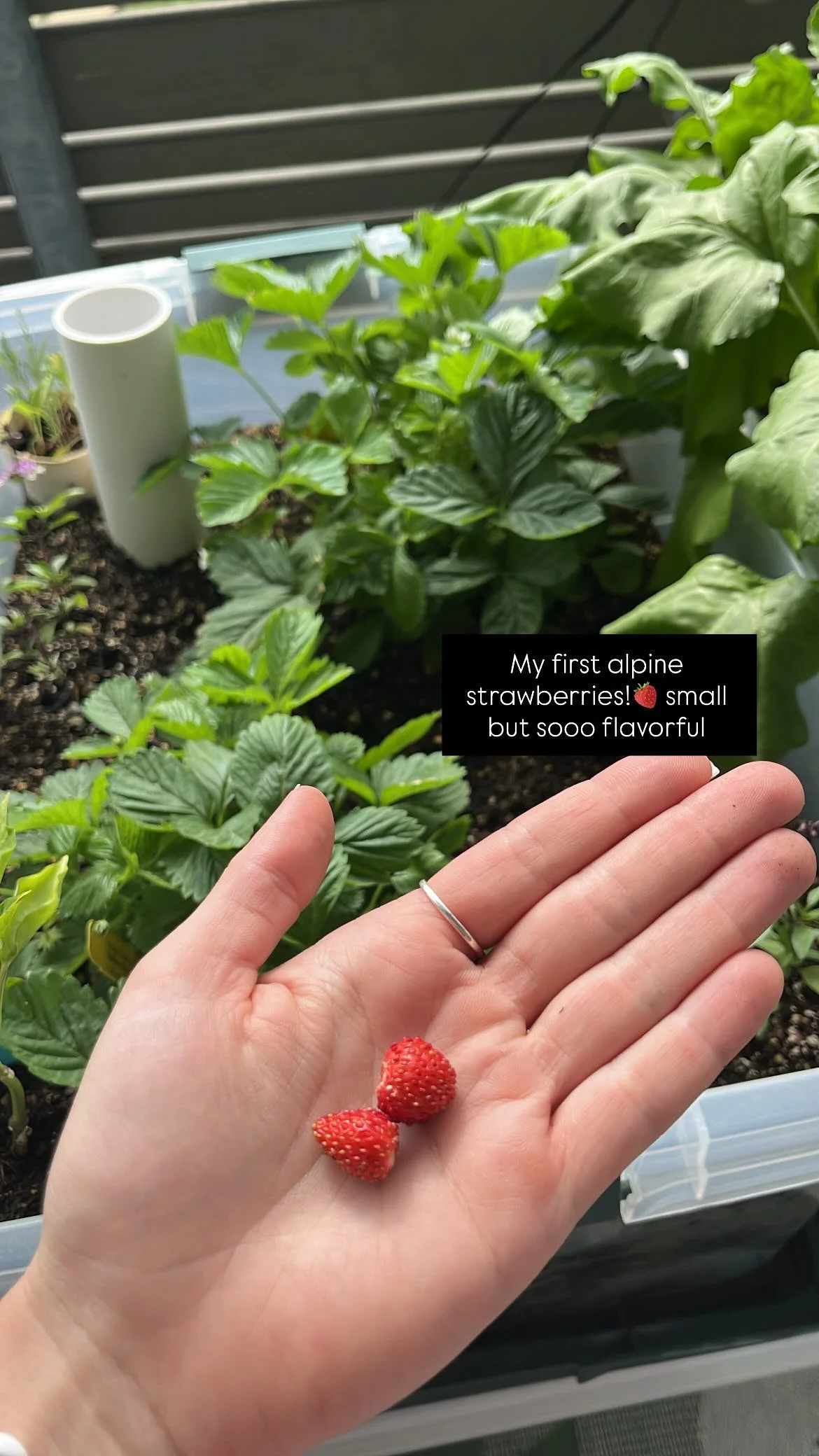
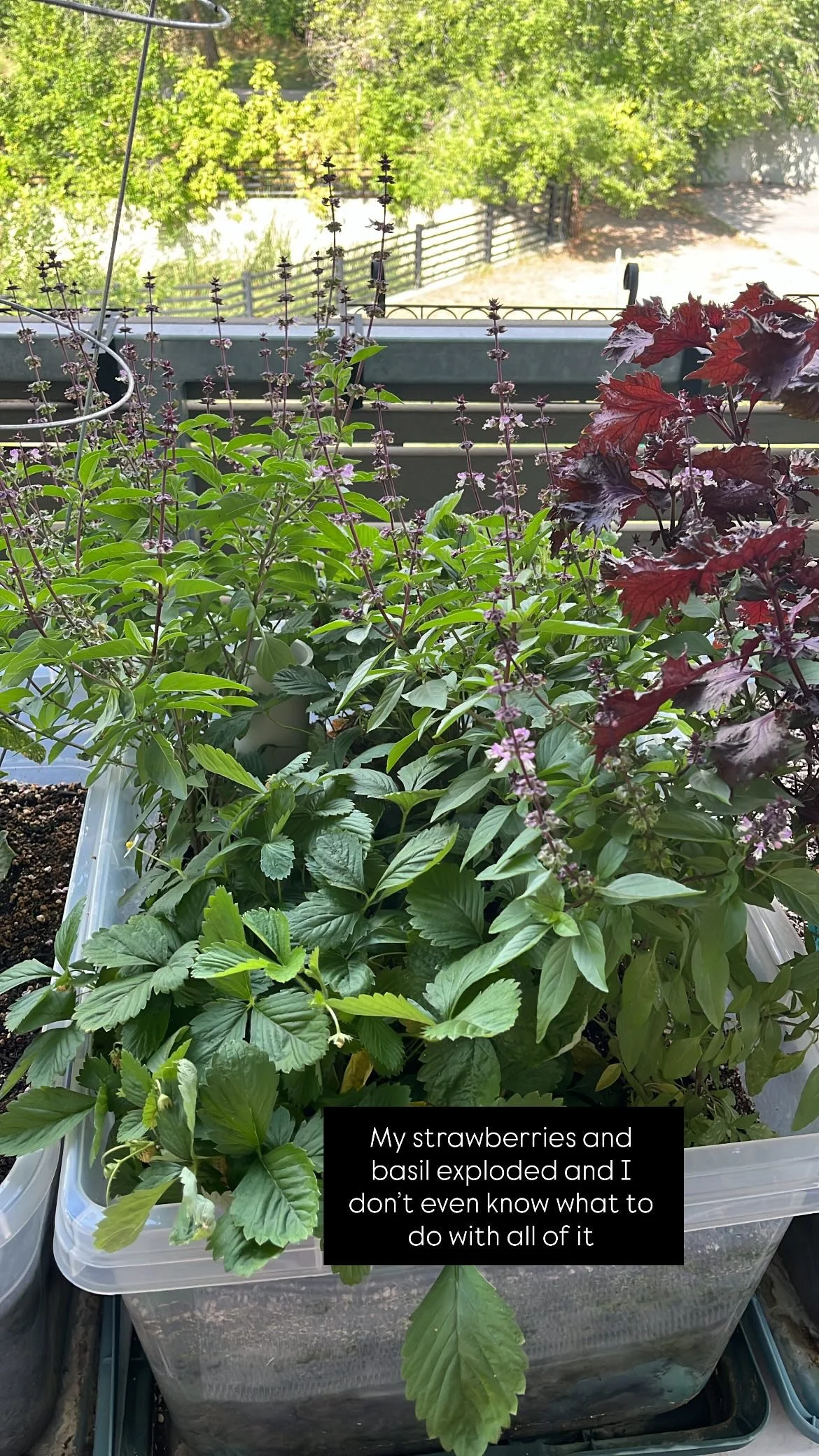
It is now the end of July, and my garden has not failed me! My coreopsis bloomed to perfection and has about 50 flowers on it. Unfortunately though, my bee plant was pulled out by my neighbor who thought it was a weed. I’ll have to try again next year on the native flowers. I do think having coreopsis nearby helped my garden with pollination. I believe it is now the end of raspberry season, as my plant seems to be near the end of her cycle. My romaine lettuce is about 3 feet tall now and has provided me with many many salads. I’m going to pull it out soon and put my purple peppers in her place. I’ve been pulling carrots and beets out slowly as I need to use them. I pulled about half of each which was a good decision because now the other carrots and beets have more room to grow larger. I used the carrot tops to make carrot top hummus, which was amazing! My thai basil exploded as soon as I planted it and so did my red shiso leaf. I’ve been enjoying those in meals throughout the summer. My sage and chamomile recovered from the watering incident, and are now healthy and growing. One of my purple pepper plants is growing tall and should start producing peppers very soon! My strawberry bushes are gorgeous and have SO MANY flowers on them, and I see many small strawberries beginning to form. I harvested a few of the yellow alpines out of curiosity, and their flavor did not disappoint. It’s similar to a red strawberry, but much more floral. I have harvested 2 small cucumbers, and have one more still growing on the vine, and I’m not sure how many more I’ll be able to get this year.
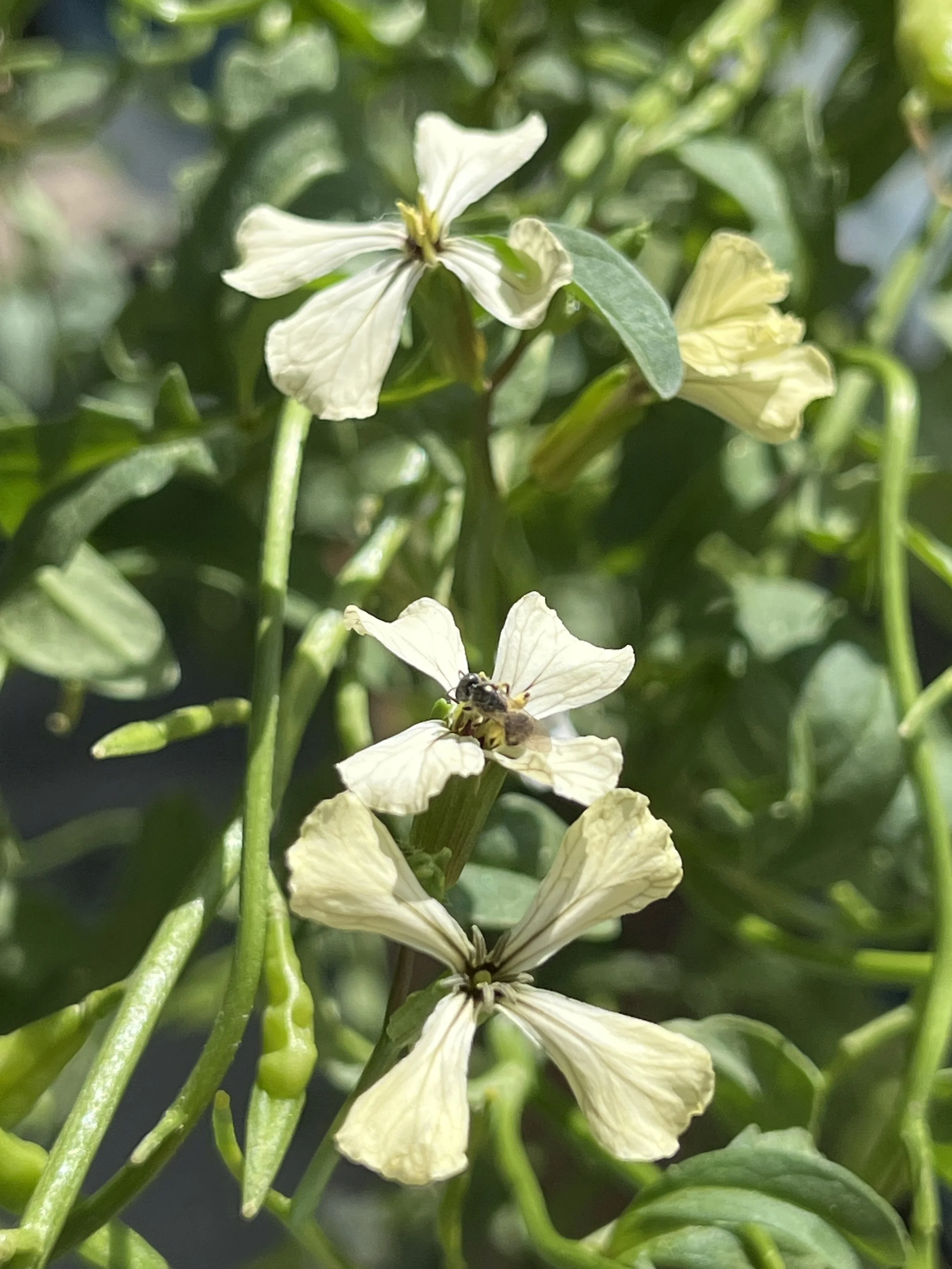
Tiny sweat bee on my arugula flowers that I left for the pollinators. (peep the seed pods forming!)
Pollinator activity has been pretty fun to watch throughout the summer so far. I’ve seen lots of hoverflies on my arugula flowers and a few sweat bees pollinating my strawberries. Other than that, I haven’t seen any larger species of bees. Pests have not really been an issue for me! I’ve had a few aphids here and there on the leafy greens, but nothing else of huge concern. Lucky me! I’d be curious to know if this is similar for other folks who garden on their balconies.
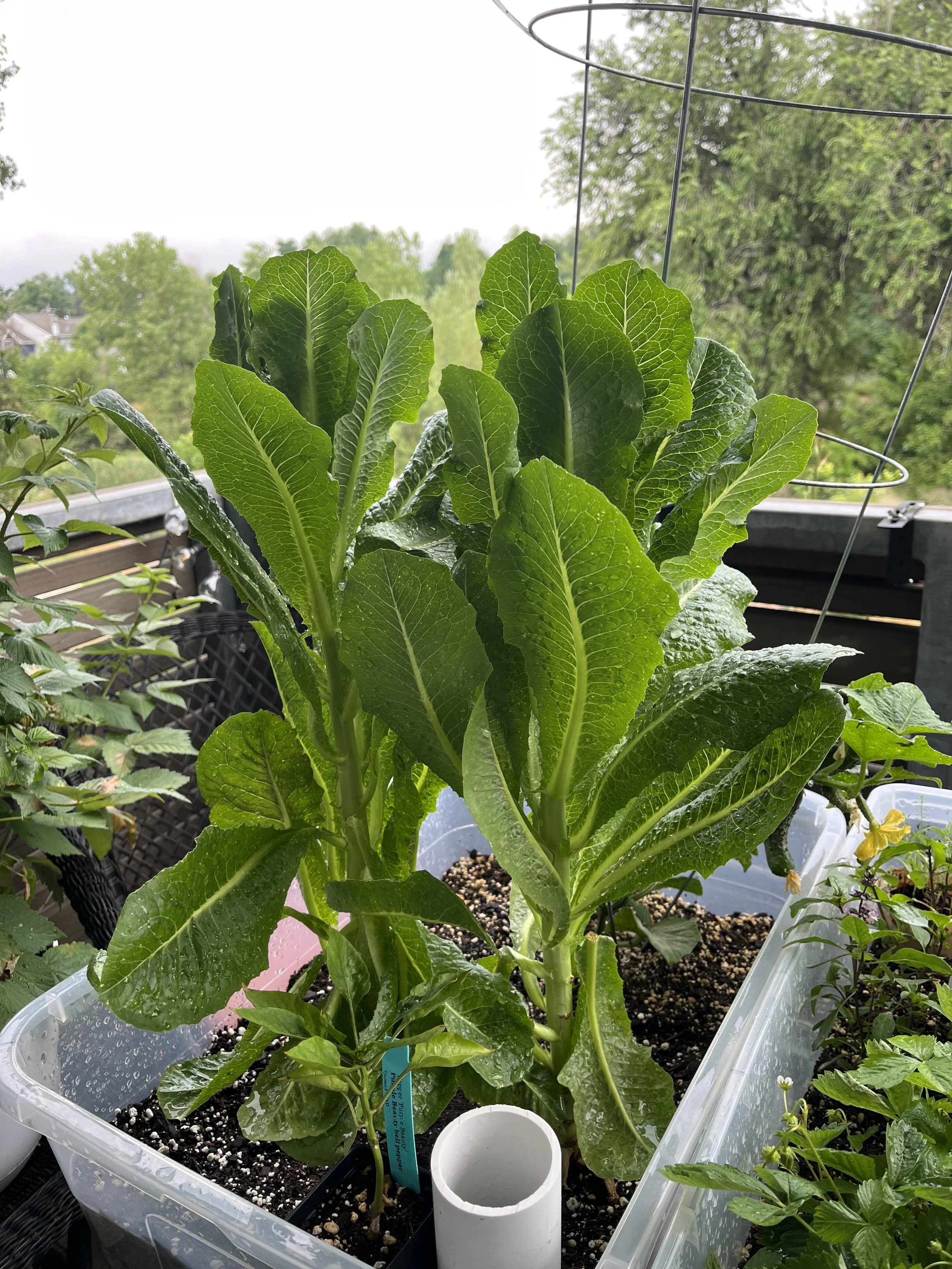
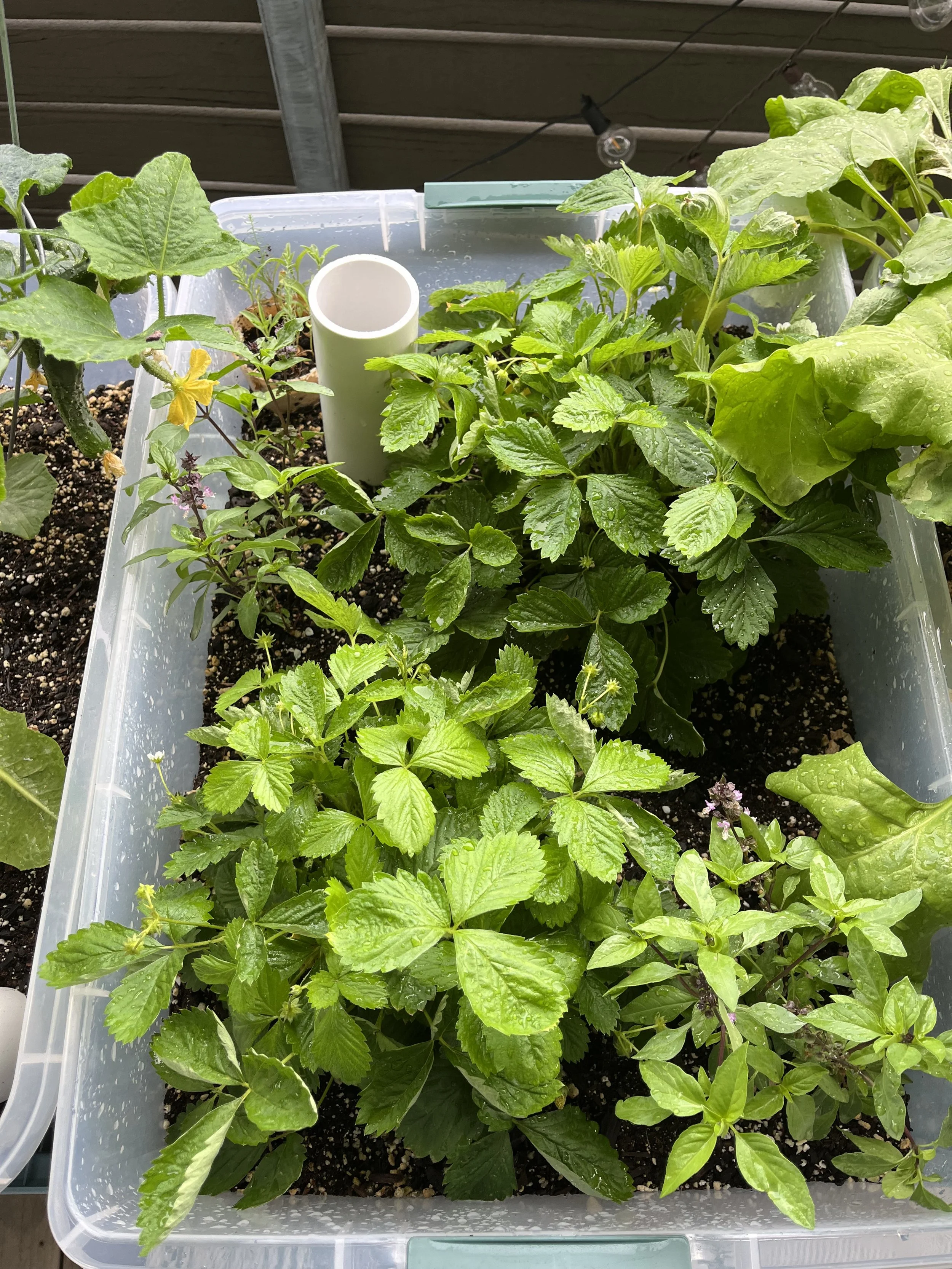
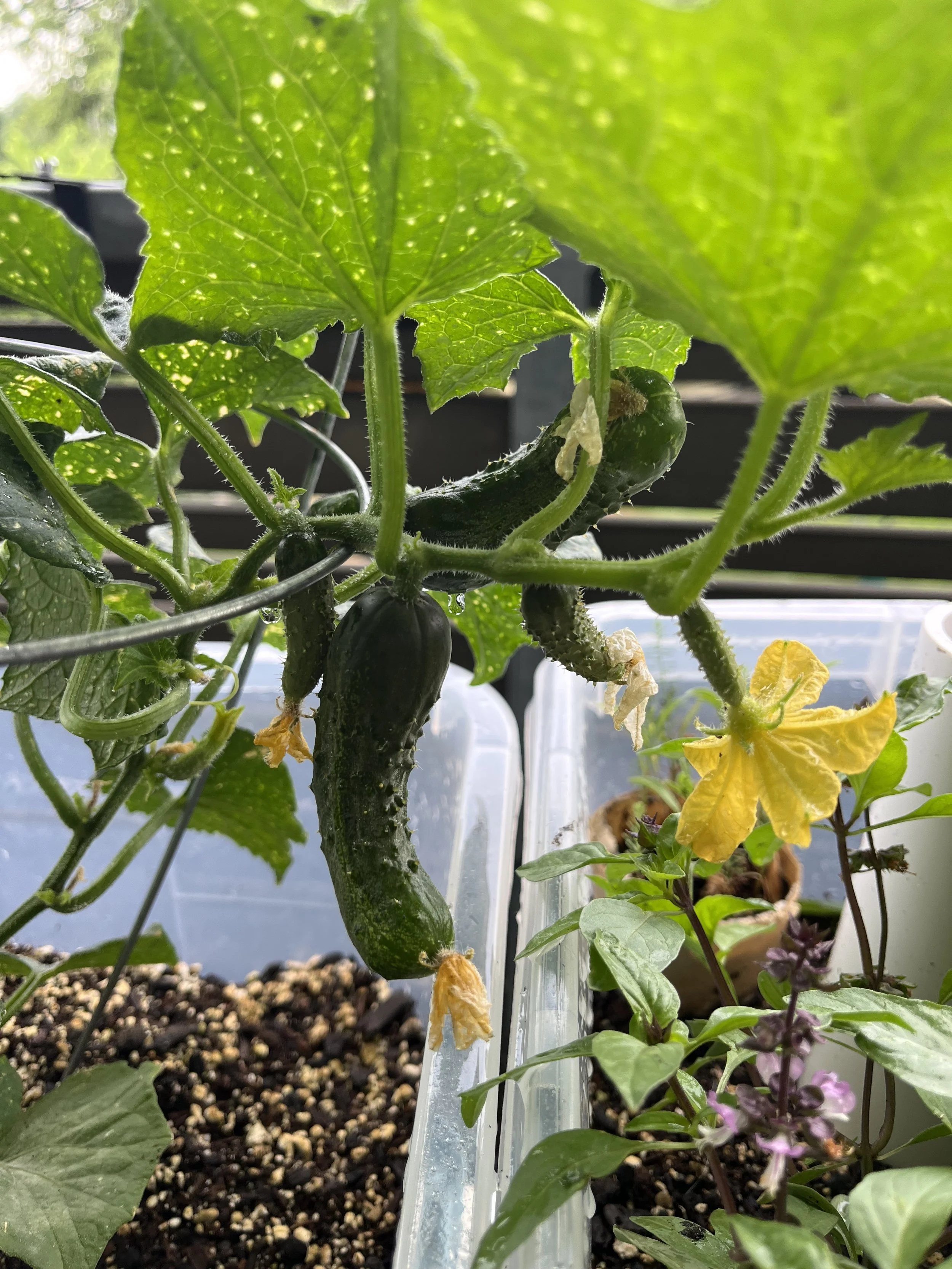
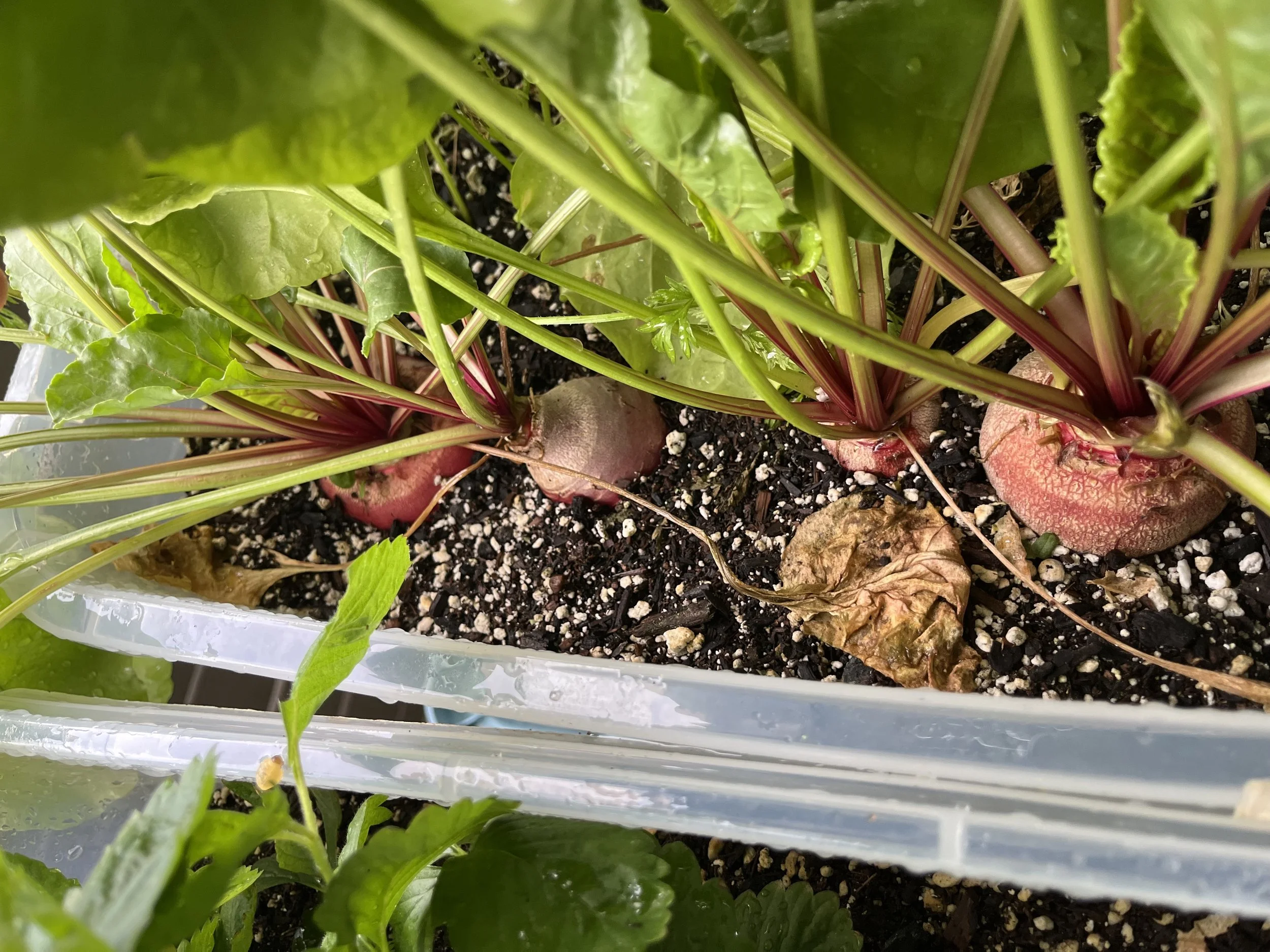
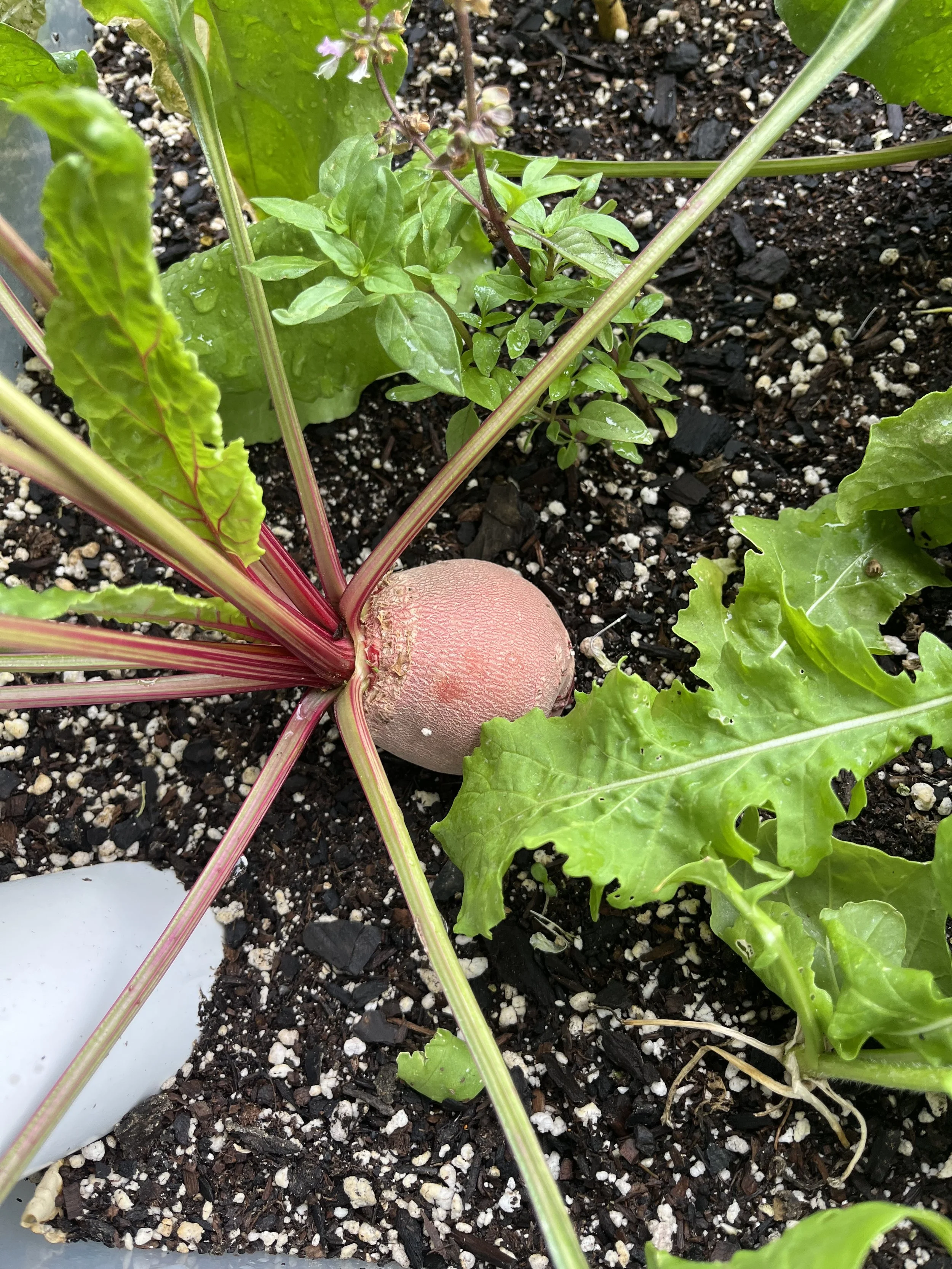
On the watering side of things, I did end up buying a sink hose attachment on Amazon for about $70. It was the best investment I’ve made for my garden because my plants seem so much healthier, and I don’t have to worry about going back and forth with my watering can to satisfy the water needs. I would highly recommend this for balcony gardeners who have a sink that is close to their garden. It has literally saved me so much time!
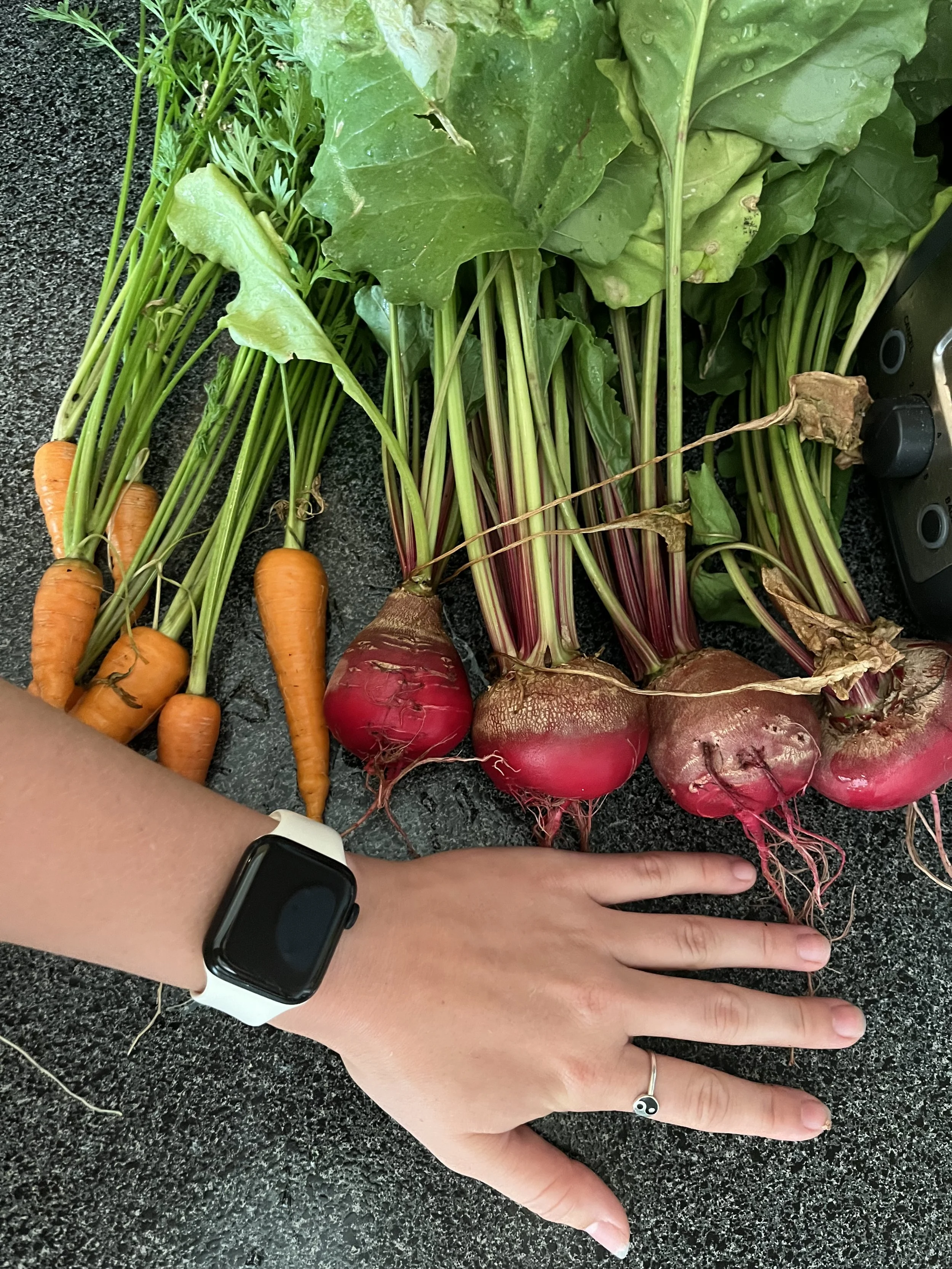
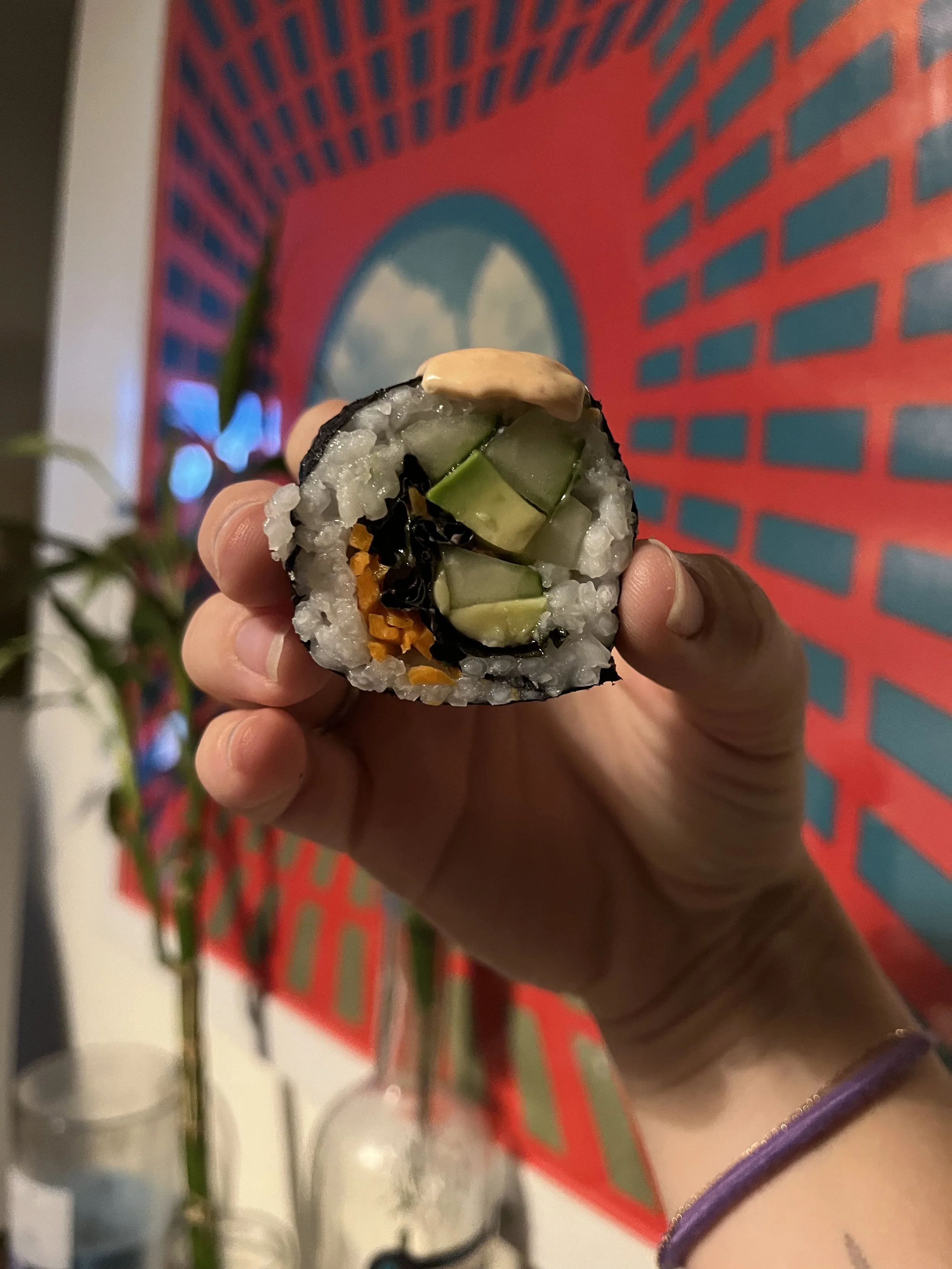
Another thing I’m happy to report is that nothing from my garden has gone to waste. I’ve used everything I’ve harvested and if I can’t use it, I’ve given it away to friends and family (mostly greens). I haven’t had the largest bounty, but I only have a small amount of space to utilize. I think that I may go with more vertical growing things next year instead of beets and carrots, which use up a lot of space and don’t boast that much or I will try to do succession planting and start growing things earlier in the season so I can do multiple harvests. I’m considering doing that now, even though it might be pushing it as far as time in the season goes.
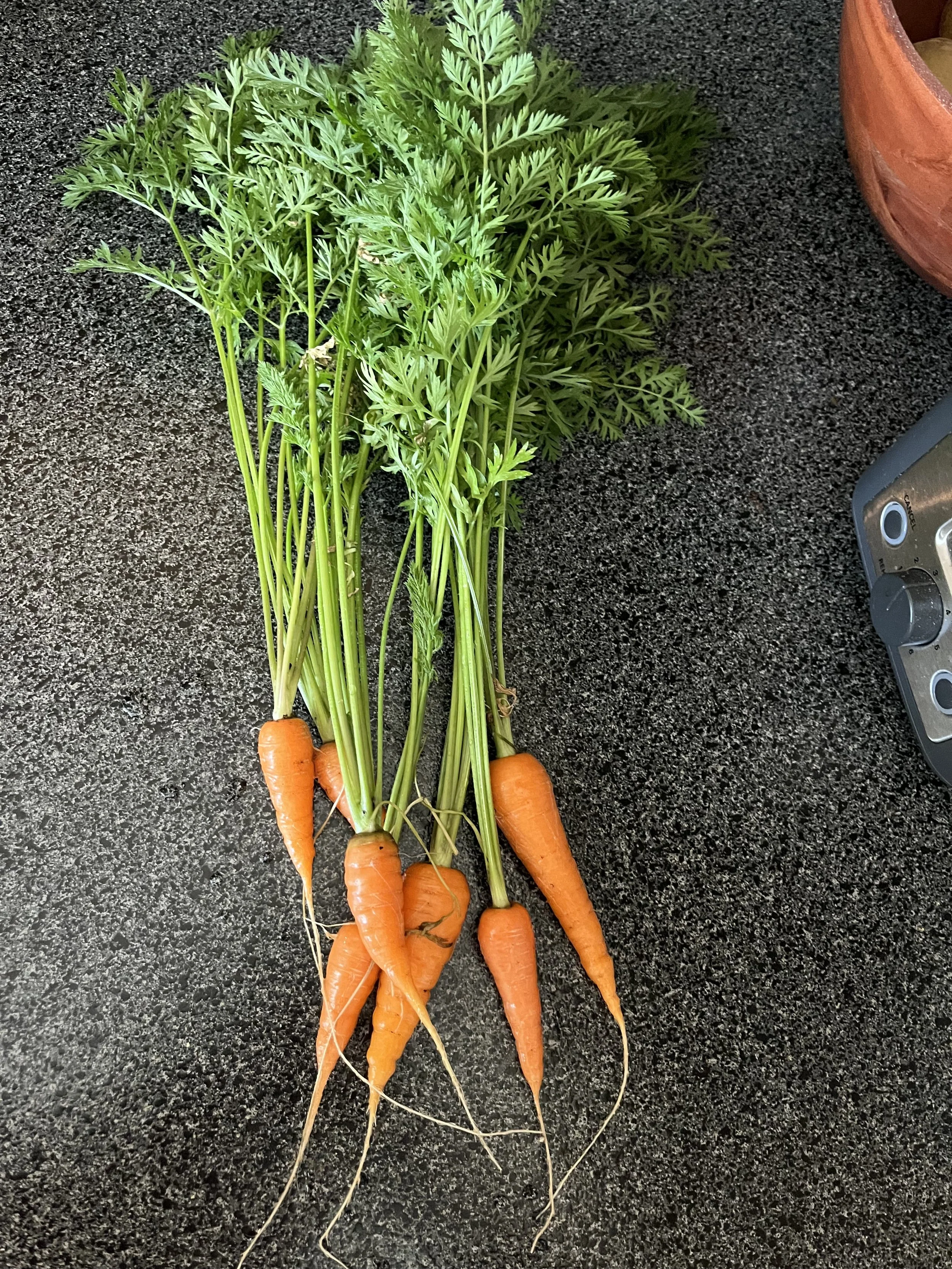
August
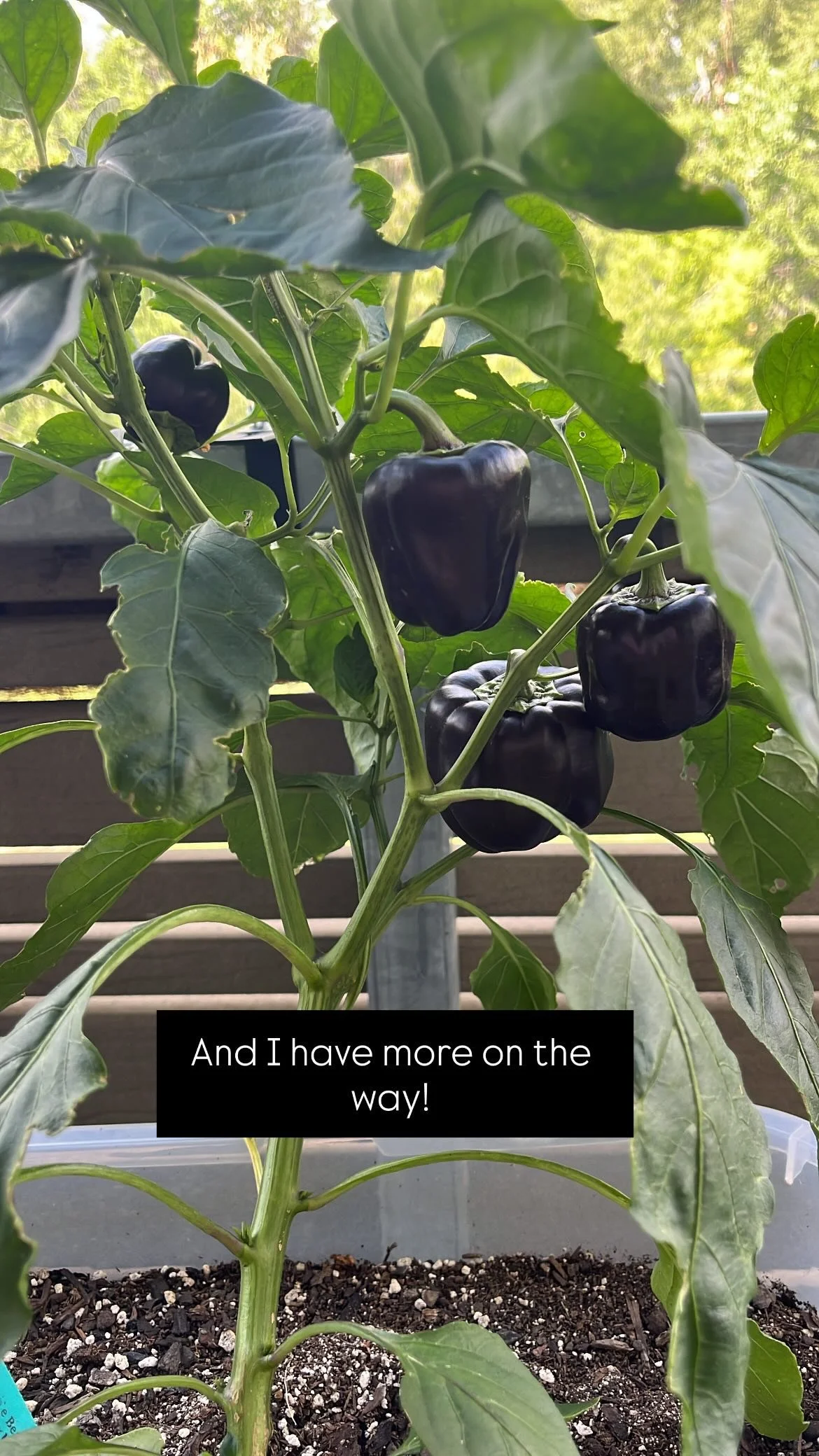
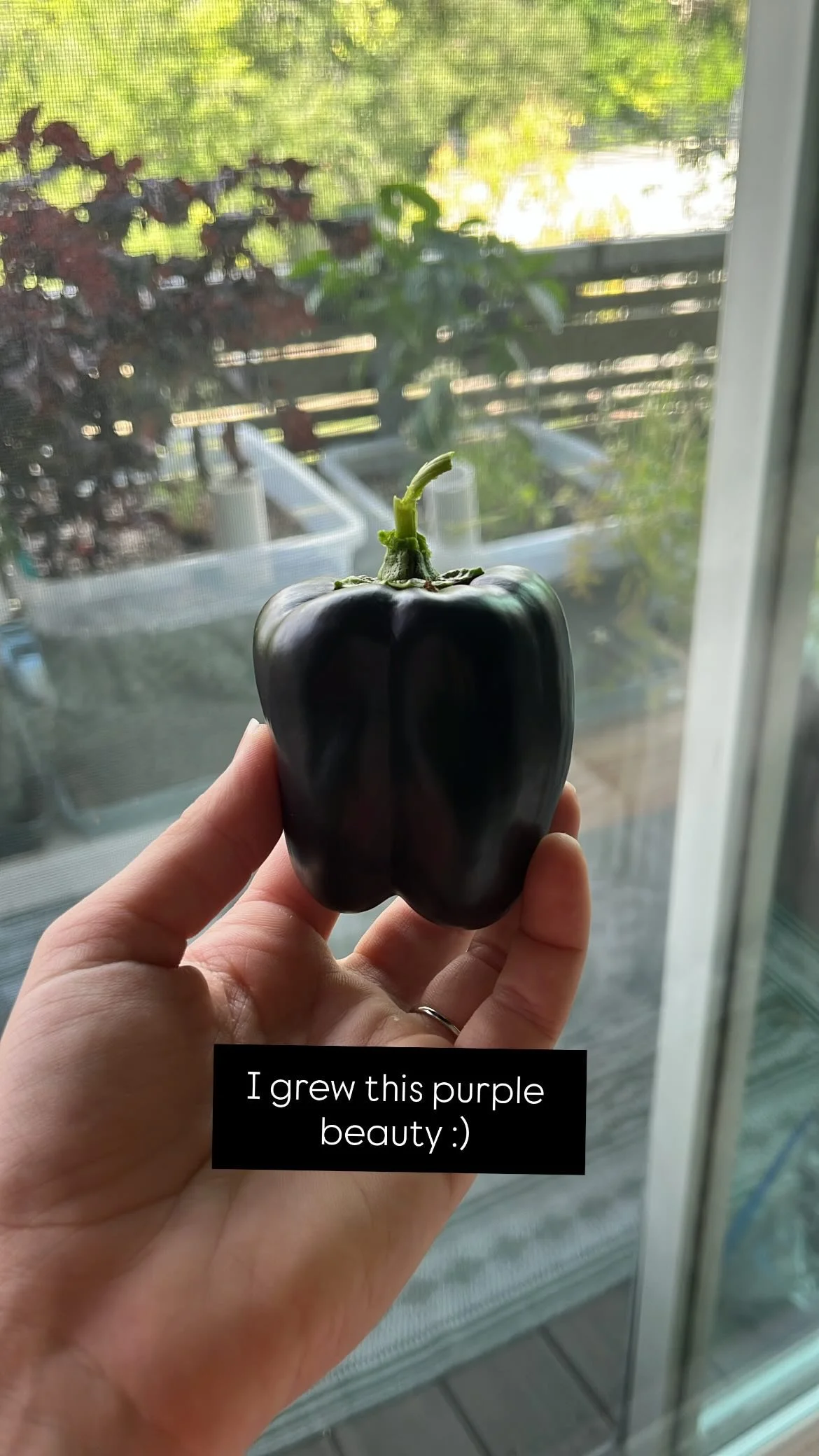
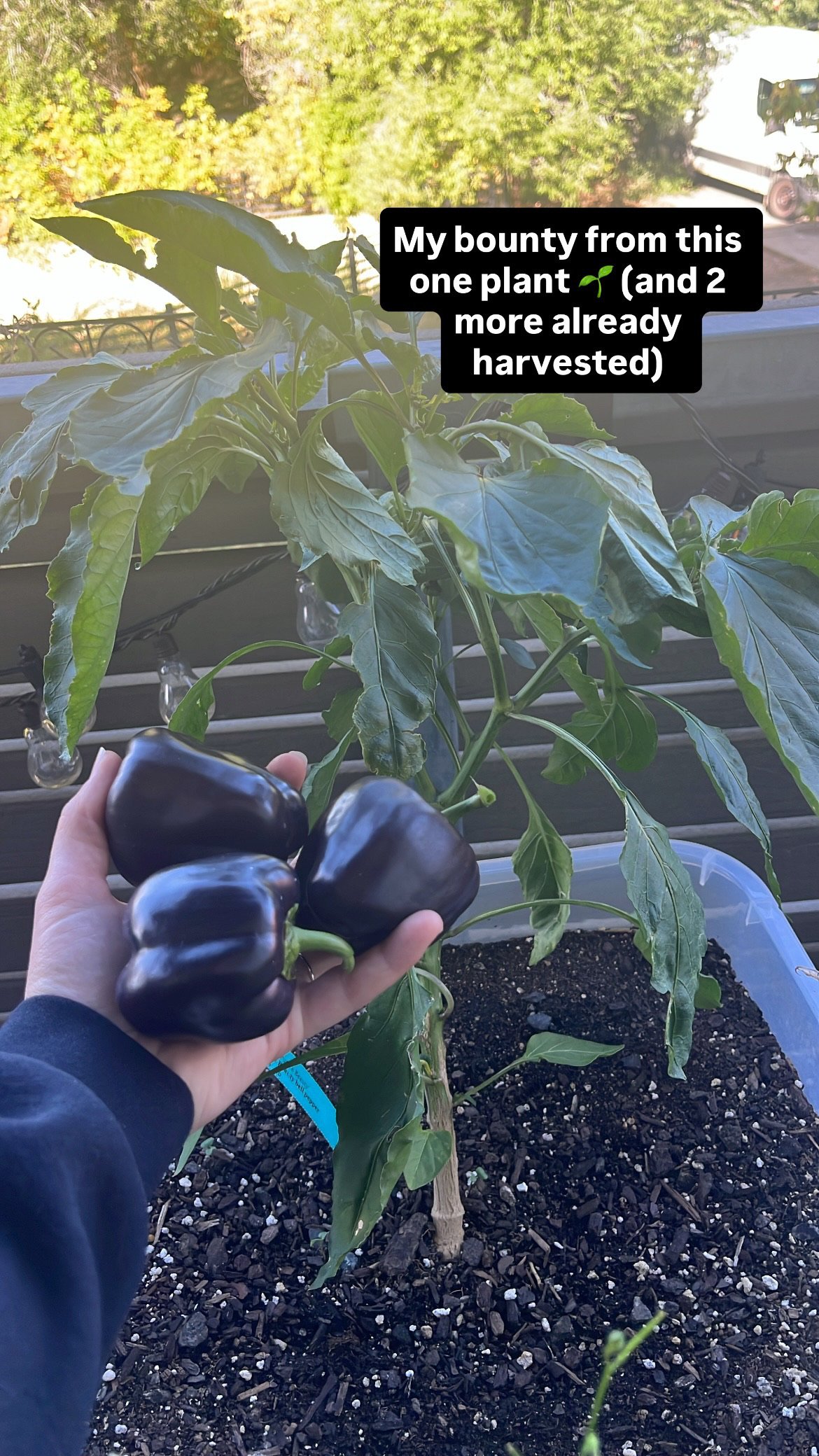
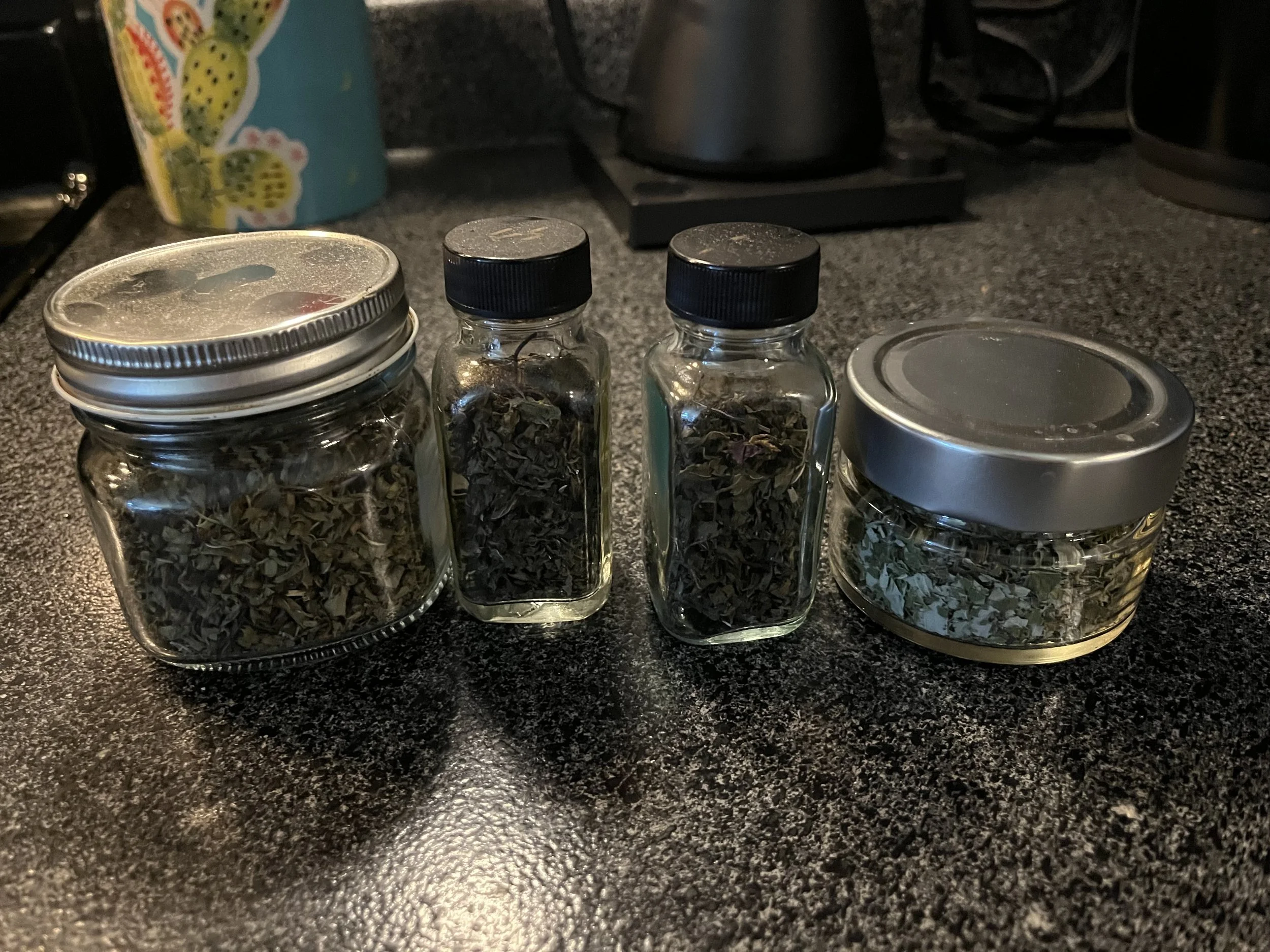
By August, I planted my first purple beauty pepper plant and it gave me 5 peppers! They were delicious, and the plant grew with ease. I planted the next one in September and it also gave me 5 peppers. They were smaller I think due to the colder temperatures at night. The growing season is coming to a close, and my bounty is mostly harvested. I cut down and dried the rest of my basil, red shiso leaf, and red raspberry leaves to use for teas and spices throughout the winter and next year.
Conclusion
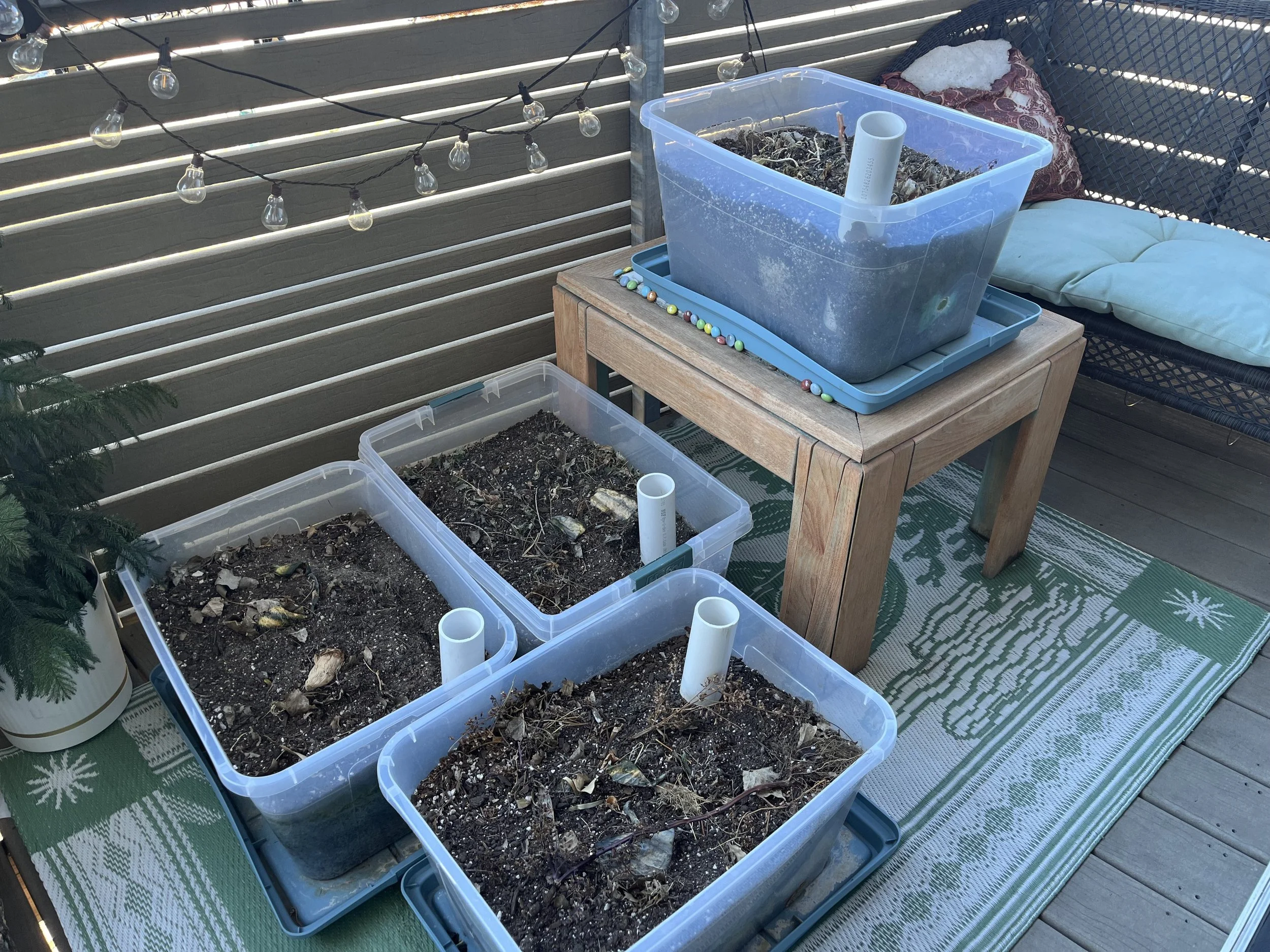
This growing season was such a learning experience for me. I’m so happy with my harvest! I winterized my beds in early November after I cut down and harvested everything. I blanketed them with dried leaves and compost, and now they’re resting, and preparing for next growing season!
Here are the final numbers that I tracked:
Arugula: 380 Grams
Romaine Lettuce: 400 Grams
Raspberries: 50 Grams (40 raspberries total)
Strawberries: 40-50 tiny (about 1/2 inch) yellow and red alpine strawberries. Eaten at random and in small increments. Would probably do a jam/jelly next time.
Carrots: 15 total. Average length: 2 inches.
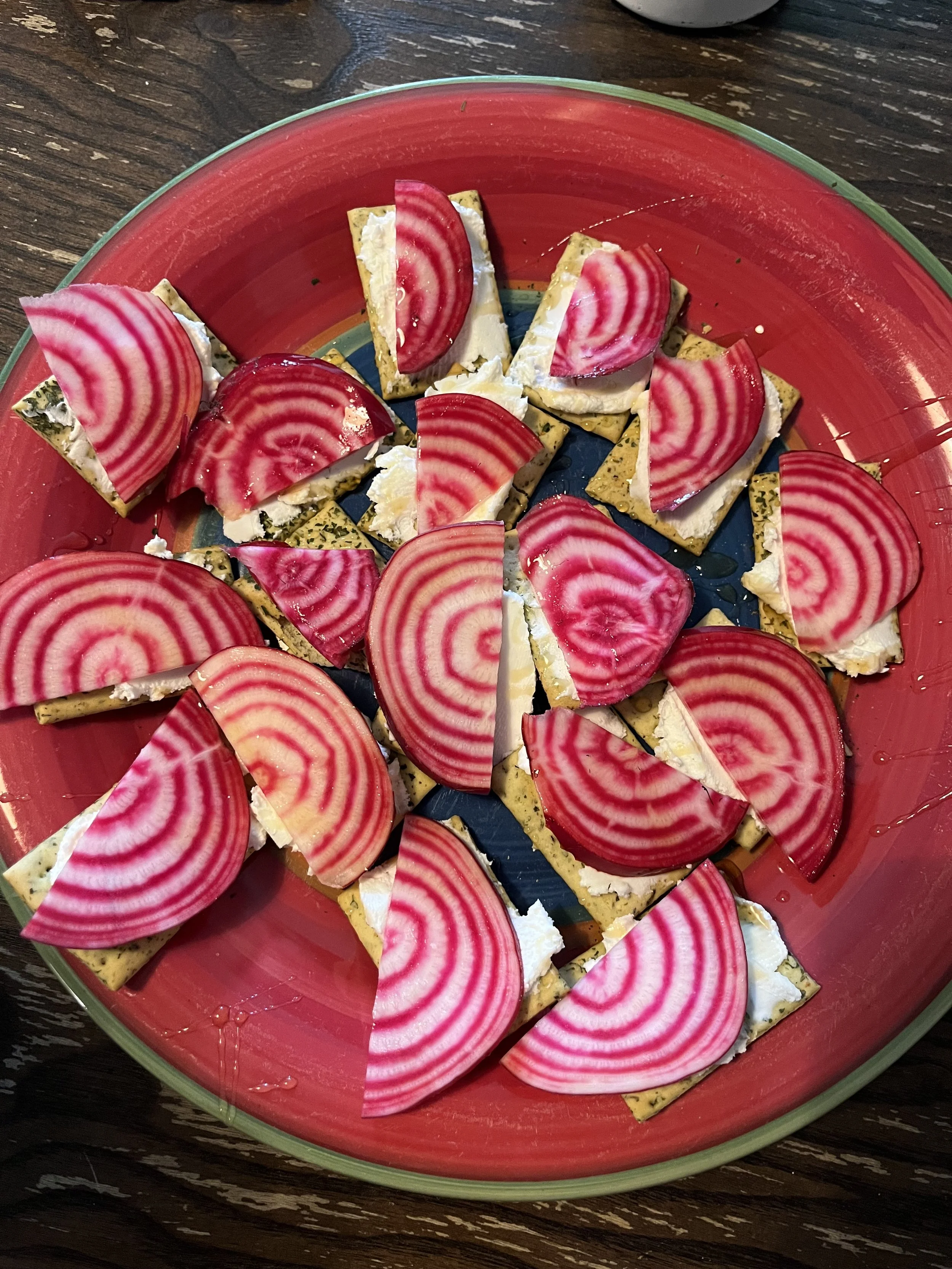
Beets: 5 total. Average circumference: 5 inches.
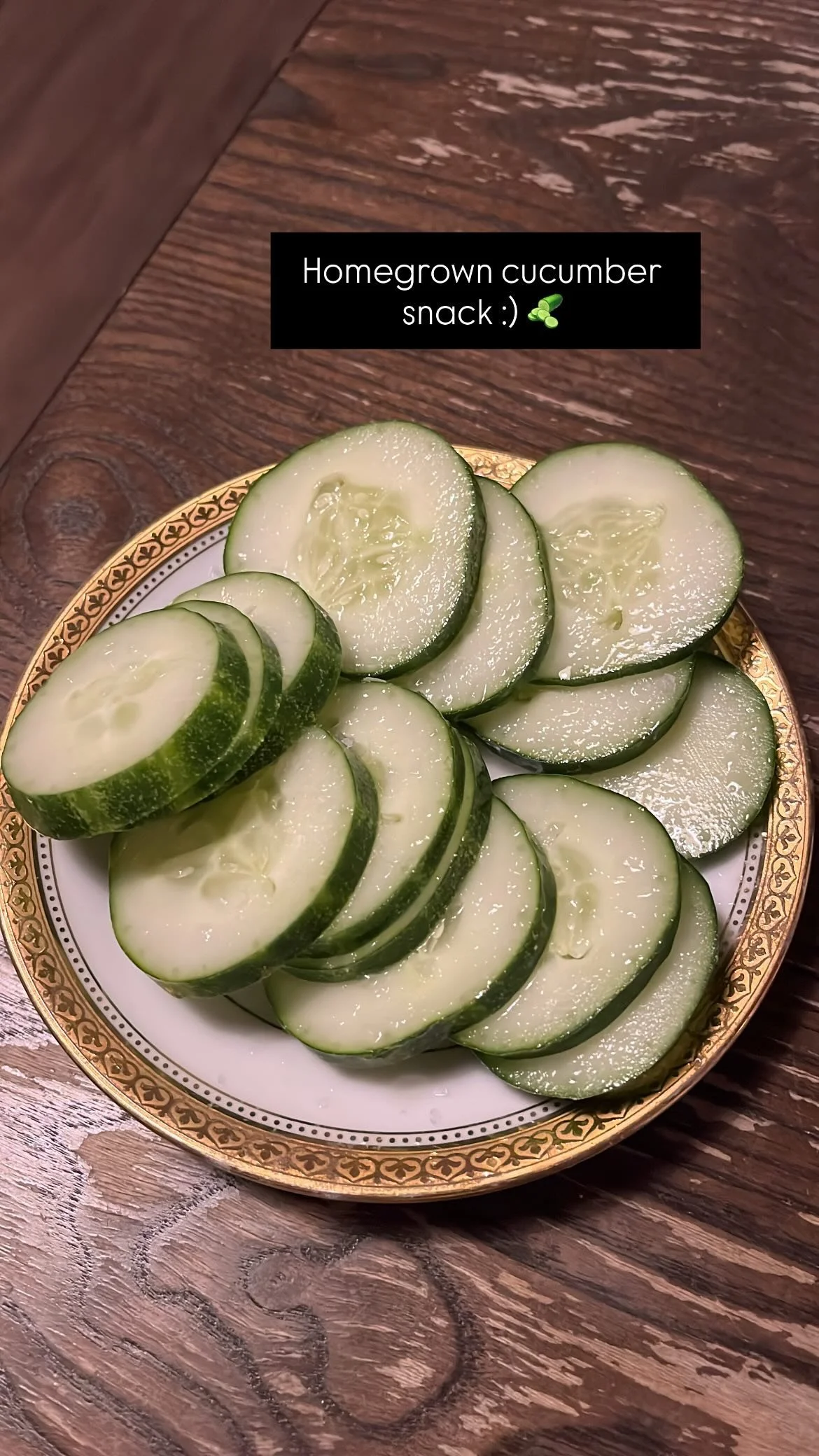
Cucumbers: 5 total. Average length: 3 inches. Average circumference: 4 inches.
Purple Beauty Peppers: 10 total. Average length: 2 inches. Average circumference: 3 inches.
Although I wasn’t able to grow a large percentage of my food with my alotted space, growing my own veggies did save me trips to the grocery store and my veggies were tastier than store bought. I have a sense of accomplishment that is hard to explain, along with a deep feeling of gratitude and sovereignty that I was able to grow even a little bit of my own food. I can’t wait until next season!